Luna 3 and the First Photographs of the Far Side of the Moon
1959 · Moscow, Soviet Union
The Soviet probe Luna 3 transmitted the first-ever photographs of the far side of the Moon, providing unprecedented views of the lunar surface.
September 14, 1959
The Soviet probe Luna 2 becomes the first human-made object to reach the Moon, impacting the lunar surface.
Moscow, Soviet Union | Soviet Space Program
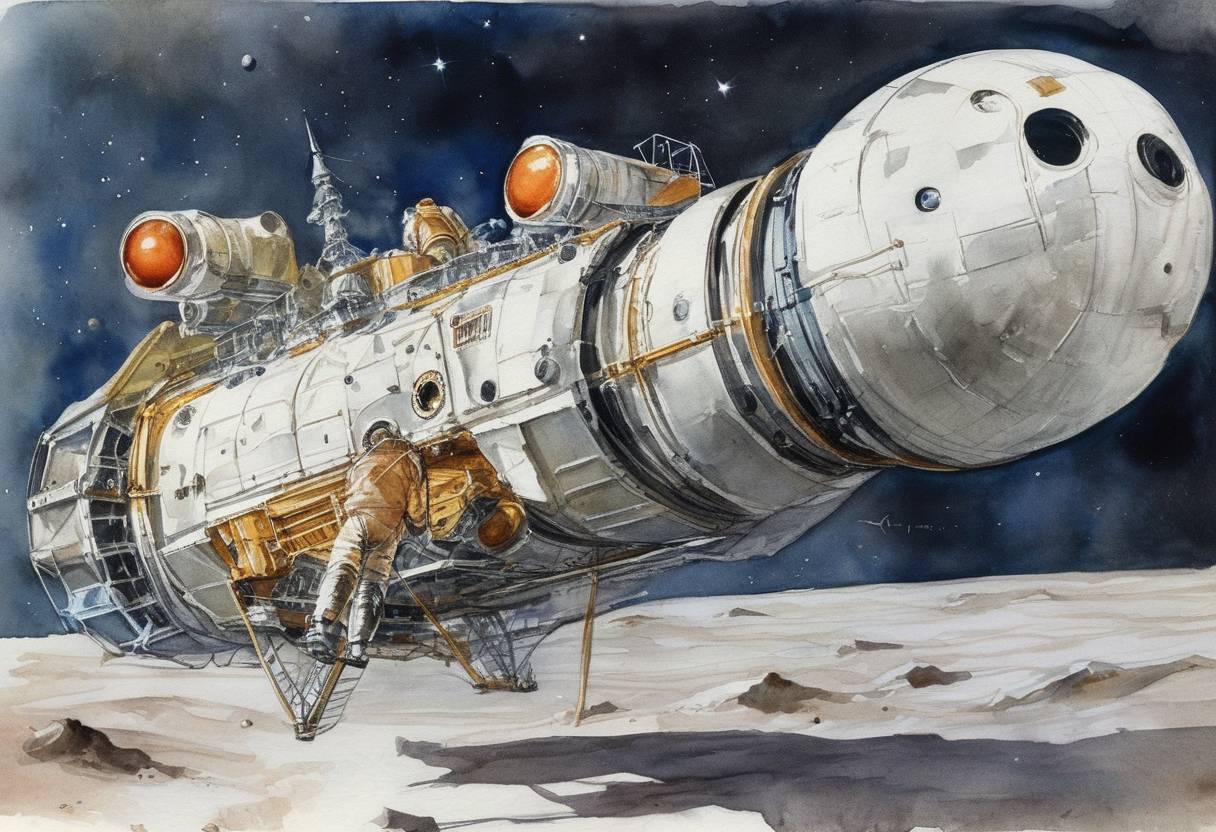
On September 14, 1959, the Soviet Union achieved a significant milestone in the history of space exploration with the successful impact of Luna 2 on the Moon’s surface. This event marked the first time a human-made object reached another celestial body, a testament to the rapid advancements in space technology during the Cold War era.
The Luna program, initiated by the Soviet Union, was a series of robotic spacecraft missions aimed at exploring the Moon. Following the success of Luna 1, which became the first spacecraft to reach the vicinity of the Moon, Luna 2 was designed to further demonstrate the capabilities of Soviet space technology.
Luna 2 carried scientific instruments designed to study cosmic rays, solar wind, and magnetic fields. Although it did not return data from the lunar surface, the mission provided insights into the space environment between the Earth and the Moon.
The success of Luna 2 was followed by subsequent missions in the Luna program, which continued to explore the Moon and contributed to our understanding of lunar science. The achievement also spurred further developments in space exploration, eventually leading to human landings on the Moon by the United States during the Apollo program.
In conclusion, Luna 2’s impact on the Moon on September 14, 1959, was a landmark event in space exploration, symbolizing human ingenuity and the relentless pursuit of knowledge beyond our planet.
Source: www.nasa.gov