William the Conqueror Lands in England: The Beginning of the Norman Conquest
1066 · Pevensey, England
William the Conqueror lands in England at Pevensey Bay, marking the beginning of the Norman Conquest.
October 14, 1066
The Battle of Hastings took place, where William the Conqueror defeated King Harold II of England, leading to the Norman conquest of England.
Hastings, England | Norman forces
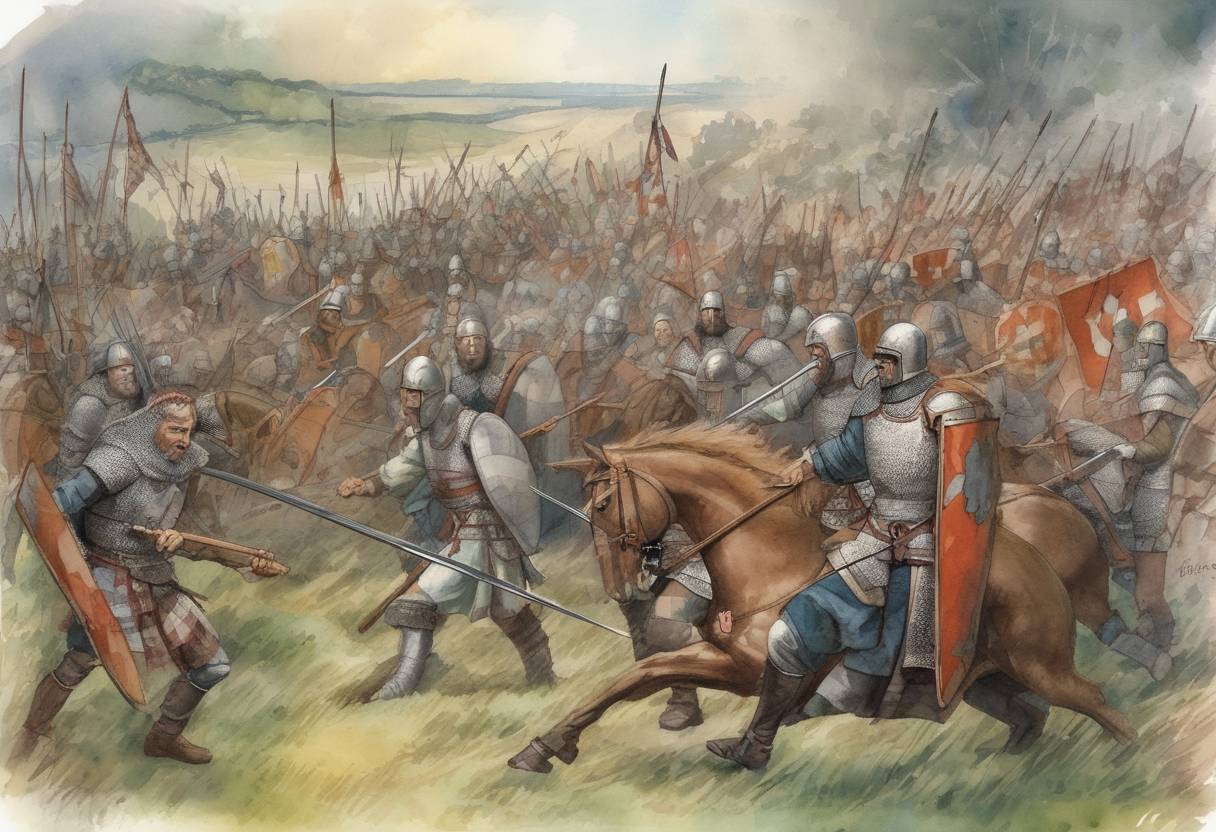
The Battle of Hastings, fought on October 14, 1066, stands as a pivotal moment in English history, marking the beginning of the Norman Conquest. This battle saw William, Duke of Normandy, defeat King Harold II of England, fundamentally altering the course of English history.
The roots of the conflict lay in a succession crisis following the death of the English king, Edward the Confessor, in January 1066. Edward died without a direct heir, leading to a power struggle among several claimants to the English throne:
Harold’s Coronation: Harold Godwinson was crowned king on January 6, 1066, but his claim was immediately contested by William of Normandy.
Invasion Preparations: William began preparations for an invasion to enforce his claim, assembling a fleet and an army of Normans, Bretons, and other allies.
Battle of Stamford Bridge: Before facing William, Harold had to deal with an invasion from the north by Harald Hardrada. On September 25, 1066, Harold defeated Hardrada at the Battle of Stamford Bridge, but this victory left his forces weakened and exhausted.
Norman Landing: While Harold was engaged in the north, William landed at Pevensey on the southern coast of England on September 28, 1066, quickly establishing a base.
The Battle of Hastings was a turning point that reshaped the English monarchy and aristocracy. It laid the foundation for the centralized English state and had lasting impacts on the culture and governance of England, influencing the country’s development for centuries to come.
Source: en.wikipedia.org