Abolition of Slavery in Brazil: The Signing of the Lei Áurea
1888 · Rio de Janeiro, Brazil
Brazil abolishes slavery with the signing of the Lei Áurea (Golden Law) by Princess Isabel.
November 20, 1695
Zumbi, the leader of the Quilombo dos Palmares, was killed. Zumbi was a prominent leader of the resistance to slavery in colonial Brazil and is remembered as a symbol of Black resistance.
Palmares, Brazil
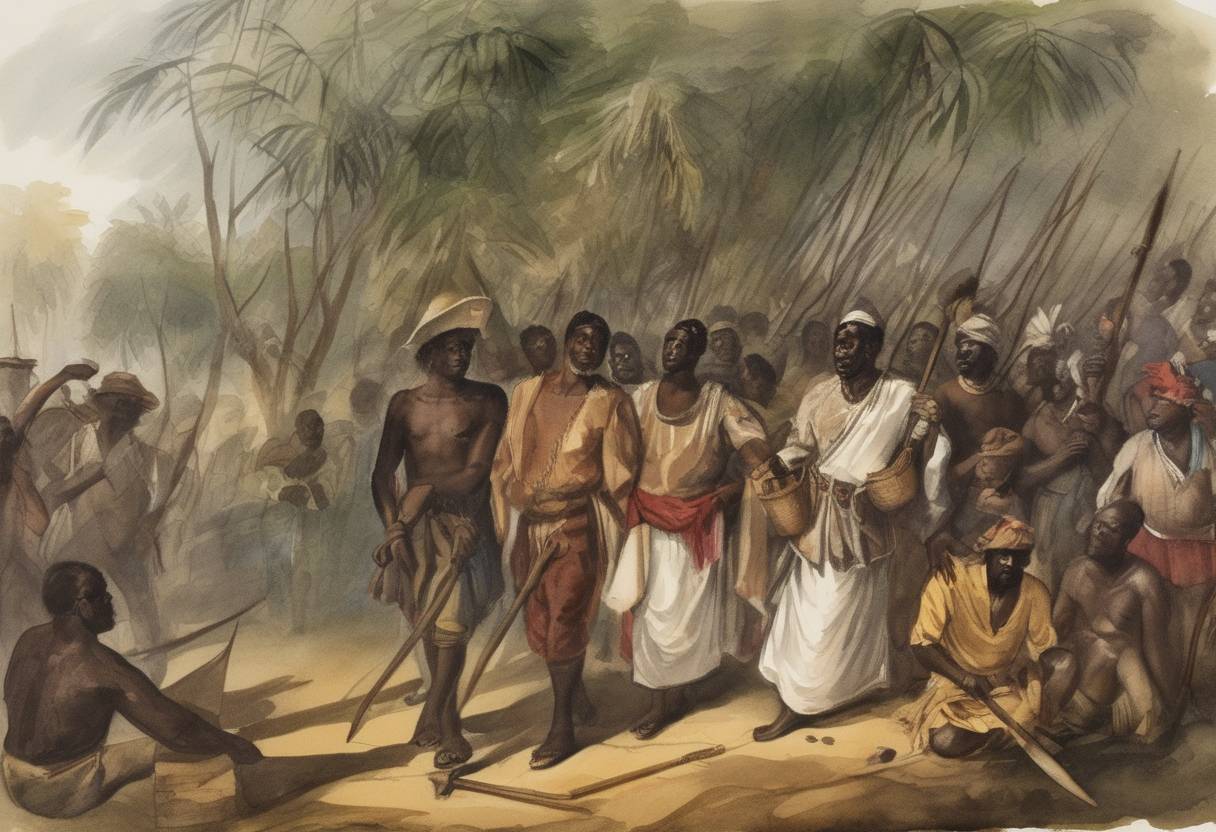
On November 20, 1695, Zumbi dos Palmares, a key figure in the resistance against slavery in colonial Brazil, was killed. Zumbi was the last leader of the Quilombo dos Palmares, a settlement of escaped slaves known as quilombolas who resisted the Portuguese colonizers’ attempts to subjugate them.
The Quilombo dos Palmares was established in the late 16th century in the hinterlands of what is today the state of Alagoas. At its height, it is estimated to have had a population of around 20,000 inhabitants, consisting of runaway slaves, indigenous peoples, and others seeking refuge from the colonial regime. The quilombo was characterized by its communal society and defensive fortifications, which allowed it to withstand numerous assaults over the decades.
Zumbi was born in 1655, believed to be in Palmares, and was captured as a child during one of the Portuguese raids. He was given to a missionary and baptized but eventually escaped and returned to Palmares at the age of 15. As an adult, he became the leader of the settlement in 1680.
The late 17th century saw increased efforts by the Portuguese colonial forces to dismantle the Quilombo dos Palmares, largely due to economic interests and the fear of rebellion spreading among the enslaved populations. The governor of the Captaincy of Pernambuco organized multiple military campaigns to subdue the community.
In early 1694, a large expedition led by the bandeirante Domingos Jorge Velho and backed by artillery finally breached the defenses. Though Palmares fell, Zumbi survived and continued to lead a guerrilla resistance.
On November 20, 1695, Zumbi was betrayed and ultimately killed in an ambush. His head was severed and displayed in a public square in Recife, in an attempt to quell any hope of rebellion among enslaved Africans and to prove Zumbi’s immortality was a myth—a significant element of the anti-slavery resistance folklore.
Zumbi’s death marked the end of one of the most enduring symbols of resistance to slavery in Brazil. Over the centuries, Zumbi has become a symbol of the struggle against racial oppression. In contemporary Brazil, November 20th is commemorated as Black Awareness Day (“Dia da Consciência Negra”), a day honoring African cultural heritage and the ongoing fight against racial discrimination.
Zumbi’s legacy lives on as an enduring symbol of freedom and resistance, not only in Brazil but throughout the African diaspora. His life and struggle continue to inspire movements for equality and justice in the modern era.
Source: en.wikipedia.org