2006 · Mecca, Saudi Arabia
A stampede occurs during the annual Hajj pilgrimage in Mecca, resulting in the deaths of at least 345 Muslim pilgrims.
August 20, 2018
Millions of people observed a major Muslim holiday, Eid al-Adha, worldwide, celebrating with communal prayers, feasts, and acts of charity. The event is noted for the sacrifice of an animal and commemorates the willingness of Ibrahim (Abraham) to sacrifice his son.
Mecca, Saudi Arabia | Muslim Community
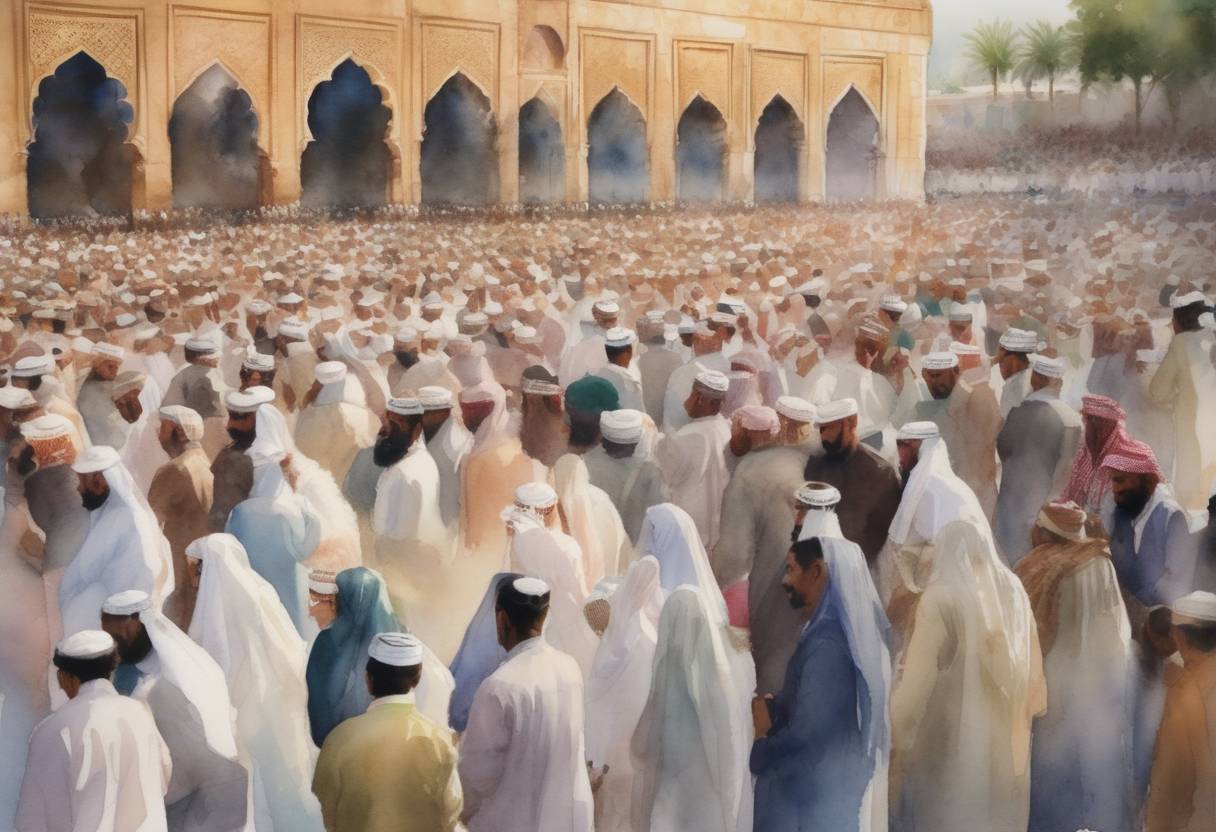
On August 20, 2018, millions of Muslims around the world celebrated Eid al-Adha, also known as the “Festival of Sacrifice”. This major Islamic holiday commemorates the readiness of the Prophet Ibrahim (Abraham) to sacrifice his son Ismail (Ishmael) in obedience to God’s command. As one of the two significant Eids in Islam, the other being Eid al-Fitr, Eid al-Adha holds immense religious importance.
Communal Prayers: The day began with Muslims gathering for special prayers at mosques and large open areas. These prayers typically included a sermon (khutbah) that emphasizes the values of sacrifice, charity, and devotion.
Sacrificial Rites: Central to the holiday is the sacrifice of an animal, usually a goat, sheep, cow, or camel, known as Qurbani. This ritual act symbolizes Ibrahim’s devotion and willingness to sacrifice his son in allegiance to God, who ultimately provided a ram to sacrifice instead.
Distribution: The meat from the sacrificed animal is divided into three parts: one-third is given to the poor and needy, one-third is shared with relatives and friends, and one-third is retained by the family for consumption.
Eid al-Adha emphasizes the importance of giving and community welfare. Families and individuals engage in various charitable activities, ensuring that those less fortunate receive help and support. This aspect of the holiday strengthens community bonds and reinforces the principle of empathy and generosity in Islam.
Muslims observe Eid al-Adha across different countries, adapting the celebrations to local customs while maintaining the religious essence. In predominantly Muslim nations, the day is marked as a public holiday, allowing for widespread participation in various festivities.
Eid al-Adha also coincides with the annual Hajj pilgrimage to Mecca, which is one of the Five Pillars of Islam. For those performing the pilgrimage, the observance of Eid represents the fulfillment of a key religious duty and symbolizes the unity and equality of the Muslim Ummah (community) as pilgrims from diverse backgrounds come together in worship.
The observance of Eid al-Adha on August 20, 2018, was marked globally by reverence and joy, reflecting the profound historical and spiritual narratives that underpin this deeply cherished celebration in the Muslim calendar.
Source: www.aljazeera.com