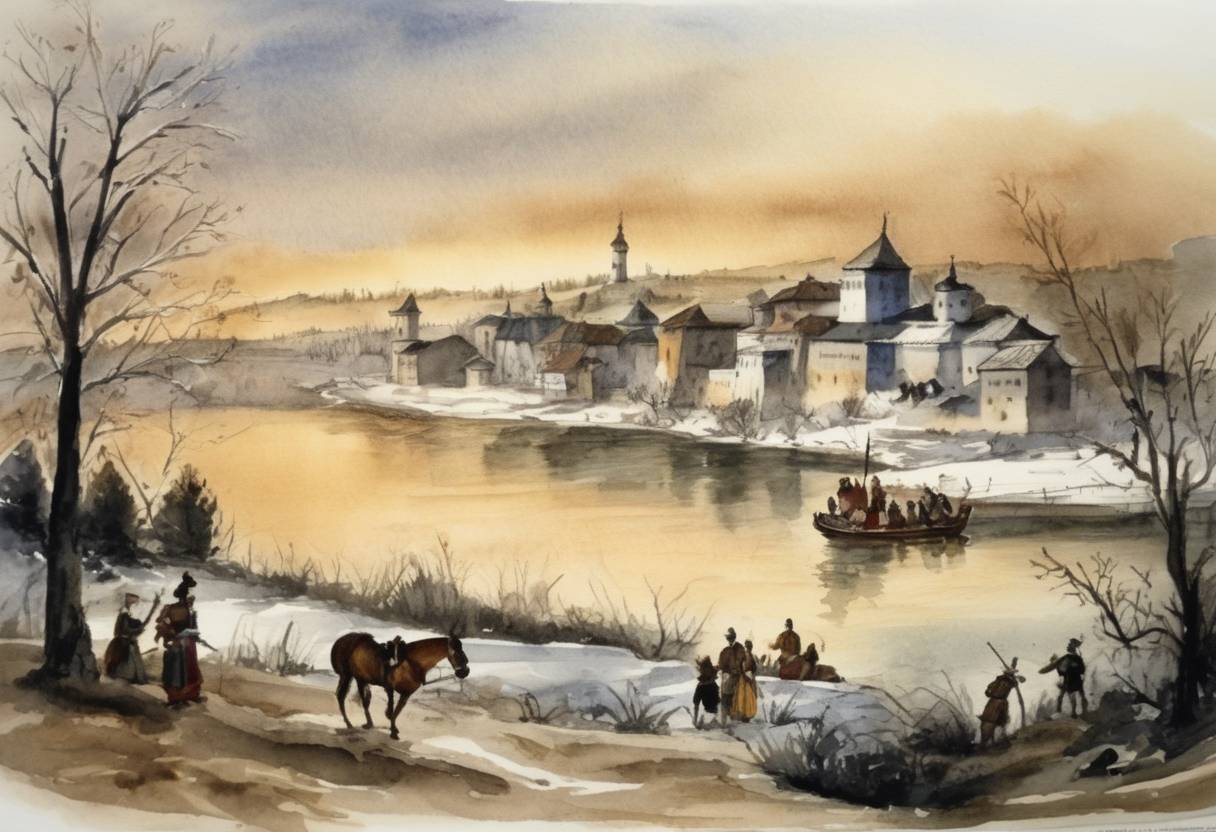
The Kalabalik at Bender
On February 1, 1713, the Kalabalik at Bender, also known as the Tumult of Bendery, marked a dramatic episode in the intriguing narrative of King Charles XII of Sweden’s exile in the Ottoman Empire. Following his defeat at the Battle of Poltava in 1709, Charles XII sought refuge within the borders of the Ottoman Empire. He settled in Bender (today in modern Moldova), where he was granted asylum by the Ottoman Sultan Ahmed III.
Background
After fleeing the disastrous defeat against Peter the Great of Russia during the Great Northern War, Charles XII retreated to Ottoman territory, seeking to regroup and plan his return to Sweden. His intentions were to inspire an Ottoman attack against Russia to alleviate pressure on Sweden and facilitate his return. Despite his efforts, the Sultan remained reluctant to engage in further conflicts with Russia without significant provocation.
The Event
Over time, Charles XII’s prolonged stay became a diplomatic and domestic issue for the Ottoman court. With expenses mounting and pressure from both Russian demands and internal politics, the Sultan desired to remove the Swedish king from the territory. When diplomatic persuasion failed to yield results, the Ottomans resorted to force.
On February 1, 1713, Ottoman troops attempted to forcibly expel Charles XII from his quarters in Bender, amid escalating tensions and misunderstandings. The event turned violent as Charles, alongside a small contingent of loyal Swedish soldiers, staged a spirited but futile resistance. The Swedish defenders repelled the initial assault, but the overwhelming numbers eventually subdued them after a fierce engagement.
Aftermath
The Kalabalik at Bender was characterized by dramatic hand-to-hand combat and has captured historical imaginations due to Charles’s refusal to surrender easily. Ultimately, Charles XII was detained by the Ottomans and later moved to Demotika (modern Didymoteicho, Greece) in closer proximity to Constantinople (Istanbul).
This incident symbolized the end of Charles XII’s asylum and greatly influenced subsequent diplomatic negotiations. After a protracted diplomatic dialogue, he was allowed passage back to Sweden, where his return was marked by continued military aspirations.
Historical Significance
The tumult at Bender underscores the regional complexities of early 18th-century European politics and highlights Charles XII’s determination, albeit stubborn to a fault. It further showcases how his escapades in the Ottoman Empire shaped Swedish-Ottoman relations and influenced the broader geopolitical balance during the Great Northern War.
In Swedish historical memory, Charles XII’s exile and the Kalabalik incident has left enduring legacies, celebrated for the king’s unyielding resolve yet illustrative of the controversial nature of his reign.