Dissolution of the Cavalier Parliament - January 24, 1679
1679 · London, England
King Charles II of England dissolves the Cavalier Parliament after 18 years of rule, marking a significant event in the political history of England.
March 15, 1672
Charles II of England issues the Royal Declaration of Indulgence, granting religious freedom to Roman Catholics and Nonconformists.
London, England | English Monarchy
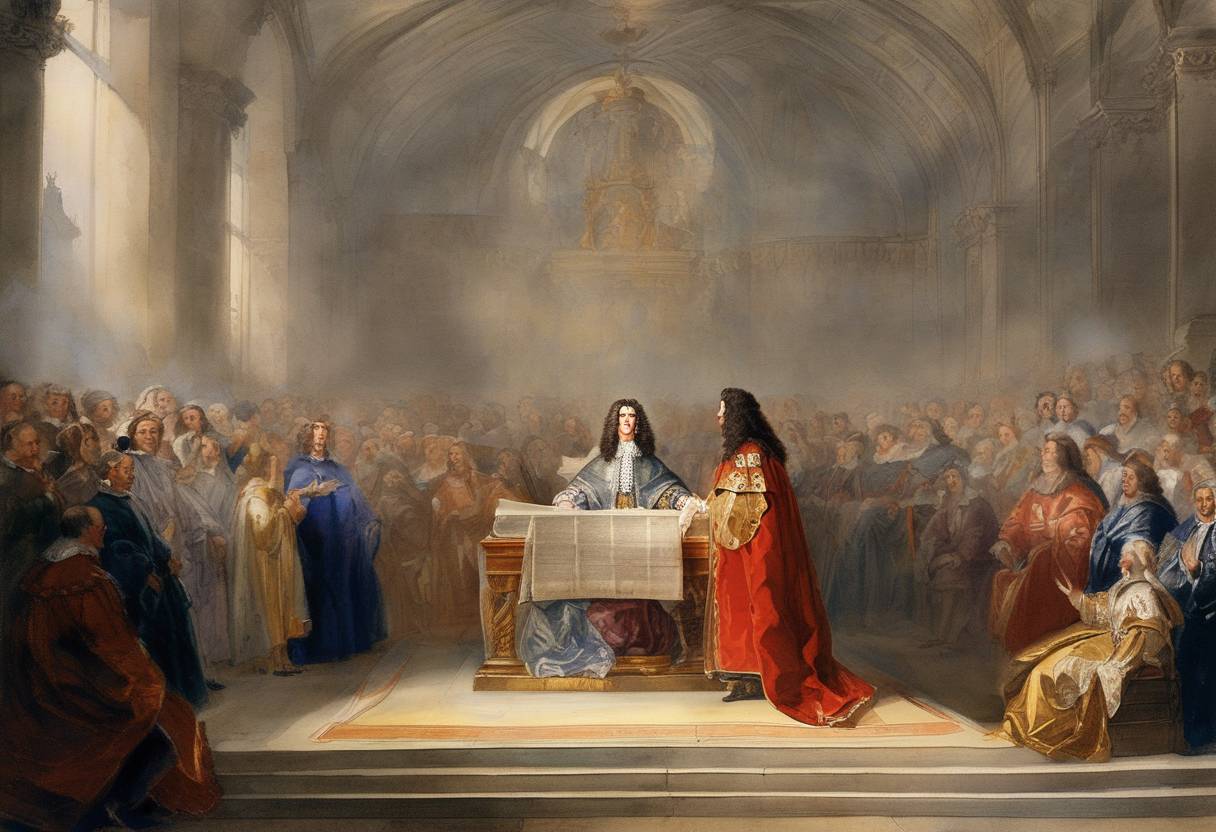
On March 15, 1672, King Charles II of England issued the Royal Declaration of Indulgence, marking a significant moment in the religious and political history of England. This declaration aimed to extend a degree of religious freedom by suspending penal laws against Roman Catholics and Protestant Nonconformists.
The period leading up to this declaration was marked by considerable religious tension in England. The Restoration of the monarchy in 1660, with King Charles II’s ascension, followed years of Puritan rule under Oliver Cromwell. The Anglican Church was re-established as the state church, leading to increased persecution of Roman Catholics and Protestant dissenters who did not conform to its doctrines and practices.
Charles II, who had Catholic sympathies and was potentially influenced by his Catholic brother, the future James II, sought to mitigate religious persecution, partly due to personal beliefs and partly due to practical political reasons, such as fostering internal peace and appeasing allied Catholic nations in Europe.
The Royal Declaration of Indulgence primarily sought to:
The declaration was met with mixed reactions. Protestant Nonconformists generally welcomed the relief it provided from persecution. However, it faced severe opposition from the Anglican establishment and the Parliament, which were suspicious of the king’s Catholic leanings and wary of the absolute power implied by suspending laws unilaterally.
Parliament, dominated by Anglicans, questioned the legality of the declaration citing the king’s overreach by bypassing legislative authority. This led to a crisis, highlighting the ongoing struggle between the monarchy and Parliament concerning the balance of power in the governance of England.
Due to significant parliamentary pressure, Charles II was eventually compelled to withdraw the Royal Declaration of Indulgence in 1673. In its place, Parliament passed the Test Act, which further restricted the rights of Roman Catholics and Nonconformists by requiring public officials to take Anglican communion and disavow Catholic doctrine.
The episode illustrated the deep-seated religious conflict within England during the 17th century and underscored the complex relationship between the monarchy and Parliament. Despite its short duration, the Royal Declaration of Indulgence set a precedent for religious tolerance that would slowly evolve in English society, laying groundwork for later, more enduring changes.
Source: www.britannica.com