Excommunication of Queen Elizabeth I by Pope Pius V
1570 · Rome, Italy
Pope Pius V excommunicated Queen Elizabeth I of England through the papal bull 'Regnans in Excelsis', declaring her a heretic and releasing her subjects from allegiance to her.
July 13, 1534
Pope Paul III excommunicated King Henry VIII of England following his decision to annul his marriage to Catherine of Aragon and his subsequent establishment of the Church of England.
Rome, Italy | Roman Catholic Church
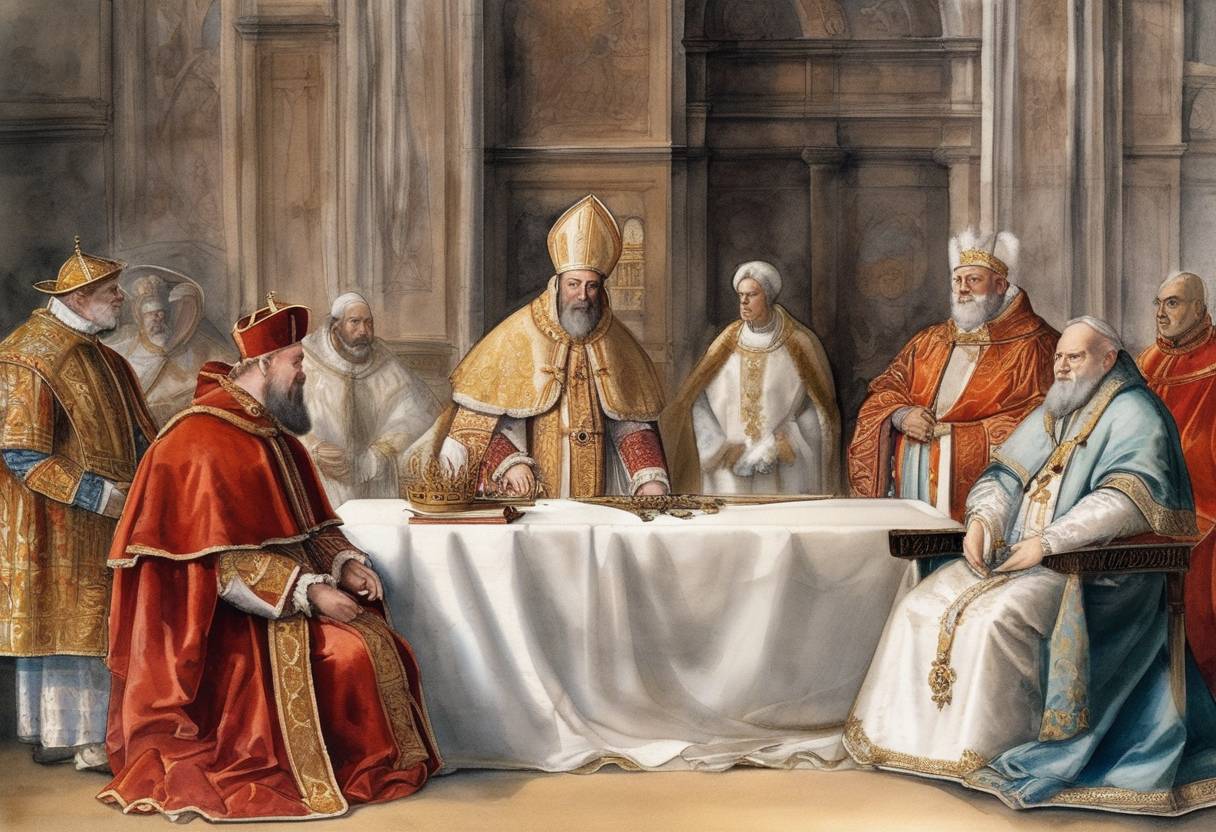
On July 13, 1534, Pope Paul III formally excommunicated King Henry VIII of England. This significant action by the papacy was a culmination of escalating tensions primarily revolving around Henry VIII’s decision to annul his marriage to Catherine of Aragon and establish the Church of England.
Marriage to Catherine of Aragon: King Henry VIII married Catherine of Aragon, his brother’s widow, in 1509. After several failed attempts to produce a male heir, Henry sought an annulment.
Annulment Request: In 1527, Henry petitioned the papacy for an annulment, but Pope Clement VII was hesitant due to pressures from Catherine’s nephew, Charles V, Holy Roman Emperor.
Church of England: Frustrated by the papal refusal, Henry took radical steps by asserting royal supremacy over ecclesiastical matters. In 1533, the Act of Restraint of Appeals was enacted, preventing matters of marriage from being appealed outside England, and in 1534, the Act of Supremacy declared Henry as the Supreme Head of the Church of England.
Defiance of the Papacy: Henry’s actions disentangled English ecclesiastical governance from the papal authority, which was a direct challenge to the Catholic Church’s influence.
Marriage to Anne Boleyn: After initiating proceedings with the Church of England, Henry married Anne Boleyn in a second marriage seen as illegitimate by Rome.
Papal Response: With growing defiance, Pope Paul III ultimately issued a bull of excommunication against Henry in July 1534, formalizing the break between England and the papal authority.
English Reformation: This excommunication was a pivotal moment in the English Reformation, leading to religious transformation and the consolidation of Protestantism in England.
Political and Religious Ramifications: It marked the increase in monarchical power over religious matters and set a precedent for subsequent religious and political conflicts in England and Europe.
Legacy: The move fundamentally altered the landscape of English religious life, leading to further reforms and establishing a framework for religious policies that continued to shape English politics and society.
Pope Paul III’s excommunication of King Henry VIII was not merely a clerical censure but a historical turning point with profound effects on the religious, political, and cultural fabric of England and beyond.
Source: www.britannica.com