Grover Cleveland's First Inauguration as the 22nd President of the United States
1885 · Washington, D.C., United States
Grover Cleveland was inaugurated as the 22nd President of the United States, marking his first term in office.
March 4, 1857
James Buchanan was inaugurated as the 15th President of the United States.
Washington, D.C., United States | United States Government
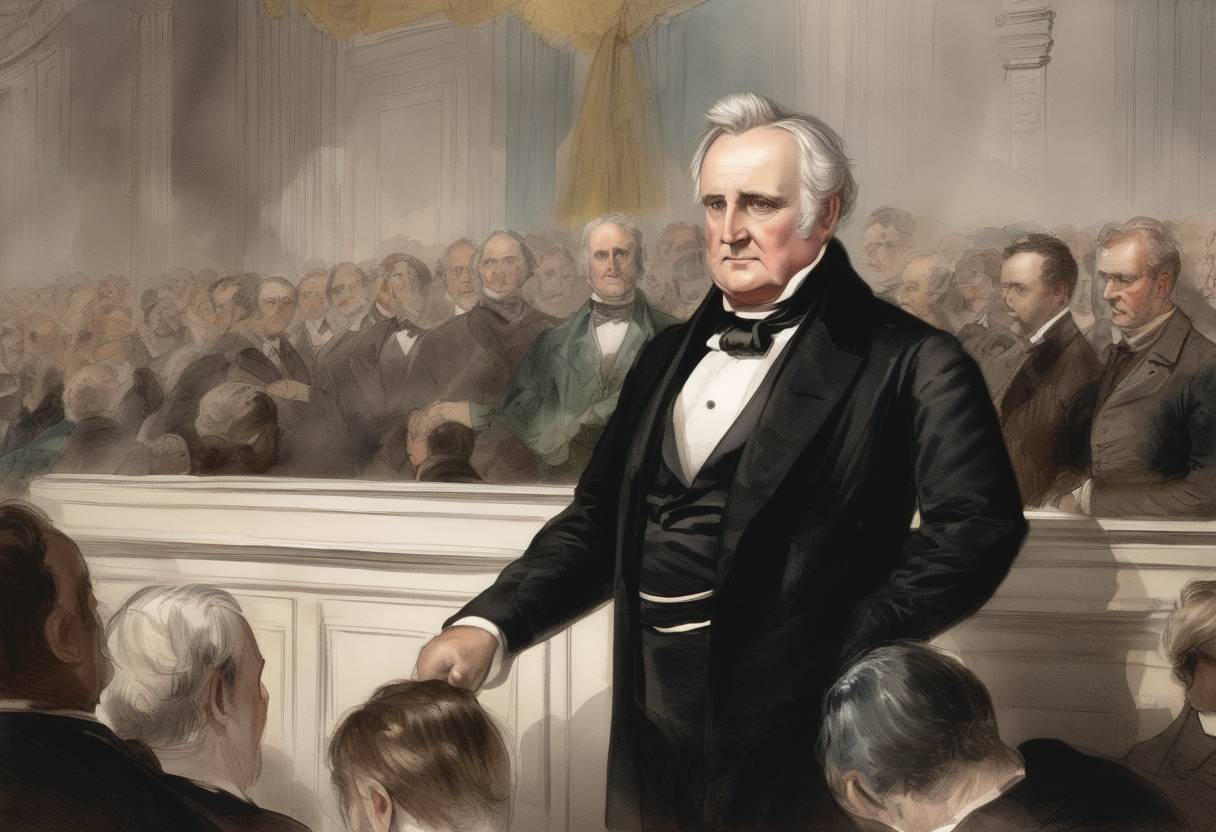
On March 4, 1857, James Buchanan was inaugurated as the 15th President of the United States. His inauguration took place at the East Portico of the United States Capitol in Washington, D.C. Buchanan, a Democrat from Pennsylvania, succeeded Franklin Pierce and was the only bachelor president in U.S. history.
James Buchanan was a seasoned diplomat and politician before becoming president, having served as a member of the U.S. House of Representatives, U.S. Senate, Secretary of State under President James K. Polk, and U.S. Minister to the United Kingdom. His extensive experience in foreign and domestic affairs was a key factor in his election. Buchanan was seen as a moderate on the issue of slavery, which was an escalating national divide at the time.
In his inaugural address, Buchanan emphasized his belief in the importance of upholding the Union and maintaining peace among the states, expressing hope that the Supreme Court would soon settle the question of slavery in the territories. He famously noted the importance of preserving the Constitution and laws of the land while expressing a desire for compromise and harmony.
Buchanan’s presidency began amid growing tensions over slavery, with debates intensifying over whether new states and territories should be free or slave-holding. He expressed support for the upcoming Supreme Court decision in the case of Dred Scott v. Sandford, hoping it would resolve these tensions. The decision, announced days after his inauguration, ruled that African Americans could not be citizens and that Congress had no power to regulate slavery in the territories, which further inflamed sectional divisions.
Buchanan’s presidency is often criticized for his inability to stem the rising tide of sectional tensions that would culminate in the Civil War. His administration’s policies, particularly regarding the enforcement of the Dred Scott decision and support for pro-slavery interests, alienated many in the North while failing to appease the South. Buchanan chose not to run for a second term, and his successor, Abraham Lincoln, would face the secession crisis and the outbreak of the Civil War.
James Buchanan remains a controversial figure in American history, often ranked among the nation’s least effective presidents due to his leadership during one of the most divisive and critical periods in U.S. history. His inauguration marked the beginning of a presidency defined by its challenges and shortcomings in addressing the country’s most pressing issue at the time: the future of slavery and the Union.
Source: www.whitehouse.gov