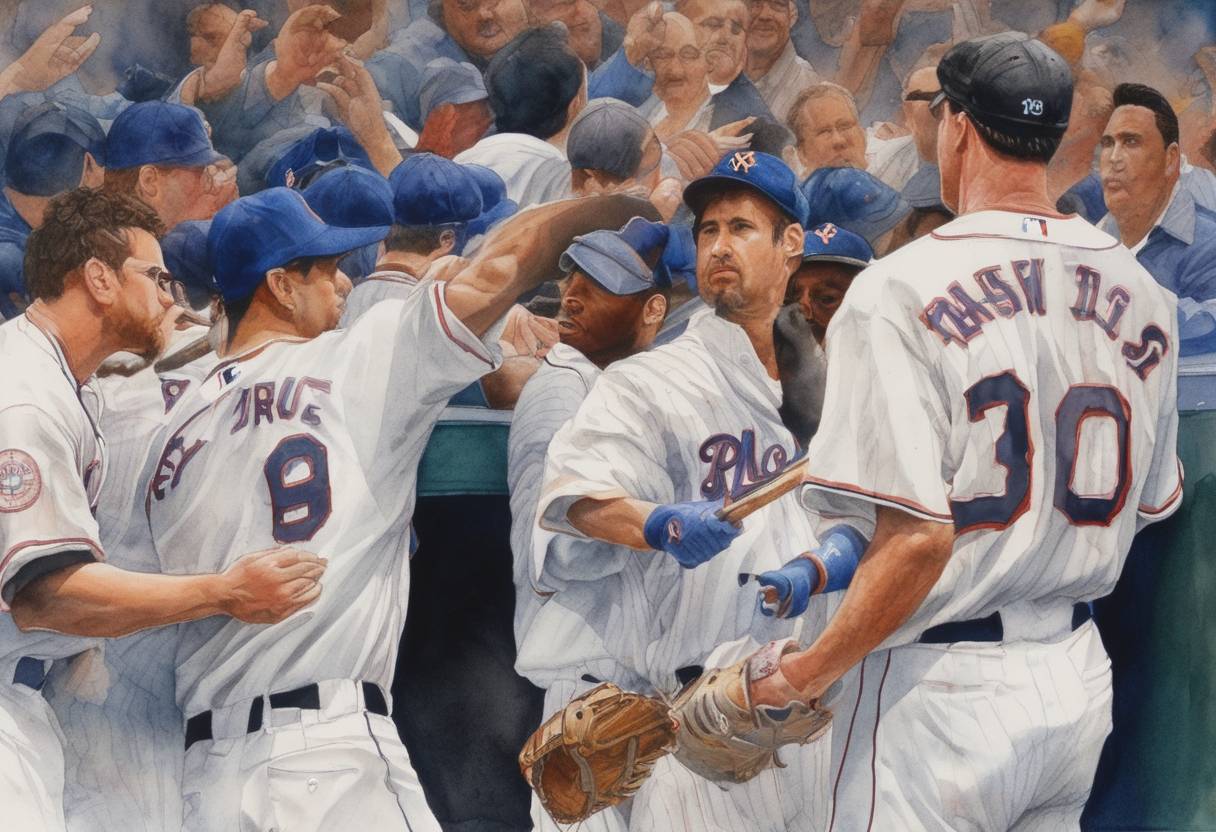
1994 Major League Baseball Players’ Strike
On August 12, 1994, Major League Baseball (MLB) players initiated a strike that resulted in one of the most significant work stoppages in the sport’s history, leading to the cancellation of the remainder of the season and the World Series for the first time since 1904. The strike, which began when players walked off the field, was driven by discord between the MLB Players Association and team owners over critical issues like salary caps and revenue sharing.
Context and Causes
- Labor Relations: The strike was rooted in longstanding labor disputes. Previous agreements had resulted in short-term resolutions, but fundamental financial disparities remained unresolved.
- Salary Cap Proposal: Team owners were pressing for the implementation of a salary cap, aiming to control player salaries and ensure competitive balance between larger and smaller market teams.
- Revenue Sharing: Another point of contention was the distribution of revenue. Owners sought to increase revenue sharing, which would redistribute profits from lucrative teams to teams earning less, theoretically leveling the playing field.
Key Events Leading Up to the Strike
- Negotiations Breakdown: The failure of negotiations between the MLB Players Association and team owners reached a head in late July and early August 1994. The parties could not reach an agreement on the new collective bargaining agreement.
- Notice of Strike: Players announced their intention to strike if an agreement was not reached by August 12. With negotiations stalling, the strike commenced as scheduled on August 12.
Impact and Consequences
- Cancellation of the 1994 Season: On September 14, 1994, MLB Commissioner Bud Selig announced the cancellation of the remainder of the season, including the World Series. This marked the first time since 1904 that the World Series was not held.
- Economic Impact: The strike had substantial economic repercussions for players, team staff, media, and local businesses dependent on game-day activities and tourism.
- Public Sentiment: The cancellation of the World Series damaged the relationship between fans and MLB, leading to a decline in viewership and attendance that took years to recover.
Aftermath
- Resolution in 1995: The strike ended on April 2, 1995, after 232 days, making it the longest strike in MLB history. The season eventually began in late April, with a shortened 144-game schedule.
- No Salary Cap: The players successfully opposed the owners’ plan for a salary cap, which was never implemented. The eventual agreement maintained free agency approaches and established luxury taxes as a compromise.
The 1994 strike stands as a defining moment in MLB history, illustrating the tensions between labor and management and emphasizing the critical nature of collective bargaining in professional sports.