1542 · Linlithgow, Scotland
Mary, Queen of Scots, was born.
August 15, 1771
Walter Scott, a renowned Scottish historical novelist and poet who created the historical novel genre, was born.
Edinburgh, Scotland
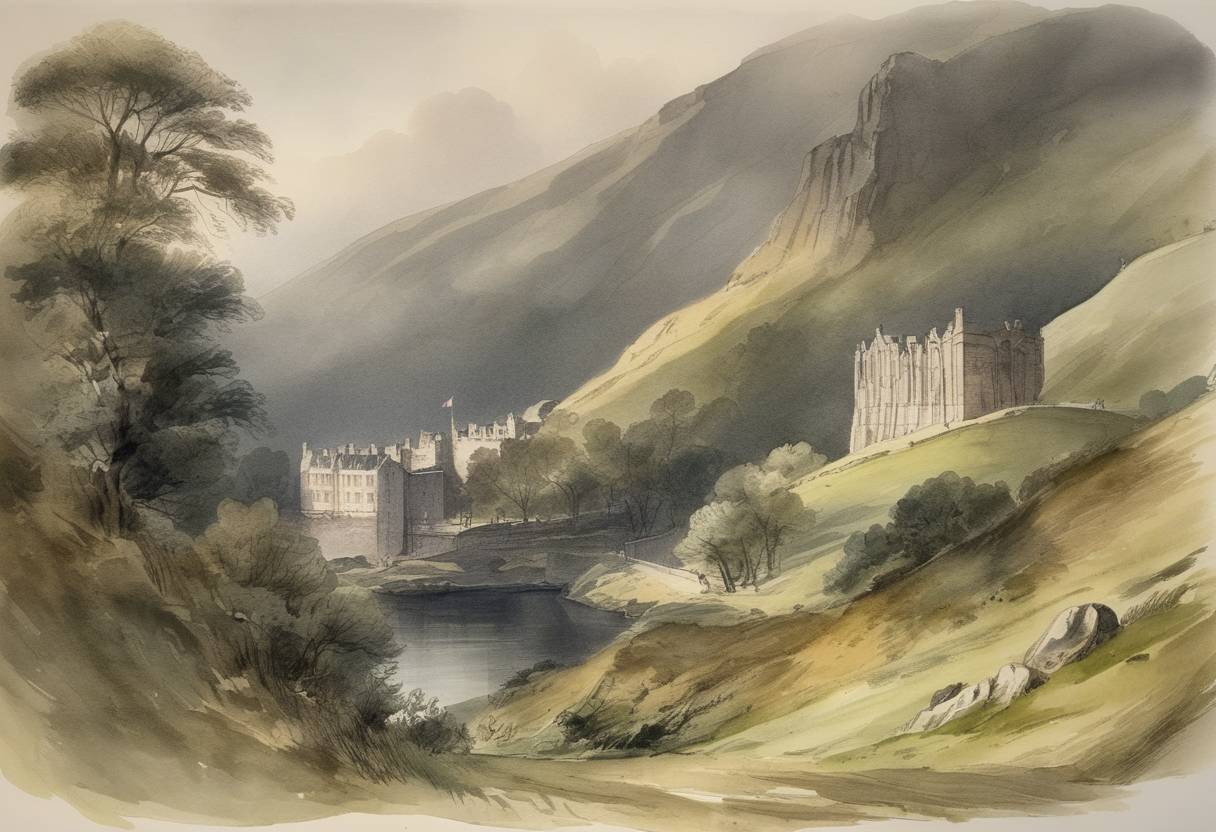
Walter Scott, born on August 15, 1771, in Edinburgh, Scotland, emerged as a seminal figure in literature, renowned for pioneering the historical novel genre. Scott’s works elegantly interwove historical events with fiction, bringing history to life for his readers and significantly influencing 19th-century literature.
Walter Scott was born to a wealthy Scottish family. His father, also named Walter Scott, was a solicitor, and his mother, Anne Rutherford, the daughter of a professor of medicine at the University of Edinburgh. Coming from a prosperous background, Scott was exposed to a rich literary and cultural environment from an early age. He was afflicted by polio as a child, leading to a lifelong limp, but this did not deter his academic pursuits.
Scott studied classics at the prestigious Edinburgh High School and later attended the University of Edinburgh. Initially training to follow in his father’s footsteps in law, he was admitted to the Faculty of Advocates in 1792. However, his passion for literature soon overshadowed his legal career. His fascination with the history and culture of Scotland inspired his literary endeavors.
Walter Scott’s literary career began with poetry. His first major work, “The Lay of the Last Minstrel” (1805), received wide acclaim. However, it was his transition into prose that secured his lasting legacy. Scott’s first novel, “Waverley” (1814), set during the Jacobite uprising in 1745, pioneered the historical novel genre. This was followed by classics such as “Rob Roy,” “The Heart of Midlothian,” and “Ivanhoe.”
Scott’s narratives were marked by their detailed historical contexts, vivid characterizations, and captivating storytelling. His use of dialects and depictions of Scottish traditions significantly contributed to the preservation and popularization of Scottish culture.
Walter Scott’s works have had a profound and lasting impact on both literature and the cultural identity of Scotland. His novels not only entertained but also provided insight into Scotland’s turbulent history and the complexity of human nature. As the “great magician” of the novel, Scott’s influence is seen in the works of subsequent novelists, who embraced and expanded upon the historical novel form he popularized.
Scott’s contribution to literature extended beyond his storytelling; he was also a key figure in the resurgence of Scottish cultural pride and identity. Through his detailed historical reconstructions and romanticized depictions of the Scottish past, he helped shape the way Scotland was perceived both nationally and internationally.
Source: www.britannica.com