Completion of the Atlantic Cable - July 27, 1866
1866 · Heart's Content, Canada
The Atlantic Cable was successfully completed, allowing for telegraphic communication between Europe and North America.
August 16, 1858
U.S. President James Buchanan inaugurated the first transatlantic telegraph cable by exchanging greetings with Queen Victoria of the United Kingdom.
Washington, D.C., United States | Atlantic Telegraph Company
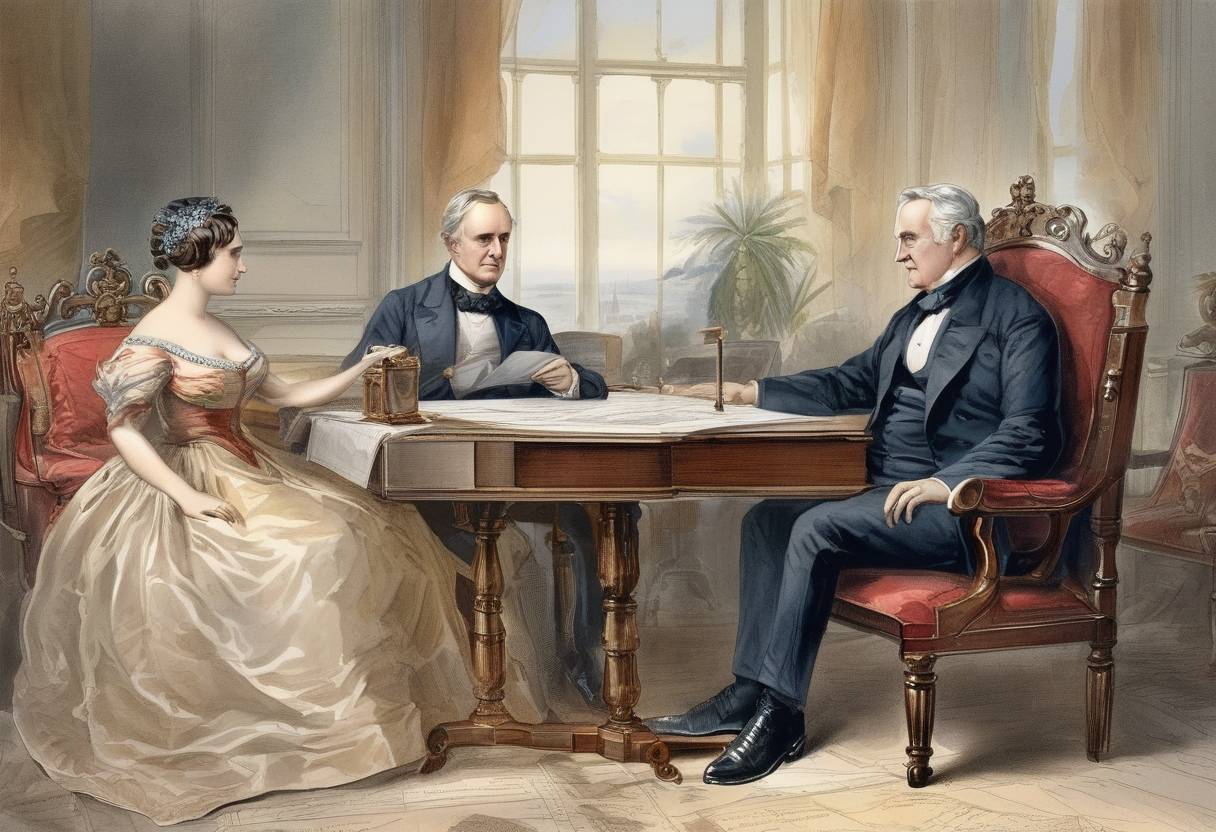
On August 16, 1858, a significant milestone in communication history was achieved when U.S. President James Buchanan and Queen Victoria of the United Kingdom exchanged formal greetings through the first transatlantic telegraph cable. This event marked a new era in international communication, drastically reducing the time it took to send messages across the Atlantic Ocean.
Before the transatlantic telegraph cable, communication between North America and Europe relied on ships, which could take weeks to deliver messages. The idea of a submarine telegraph cable was proposed in the early 1850s, with American entrepreneur Cyrus West Field playing a pivotal role in its realization. Field, along with the Atlantic Telegraph Company, spearheaded the project, which involved laying a cable across the Atlantic Ocean from Valentia Island in Ireland to Heart’s Content in Newfoundland, Canada.
The successful laying of the cable was completed on August 5, 1858, after several failed attempts. On August 16, President Buchanan sent a congratulatory message to Queen Victoria, which took approximately 17 hours to transmit. In response, Queen Victoria sent a message back, expressing her hope that the cable would serve as an “additional link between the nations whose friendship is founded on their mutual interest and reciprocal esteem.”
The inauguration of the transatlantic telegraph cable was a groundbreaking achievement in the field of communication. It symbolized the beginning of a new era where information could be exchanged almost instantaneously across great distances, fostering closer diplomatic and economic ties between Europe and North America.
Despite the initial success, the cable ceased to function after just three weeks due to technical issues, including the degradation of the cable’s insulation. It wasn’t until 1866 that a more durable and reliable cable was successfully laid, permanently establishing transatlantic telegraph communication.
The event underscored the potential of global communication networks and paved the way for future technological advancements, ultimately leading to the interconnected world we experience today.
Source: en.wikipedia.org