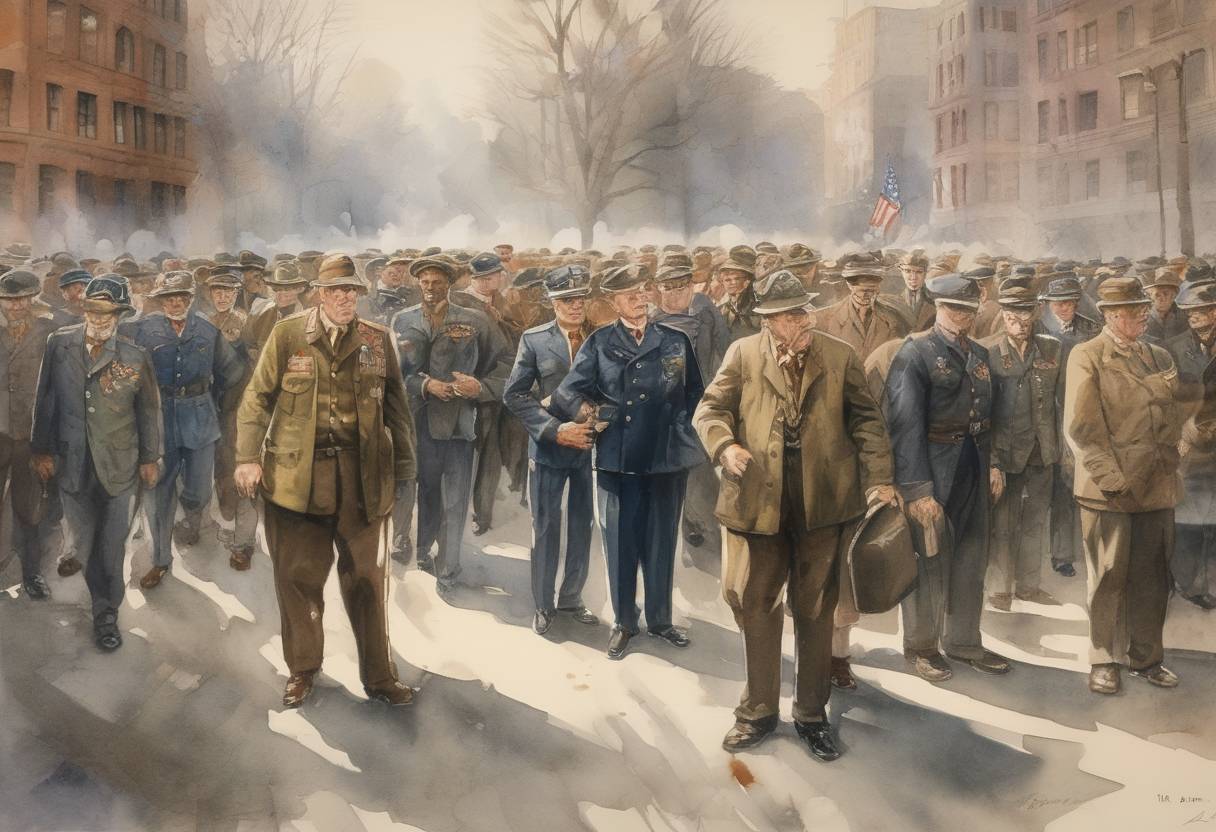
The Bonus Army Dispersal: July 28, 1932
On July 28, 1932, a significant and somber event unfolded in Washington, D.C., involving a group known as the Bonus Army. This group consisted of approximately 43,000 demonstrators, including 17,000 World War I veterans, their families, and affiliated groups. They had gathered in the nation’s capital to demand early payment of a promised bonus for their military service.
Background
- The Bonus Act of 1924: After World War I, the U.S. Congress passed the Adjusted Compensation Act, which promised veterans a bonus for their service. However, the payment was not scheduled to be disbursed until 1945.
- The Great Depression: By the early 1930s, the United States was in the grip of the Great Depression. Many veterans were unemployed and destitute, prompting them to seek immediate payment of their bonuses to alleviate their financial hardships.
The Protest
- Arrival in Washington, D.C.: Beginning in May 1932, veterans and their families began arriving in Washington, D.C., setting up camps and shantytowns, the largest of which was located on Anacostia Flats.
- Peaceful Demonstrations: The Bonus Army conducted peaceful protests and lobbied Congress for early payment. Despite their efforts, the Senate rejected a bill that would have authorized the immediate disbursement of the bonuses.
The Dispersal
- President Herbert Hoover’s Decision: Concerned about the potential for unrest and the unsanitary conditions of the camps, President Herbert Hoover ordered the removal of the Bonus Army.
- Military Action: On July 28, 1932, U.S. Army troops, led by General Douglas MacArthur and assisted by Major Dwight D. Eisenhower and Major George S. Patton, were deployed to clear the veterans from the capital.
- Confrontation and Aftermath: The operation involved the use of tear gas and bayonets, resulting in the destruction of the camps and the forcible removal of the veterans. The confrontation led to injuries and the death of two veterans.
Consequences and Historical Significance
- Public Outcry: The violent dispersal of the Bonus Army was met with widespread public criticism and damaged President Hoover’s reputation, contributing to his defeat in the 1932 presidential election.
- Legacy: The event highlighted the struggles of veterans and the broader economic challenges of the Great Depression. It also underscored the need for better support systems for veterans, influencing future policies.
The Bonus Army incident remains a poignant example of the intersection between military service, economic hardship, and government policy, reflecting the broader social and political challenges of the era.