Launch of the Ford Model A - December 2, 1927
1927 · Dearborn, United States
The Ford Model A was launched, marking a significant advancement in automobile design and manufacturing after the success of the Model T.
August 12, 1908
The first Model T Ford was built at the Piquette Plant in Detroit, Michigan, marking a significant milestone in automotive history and the beginning of mass automobile production.
Detroit, United States | Ford Motor Company
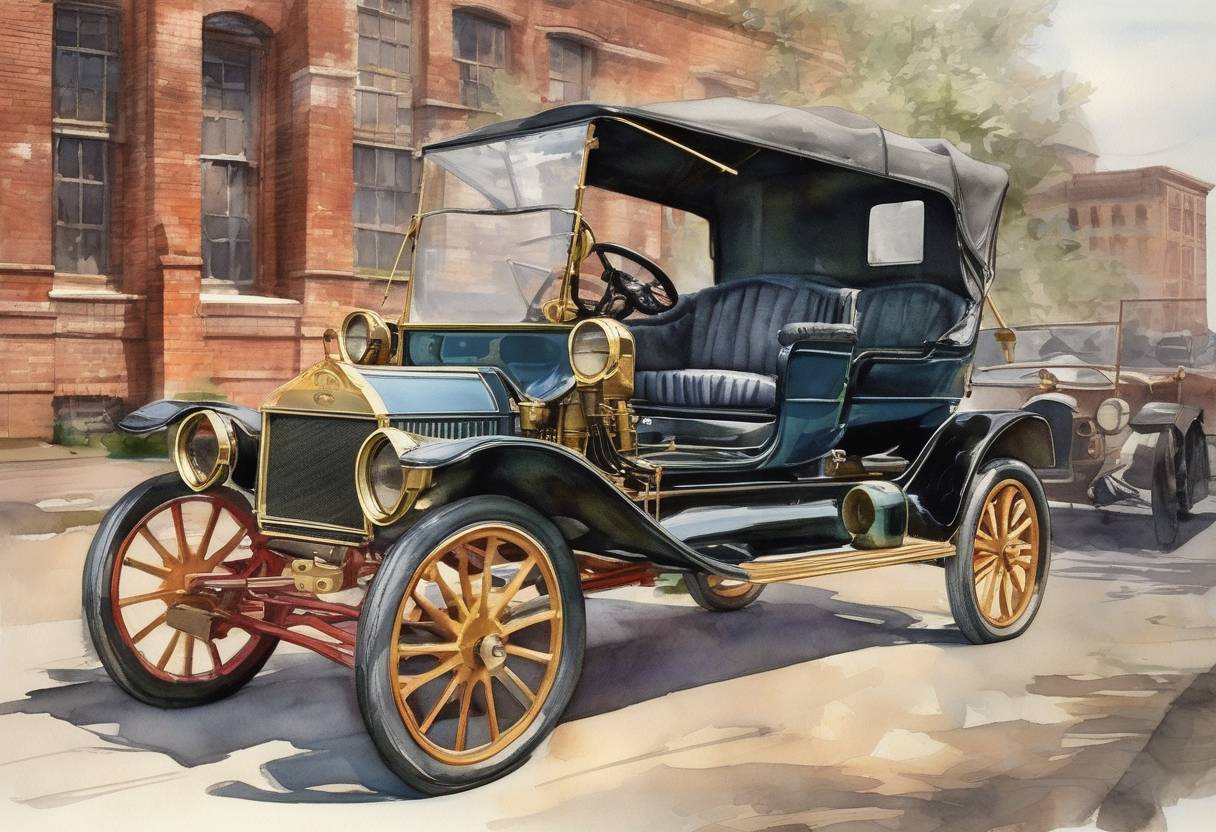
On August 12, 1908, the first Model T Ford was built at the Piquette Plant in Detroit, Michigan. This event marked a significant milestone in the history of the automotive industry and heralded the beginning of mass automobile production.
Henry Ford and the Ford Motor Company: Founded in 1903 by Henry Ford and a group of investors, the Ford Motor Company aimed to produce affordable automobiles for the general public. Prior to the Model T, Ford had produced several models, but none achieved the widespread success he envisioned.
Automobile Industry in the Early 1900s: At the time, automobiles were largely considered luxury items, accessible only to the wealthy. The production methods were labor-intensive and costly, limiting the scale and affordability of cars.
Design and Features: The Model T, also known as the “Tin Lizzie,” was designed to be simple, durable, and affordable. It featured a 20-horsepower, four-cylinder engine and was capable of reaching speeds of up to 45 miles per hour. Its design emphasized ease of maintenance and operation.
Affordability and Accessibility: Priced initially at $850, the Model T was significantly cheaper than most other cars on the market. Over time, the price dropped further due to innovations in production, making it accessible to a broader segment of the population.
Innovations in Manufacturing: The production of the Model T at the Piquette Plant initially followed traditional methods. However, in 1913, Ford revolutionized manufacturing with the introduction of the moving assembly line at the Highland Park Plant. This innovation drastically reduced production time and costs.
Impact on the Industry: The assembly line allowed Ford to produce cars at an unprecedented scale, leading to the mass production era in the automotive industry. By 1927, when production of the Model T ended, over 15 million units had been sold.
Economic and Social Impact: The affordability of the Model T transformed transportation, enabling greater mobility and contributing to the growth of suburbs. It also stimulated industries such as steel, rubber, and oil, significantly impacting the U.S. economy.
Cultural Influence: The Model T became a symbol of innovation and the American spirit of progress. It democratized travel and had a lasting influence on American culture and society.
In summary, the construction of the first Model T Ford on August 12, 1908, was a pivotal moment in automotive history. It not only marked the beginning of mass automobile production but also had profound economic, social, and cultural impacts that resonated well beyond the automotive industry.
Source: en.wikipedia.org