Firebombing of Tokyo - March 9-10, 1945
1945 · Tokyo, Japan
The United States conducted a massive firebombing raid on Tokyo, Japan, during World War II, resulting in extensive destruction and loss of life.
April 18, 1942
The Doolittle Raid took place, where 16 American B-25 bombers launched from the USS Hornet to conduct an air raid on Tokyo and other locations on Honshu during World War II, marking the first air operation to strike the Japanese archipelago.
Tokyo, Japan | United States Army Air Forces
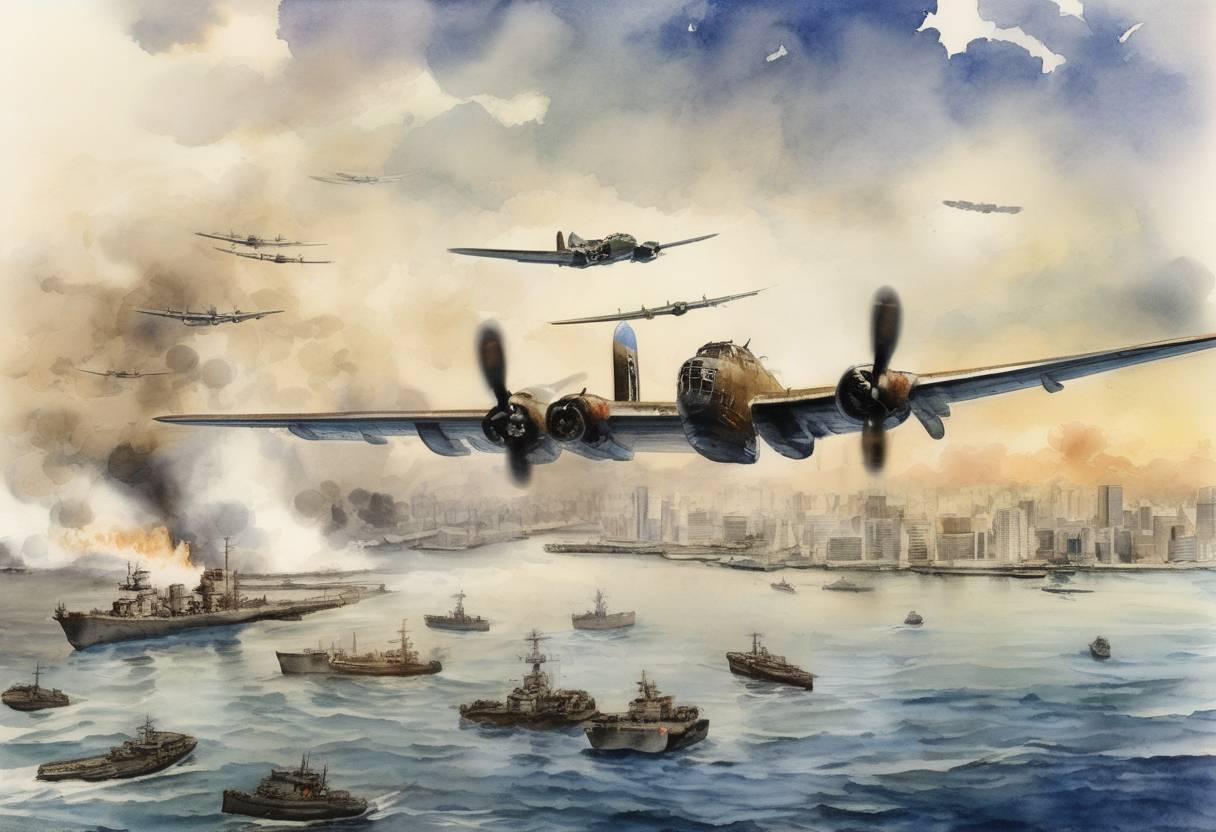
The Doolittle Raid, conducted on April 18, 1942, was a pivotal moment in World War II, marking the first air operation to strike the Japanese archipelago. This audacious mission involved 16 American B-25 Mitchell bombers launching from the USS Hornet, targeting Tokyo and other locations on Honshu.
In the months following the attack on Pearl Harbor on December 7, 1941, the United States sought a way to retaliate against Japan and boost American morale. The idea for a carrier-based air raid on Japan was proposed by Navy Captain Francis Low and developed by Lieutenant Colonel James H. Doolittle, who led the mission.
Training and Modifications: The B-25 bombers were chosen for their range and payload capacity. Pilots underwent intensive training for short takeoffs, as the bombers had to launch from the deck of an aircraft carrier, a feat never before attempted with such large aircraft.
Launch from the USS Hornet: On April 2, 1942, the USS Hornet departed from San Francisco with the 16 bombers aboard. The task force, which included the USS Enterprise providing air cover, sailed to a launch point approximately 650 miles east of Japan.
Early Launch: On the morning of April 18, the task force was spotted by a Japanese patrol boat. Although the boat was sunk, the decision was made to launch the bombers earlier than planned, at a distance of about 650 nautical miles from Japan, rather than the intended 450 miles.
Targets and Impact: The bombers targeted military and industrial sites in Tokyo, Yokohama, Yokosuka, Nagoya, and Kobe. While the physical damage was relatively minor, the psychological impact on Japan was significant, as it demonstrated that the Japanese mainland was vulnerable to American air attacks.
Aftermath for the Crews: After completing their bombing runs, the crews faced the challenge of reaching safety in China. Due to fuel shortages and adverse weather, most of the aircraft crash-landed or were abandoned. Of the 80 airmen, 69 survived, while 8 were captured by Japanese forces, and 3 were executed.
Boost to American Morale: The raid provided a much-needed boost to American morale and demonstrated the United States’ capability to strike back at Japan.
Japanese Strategic Shift: In response, Japan diverted resources to homeland defense and accelerated plans for the Midway operation, which would become a turning point in the Pacific War.
Legacy: The Doolittle Raid is remembered as a daring and innovative military operation, showcasing the bravery and ingenuity of the American forces. It also highlighted the strategic importance of aircraft carriers in modern naval warfare.
The Doolittle Raid remains a symbol of resilience and determination, illustrating how a bold and unexpected strike can have far-reaching effects in the course of a conflict.
Source: en.wikipedia.org