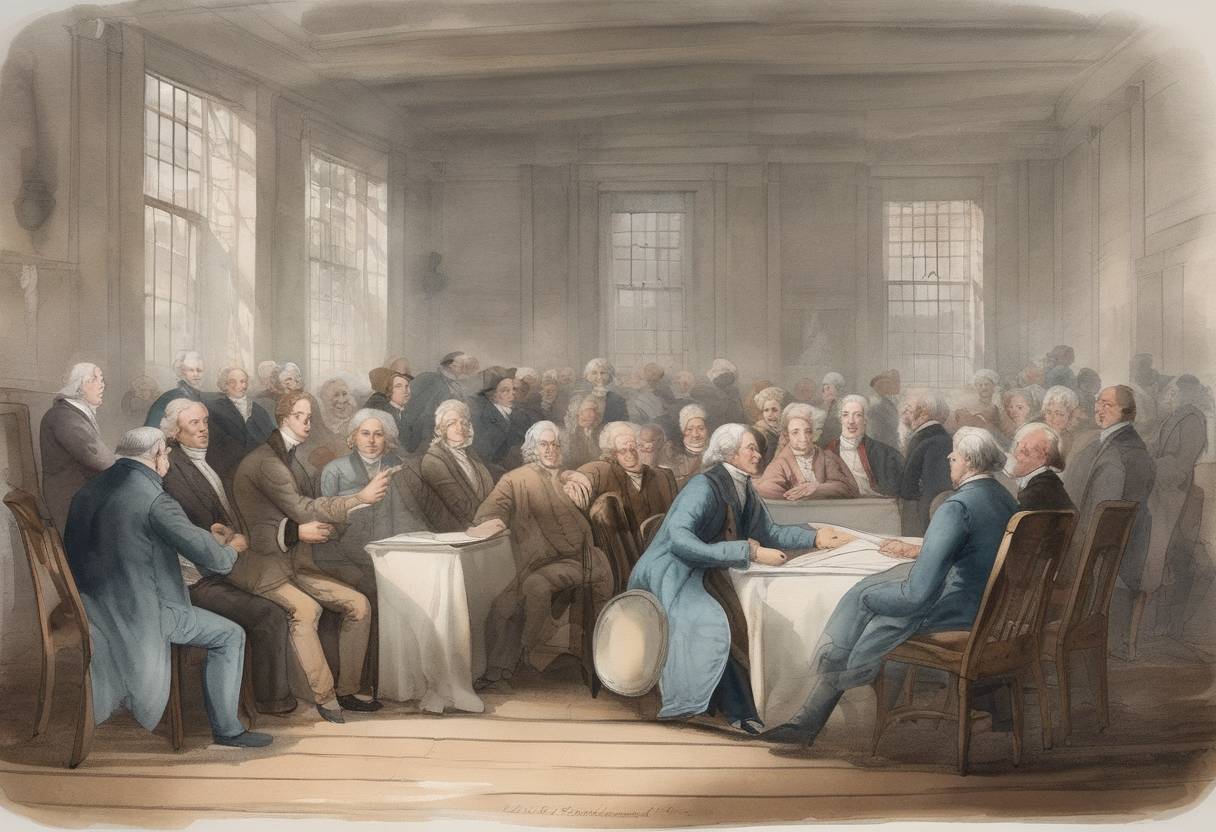
The Quaker Petition to Abolish Slavery: February 11, 1790
On February 11, 1790, the Religious Society of Friends, commonly known as Quakers, submitted a petition to the United States Congress calling for the abolition of slavery. This event marked one of the earliest organized efforts to end slavery in the United States, reflecting the Quakers’ longstanding commitment to social justice and equality.
Historical Context
The Quakers, originating in England in the mid-17th century, were known for their progressive views on social issues, including their opposition to slavery. By the late 18th century, the Quakers had established a strong presence in the American colonies, particularly in Pennsylvania, where they played a significant role in the colony’s founding.
The Quakers’ opposition to slavery was rooted in their religious beliefs, which emphasized the equality of all people before God. This conviction led them to become one of the first religious groups to formally denounce slavery and advocate for its abolition.
The Petition
The petition presented to Congress in 1790 was spearheaded by prominent Quaker leaders, including Benjamin Franklin, who had recently become the president of the Pennsylvania Abolition Society. The petition called for Congress to “devise means for removing the inconsistency from the character of the American people” and to “promote mercy and justice toward this distressed race.”
The petition was significant not only for its content but also for its timing. It was submitted just a few years after the ratification of the U.S. Constitution, during the first session of the newly formed Congress. This was a period when the young nation was grappling with its identity and the principles it would uphold.
Congressional Response
The petition was met with mixed reactions in Congress. While some members, particularly those from Northern states, were sympathetic to the Quakers’ cause, others, especially from Southern states, were vehemently opposed. The debate highlighted the deep divisions within the country over the issue of slavery.
Ultimately, Congress decided to table the petition, effectively postponing any immediate action. However, the submission of the petition and the ensuing debate marked an important moment in the history of the abolitionist movement in the United States.
Broader Historical Significance
The Quaker petition of 1790 was a precursor to the more organized and widespread abolitionist movements that would emerge in the 19th century. It demonstrated the potential for religious and moral arguments to influence political discourse and laid the groundwork for future advocacy against slavery.
The petition also underscored the role of the Quakers as pioneers in the fight for social justice in America. Their efforts would inspire subsequent generations of abolitionists and contribute to the eventual abolition of slavery with the ratification of the 13th Amendment in 1865.
In summary, the Quaker petition to Congress in 1790 was a landmark event in the history of American abolitionism, reflecting the enduring impact of religious conviction on social and political change.