Reclassification of Pluto: The IAU Decision on August 25, 2006
2006 · Prague, Czech Republic
The International Astronomical Union (IAU) redefined the term 'planet,' which led to the reclassification of Pluto as a 'dwarf planet.'
June 21, 2006
Pluto's newly discovered moons, Nix and Hydra, are officially named by the International Astronomical Union.
Paris, France | International Astronomical Union
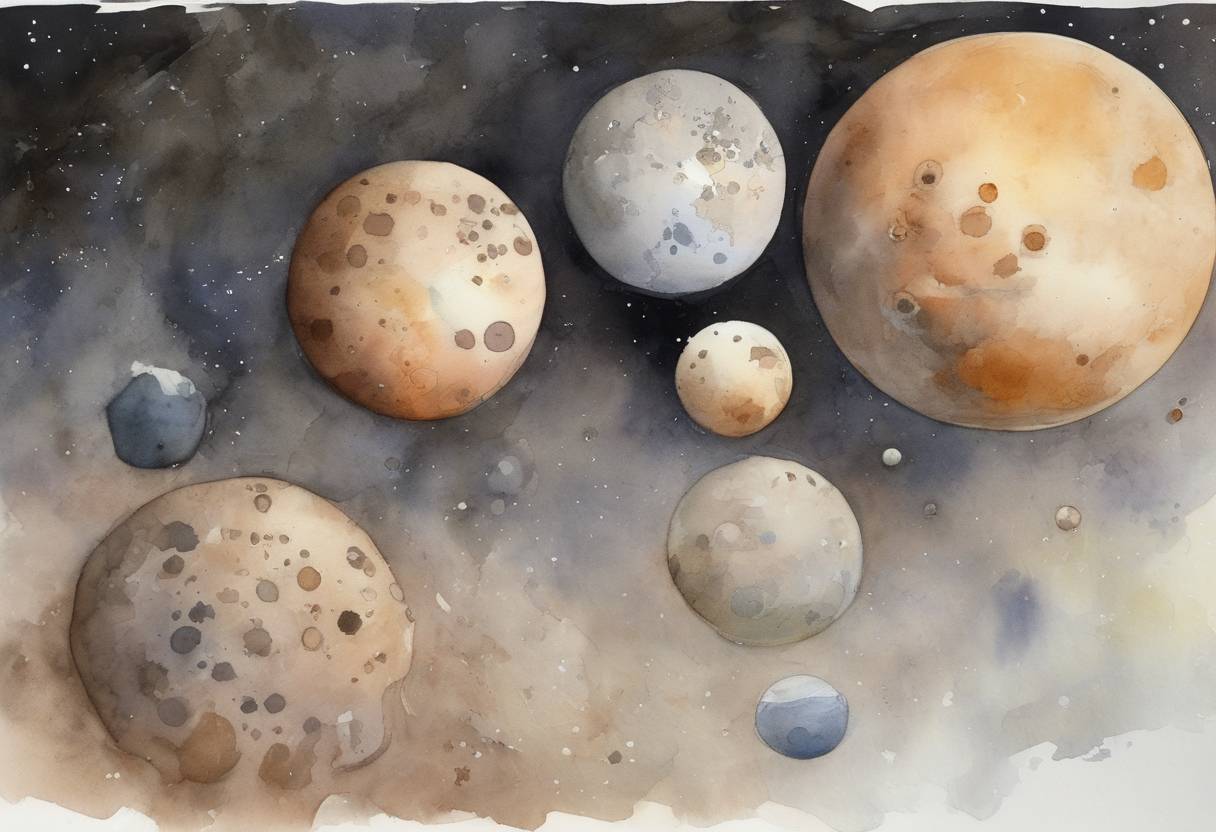
On June 21, 2006, the International Astronomical Union (IAU) officially named two of Pluto’s moons, Nix and Hydra. This marked a significant moment in the study of the outer solar system and the ongoing exploration of Pluto and its satellites.
Nix and Hydra were discovered in 2005 by a team of astronomers using the Hubble Space Telescope. The team, led by Hal Weaver and Alan Stern, identified these moons while conducting observations to search for additional satellites around Pluto. The discovery was announced in October 2005, adding to the known celestial bodies orbiting Pluto, which at the time included its largest moon, Charon.
The names “Nix” and “Hydra” were chosen following the tradition of naming Pluto’s moons after mythological figures associated with the underworld, reflecting Pluto’s namesake, the Roman god of the underworld.
Nix: Named after Nyx, the Greek goddess of the night, the name was slightly altered to “Nix” to avoid confusion with an asteroid named “Nyx.” Nix is the smaller of the two moons and is known for its reddish color, which is unusual among Pluto’s moons.
Hydra: Named after the nine-headed serpent that guarded the underworld in Greek mythology, Hydra is the outermost of Pluto’s known moons. It is slightly larger than Nix and has a more reflective surface.
The naming of Nix and Hydra was a pivotal step in the characterization of Pluto’s satellite system. These moons, along with Charon, provide valuable insights into the formation and evolution of the Pluto system. The discovery of additional moons around Pluto also contributed to the debate about Pluto’s classification, which culminated in the IAU’s decision to reclassify Pluto as a “dwarf planet” later in 2006.
The discovery and subsequent naming of Nix and Hydra set the stage for further exploration of the Pluto system. This culminated in the New Horizons mission, which conducted a flyby of Pluto in July 2015, providing unprecedented images and data about Pluto and its moons, including Nix and Hydra. The mission’s findings have significantly enhanced our understanding of these distant celestial bodies and their characteristics.
In summary, the official naming of Nix and Hydra by the IAU on June 21, 2006, was a key milestone in the exploration of Pluto, highlighting the dynamic and complex nature of this distant dwarf planet and its moons.
Source: en.wikipedia.org