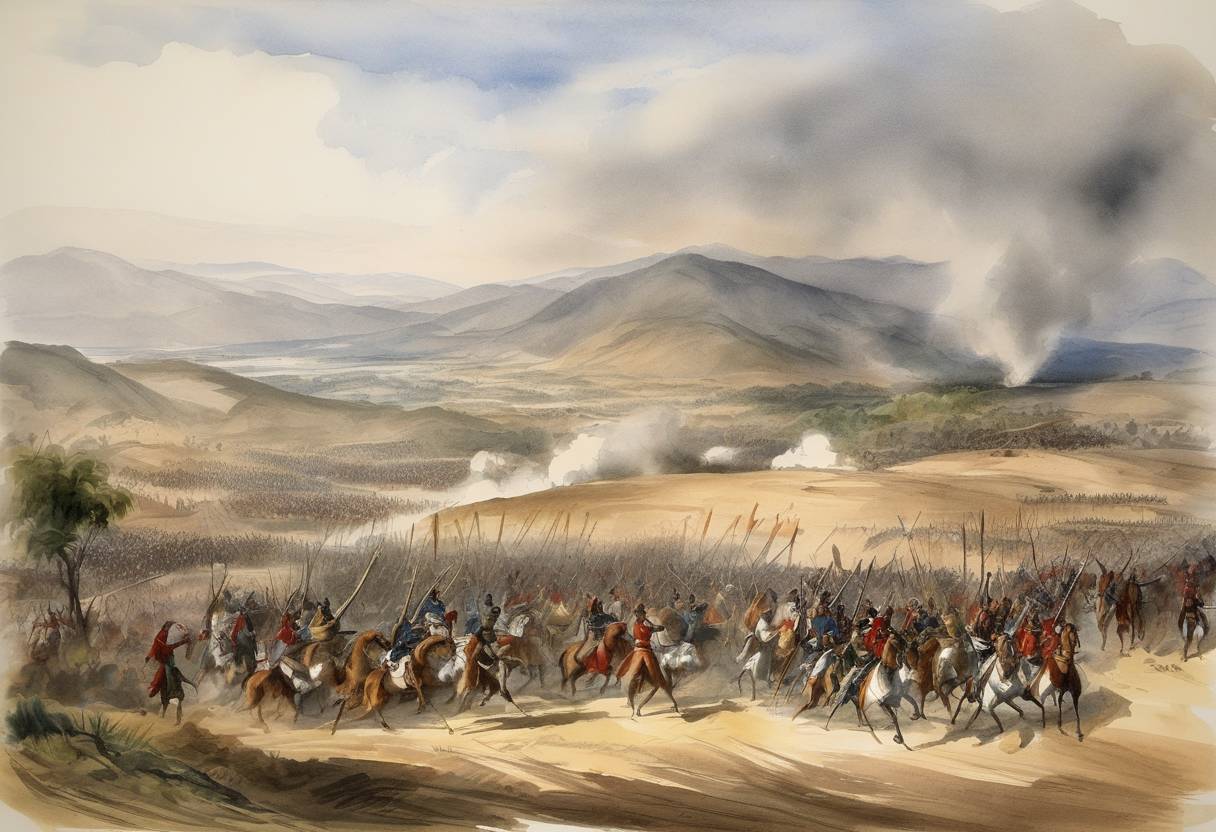
British Expedition to Abyssinia: The Capture of Magdala
The event described—an army led by Sir Robert Napier attacking the fortress of Magdala during the British Expedition to Abyssinia—did not occur on November 27, 1868. Instead, it took place earlier in the year, with the climax occurring on April 10-13, 1868.
Background
The British Expedition to Abyssinia was initiated in response to a diplomatic crisis involving the imprisonment of British diplomats and missionaries by Emperor Tewodros II of Ethiopia (then Abyssinia). Tewodros sought military assistance from Britain to modernize his army, but when his requests were ignored, he took hostages to leverage support. This prompted the British government to plan a military expedition to secure the release of the captives and discipline Tewodros.
The Expedition
Under the command of Sir Robert Napier, a well-organized force of approximately 13,000 British and Indian troops departed from Bombay (now Mumbai) and landed at the Red Sea port of Zula. The expedition was a logistical triumph, involving an intricate supply chain and the construction of a railway to transport troops and supplies across the challenging terrain leading to Magdala, the fortress capital of Tewodros.
The Attack on Magdala
On April 10, 1868, Napier’s forces reached Magdala, where Emperor Tewodros’ troops, numbering around 5,000, were stationed within the defenses of the fortress. On April 13, following a short and intense battle, the British successfully breached the defenses of Magdala. The superior firepower and organization of Napier’s forces quickly overwhelmed Tewodros’ defenders.
Recognizing the hopelessness of his situation and preferring death over capture, Emperor Tewodros II took his own life with a pistol gifted to him by Queen Victoria. The British troops subsequently liberated the hostages and seized numerous treasures comprising significant Ethiopian artifacts and manuscripts.
Aftermath and Significance
The expedition effectively demonstrated British military prowess and logistical capabilities, with minimal British casualties. The substantial cost of the operation, however, was a point of contention back home. The collapse of Tewodros’ regime marked a significant turning point in Ethiopian history, contributing to a period of succession struggles and internal turmoil.
The captured artifacts, some of which remain in British institutions, have been the subject of repatriation debates in recent years, symbolizing broader discussions on colonial-era looting and its lasting implications.
Conclusion
Though the event didn’t occur on the initially mentioned date, the successful British assault on Magdala exemplifies a stark episode of military intervention during the 19th-century expansion of British imperial interests, with lingering cultural and diplomatic ramifications.