Establishment of Moscow University on Tatiana Day - January 25, 1755
1755 · Moscow, Russia
Moscow University is established on Tatiana Day.
January 12, 1755
Tsarina Elizabeth of Russia establishes the Moscow University, later known as Lomonosov Moscow State University, one of the most prestigious universities in Russia.
Moscow, Russia | Russian Empire
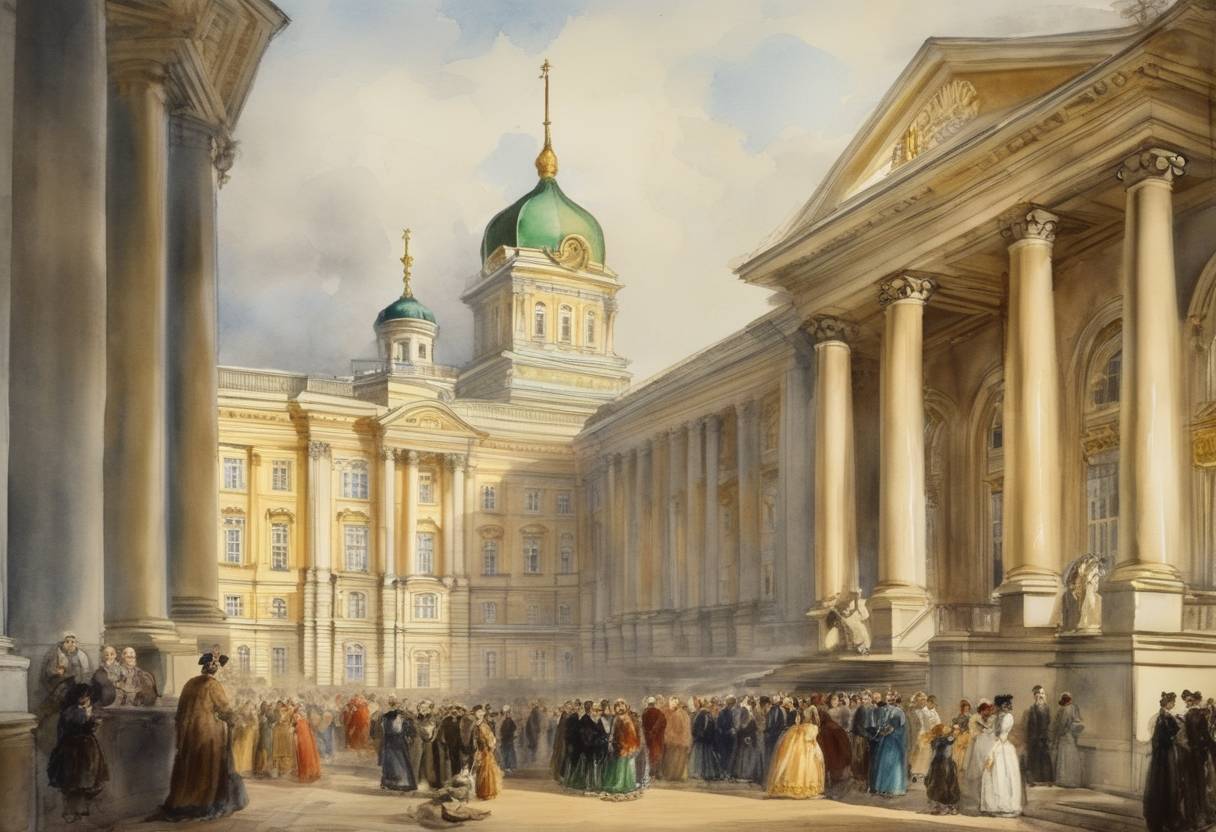
On January 12, 1755, Tsarina Elizabeth of Russia officially approved the founding of Moscow University, an institution that would evolve into today’s Lomonosov Moscow State University, among the most esteemed educational establishments in Russia.
Influence of Enlightenment Ideas: The university’s creation was significantly influenced by the Enlightenment movement, emphasizing reason, science, and the importance of education. The push for the establishment of higher learning institutions in Russia was part of a broader trend to modernize and reform the nation under European intellectual currents.
Role of Mikhail Lomonosov: The project was notably championed by Mikhail Lomonosov, a prominent Russian polymath who played a vital role in its establishment. Lomonosov’s vision of accessible higher education was instrumental in shaping the academic character of the university.
Ivan Shuvalov’s Contribution: Lomonosov was supported by Ivan Shuvalov, a favorite at the Russian court and a patron of the arts and sciences. His influence helped secure royal approval and resources necessary for founding the university.
Charter and Mission: The university was provided a charter that outlined the mission to foster knowledge across various disciplines, particularly in the natural sciences, humanities, and law, adapting ideas from Western European universities.
Initial Structure: Initially, the university comprised three departments: philosophy, law, and medicine, marking a comprehensive approach to education that included various branches of knowledge.
Development and Expansion: From its modest beginnings, the university steadily expanded, both in infrastructure and academic breadth, becoming a significant center of learning and research in Russia.
Contributions to Russian Education: Over the centuries, Lomonosov Moscow State University has been pivotal in advancing academic and scientific endeavors in Russia, producing numerous distinguished alumni and contributing to various fields globally.
Cultural and Social Impact: The establishment created an educational and cultural ripple effect throughout the Russian Empire, influencing both thought and policy in subsequent generations.
Today, Lomonosov Moscow State University stands as a testament to the transformative power of education, embodying the aspirations that drove its founding over two and a half centuries ago.
Source: en.wikipedia.org