The Battle of Mohi: April 11, 1241
1241 · Mohi, Hungary
The Battle of Mohi took place, where the Mongol Empire, led by Batu Khan and Subutai, defeated the Kingdom of Hungary. This battle was part of the Mongol invasion of Europe.
March 4, 1238
The Battle of Sit River took place where the Mongol Empire under Batu Khan defeated the forces of Yuri II of Vladimir, during the Mongol invasion of Rus'.
Near the Sit River, Russia | Mongol Empire
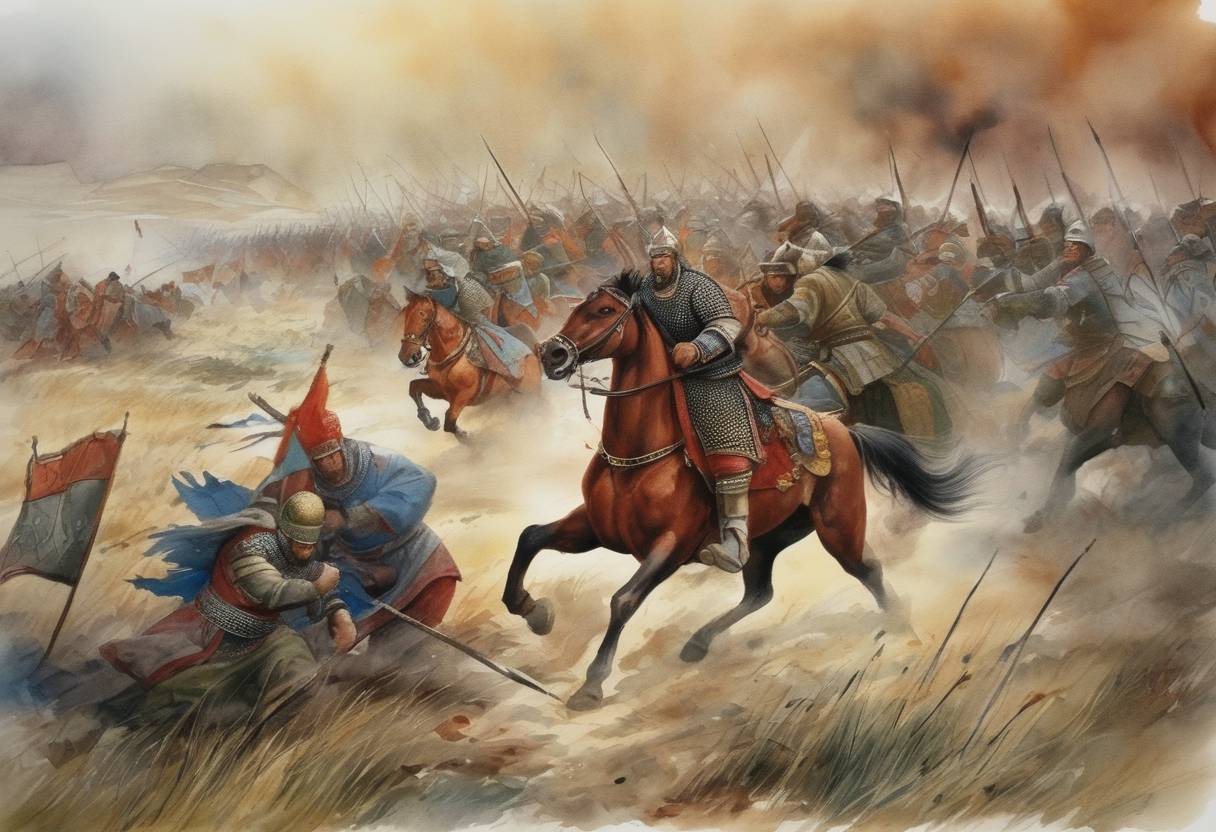
The Battle of the Sit River on March 4, 1238, was a significant engagement during the Mongol invasion of Rus’. This battle marked the conclusive defeat of Yuri II of Vladimir by the forces of the Mongol Empire led by Batu Khan.
The invasion of the Rus’ territories by the Mongols was part of the broader series of Mongol conquests under the leadership of Genghis Khan and his successors. Batu Khan, a grandson of Genghis Khan, spearheaded the campaign into Rus’ as part of the Mongol expansion into Europe.
In the winter of 1237, the Mongols systematically targeted the various principalities within the Kievan Rus’. Batu Khan, together with his subordinate generals, orchestrated a series of devastating attacks that included the sack of major cities such as Ryazan and Kolomna. These initial victories set the stage for the encounter with the forces of Yuri II, Grand Prince of Vladimir, one of the principal Rus’ rulers.
Yuri II attempted to mount a defense against Batu Khan’s forces by gathering troops, including his own and those of his vassals. Choosing to confront the Mongols near the Sit River, a tributary located in present-day Yaroslavl Oblast, he hoped to halt the Mongol advance.
The Mongols, employing their superior cavalry tactics and experienced commanders, executed a well-planned assault. Their mobility and coordination overwhelmed the Rus’ forces. Yuri II, realizing the futility of the fight as his forces fell into disarray, reportedly attempted to flee but was ultimately killed in the ensuing chaos.
The defeat at the Sit River further paved the way for the Mongol domination of the Rus’ territories, a period often referred to as the “Mongol Yoke,” which lasted for over two centuries. This phase significantly influenced the political, cultural, and economic landscape of the region.
Yuri II’s death marked a critical blow to the unified resistance against the Mongol invasions, resulting in the fragmentation of Rus’ principalities. The lack of centralized power facilitated the Mongol strategy of dividing and ruling the various Russian principalities, exerting significant influence and demanding tribute.
The battle at the Sit River is remembered for its impact on the Russian states’ sovereignty, shaping the future trajectory of Russian history and contributing to the eventual rise of the Grand Duchy of Moscow as a center of power in the region.
Source: en.wikipedia.org