Restoration of the Five Cross Flag of Georgia
2004 · Tbilisi, Georgia
The national flag of Georgia, known as the Five Cross Flag, is restored to official use after a hiatus of over 500 years.
November 4, 2018
A series of demonstrations, known as 'March for Justice,' took place in Tbilisi, Georgia, expressing dissatisfaction with government policies and the perceived corruption surrounding the presidential elections.
Tbilisi, Georgia | Georgian political opposition
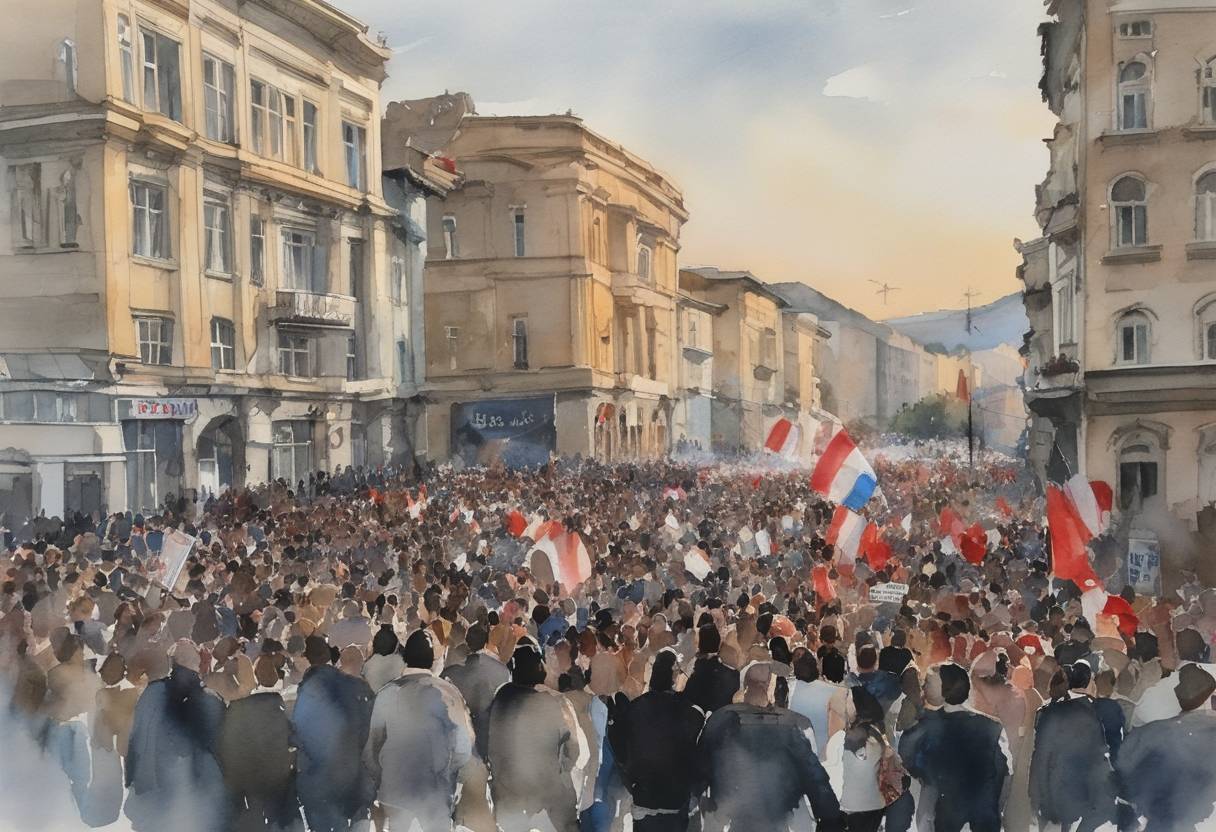
On November 4, 2018, Tbilisi, the capital city of Georgia, witnessed significant public demonstrations known as the “March for Justice.” These protests marked a pivotal moment of civic activism, reflecting widespread dissatisfaction with the Georgian government’s policies and allegations of corruption and election manipulation.
Leading up to the protests, Georgia found itself amid a politically charged atmosphere following the presidential elections held on October 28, 2018. The elections were fraught with controversy as opposition parties and international observers raised concerns about vote-buying, intimidation, and electoral fraud. Salome Zourabichvili, an independent candidate backed by the ruling Georgian Dream party, faced significant criticism, with many questioning the integrity of the election process.
Mass Mobilization: The protests on November 4 were characterized by large crowds converging in Tbilisi, bringing together citizens from various walks of life. The demonstrators were unified in their demands for transparent governance and accountability from the ruling authorities.
Speeches and Marching: The event featured speeches from opposition leaders, activists, and citizens, all calling for a fair electoral process and expressing frustration over governmental corruption. Protesters marched through central Tbilisi, carrying banners and chanting slogans that captured their dissatisfaction and demands for justice.
Peaceful Demonstration: Maintaining non-violence as a core principle, the protest remained peaceful despite the fervent emotions and high stakes, earning praise for the restraint shown by both protesters and law enforcement.
The “March for Justice” underscored significant public willingness to challenge perceived governmental injustices and highlighted deep-seated political divisions within Georgia. This event put additional pressure on the Georgian government to address concerns related to electoral credibility and combat corruption.
In the wake of the protests, the Georgian administration faced calls from international observers to strengthen democratic processes and ensure electoral reforms. However, the political landscape in Georgia continued to be marked by tension and polarization as debates over election legitimacy persisted.
The demonstration served as a reminder of Georgia’s ongoing struggle to consolidate democratic practices in post-Soviet governance and highlighted the critical role of civic activism in shaping the country’s political discourse.
Source: oc-media.org