The Assassination of Leon Trotsky: August 20, 1940
1940 · Mexico City, Mexico
Leon Trotsky is fatally wounded by an ice-axe-wielding assassin in Mexico City.
April 10, 1919
Mexican revolutionary leader Emiliano Zapata was assassinated by government forces in Chinameca, Morelos.
Chinameca, Mexico | Mexican government
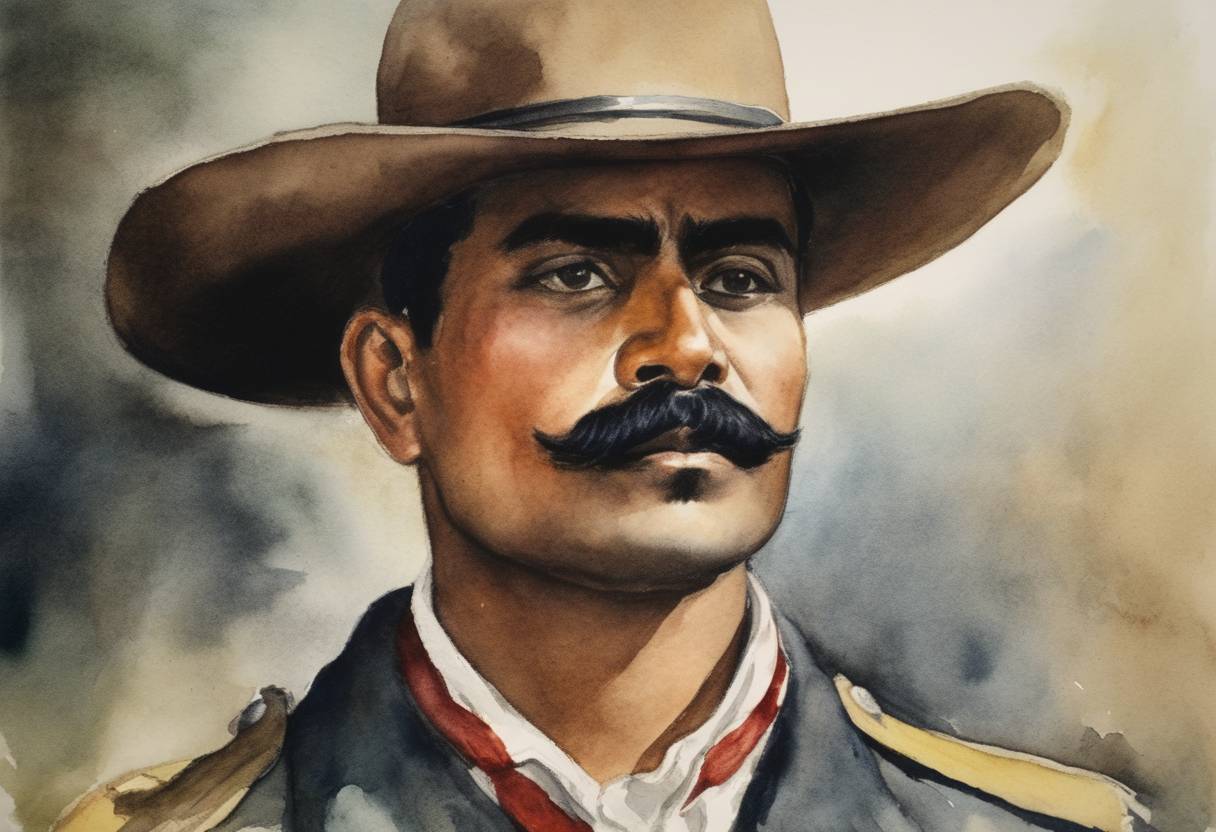
Emiliano Zapata, a pivotal leader in the Mexican Revolution, was assassinated on April 10, 1919, in Chinameca, Morelos, by forces of the Mexican government. His death marked a significant turning point in the revolution, impacting the struggle for agrarian reform and the broader revolutionary movement.
Emiliano Zapata emerged as a revolutionary leader following the fraudulent re-election of Porfirio Díaz in 1910. He championed the rights of peasants, advocating for land reforms and the return of lands to rural communities through his iconic “Plan de Ayala” of 1911. Zapata aligned with other revolutionaries like Francisco Madero, although he remained steadfast in his demands for social justice, which he felt Madero and subsequent leaders, like Venustiano Carranza, failed to sufficiently address.
By 1919, Zapata’s influence posed a significant threat to Venustiano Carranza, who had ascended to the presidency. Carranza viewed Zapata’s persistent resistance and revolutionary activities as a serious obstacle to consolidating his power. To neutralize this threat, General Jesús Guajardo was tasked with a plan to eliminate Zapata.
Emiliano Zapata was lured into a trap under the pretense of a meeting with Guajardo, who pretended to defect to Zapata’s cause. Guajardo offered Zapata monetary incentives and purported loyalty, gaining his trust by staging a false execution of Carranza’s troops. The meeting was scheduled at the Hacienda de San Juan in Chinameca.
On April 10, as Zapata arrived at the designated location, Guajardo’s men ambushed and killed him. This calculated assassination dismantled a significant part of the revolutionary fervor centered around Zapata’s leadership.
Zapata’s assassination had profound implications. Immediately, it weakened the Zapatista movement and disillusioned many of his followers. However, his legacy lived on as “Zapatismo,” the ideology committed to land reforms and social justice for peasants.
Zapata became a symbol of resistance and inspiration for future movements in Mexico and beyond, embodying the fight against oppression and inequality. His vision for agrarian reform would eventually influence the 1917 Mexican Constitution, particularly Article 27, which addressed land redistribution.
The death of Zapata marked the end of a significant chapter in the Mexican Revolution but solidified his status as a Mexican folk hero and a martyr for the cause of agrarian rights. His enduring legacy embodies the persistent struggle for social justice and equitable land distribution.
Source: en.wikipedia.org