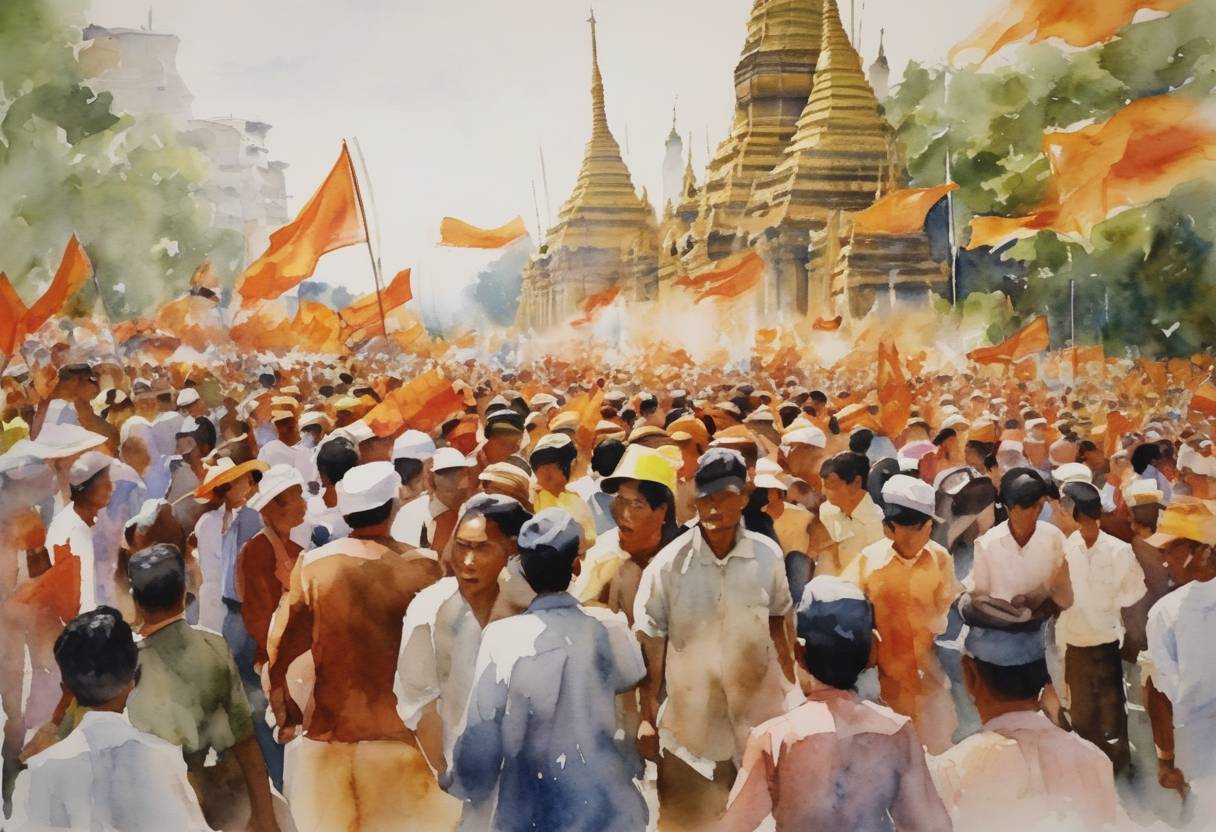
The Saffron Revolution’s largest protest did not occur on October 27, 2005. It is important to clarify that the significant protests of the Saffron Revolution happened in 2007. The largest demonstration occurred on September 24, 2007, where tens of thousands of monks and civilians joined the protest, making it the most substantial challenge to Myanmar’s military junta up to that time.
Context
The Saffron Revolution was a series of economic and political protests and demonstrations that took place in Myanmar (formerly Burma) during August, September, and October 2007. The immediate catalyst for these protests was the government’s removal of subsidies on fuel, which led to a sharp increase in fuel and commodity prices, severely impacting the cost of living.
Key Events Leading to September 24, 2007
- Fuel Price Increase: On August 15, 2007, the Myanmar government abruptly increased the prices of fuel, including gasoline and diesel, by as much as 500%. This sudden spike led to widespread public discontent.
- Initial Protests: Initial protests were led by former student leaders and political activists. The All Burma Federation of Student Unions and other groups participated, calling for economic and political reforms.
- Monk Involvement: Buddhist monks, who are highly respected in Myanmar society, joined the protests after a violent crackdown on demonstrators in the town of Pakokku. The participation of monks significantly elevated the movement, as they began leading columns of peaceful protestors in cities across the country.
The Largest Protest on September 24, 2007
- Massive Turnout: On September 24, 2007, the streets of Myanmar, particularly in Yangon, witnessed a massive turnout of over 100,000 Buddhist monks and civilians. This demonstration was the peak of the protests during the Saffron Revolution.
- Symbolism and Solidarity: Protesters wore saffron-colored robes, symbolizing the Buddhist clergy, and carried banners and flags. They chanted peaceful mantras, reinforcing the non-violent nature of the movement.
- International Attention: The massive protests attracted significant international attention. Media coverage highlighted the monks’ critical role, and prominent international figures and governments issued statements condemning the junta’s brutal response.
Aftermath and Consequences
- Violent Crackdown: The protests were met with a violent crackdown by the military on September 26, 2007, when security forces raided monasteries and arrested monks, including prominent leaders of the movement.
- Continued Repression: The crackdown left many dead or imprisoned, and the government imposed strict measures to prevent further dissent. Communication networks were disrupted to isolate the country from international media.
- Long-term Impact: The Saffron Revolution, despite its suppression, played a crucial role in highlighting the grievances of the Myanmar people under military rule. It laid the groundwork for the eventual opening up of the political landscape, leading to elections and partial civilian rule in the following years.
By focusing on the significant protest events and their implications, the Saffron Revolution remains a milestone in Myanmar’s ongoing struggle for democracy and human rights.