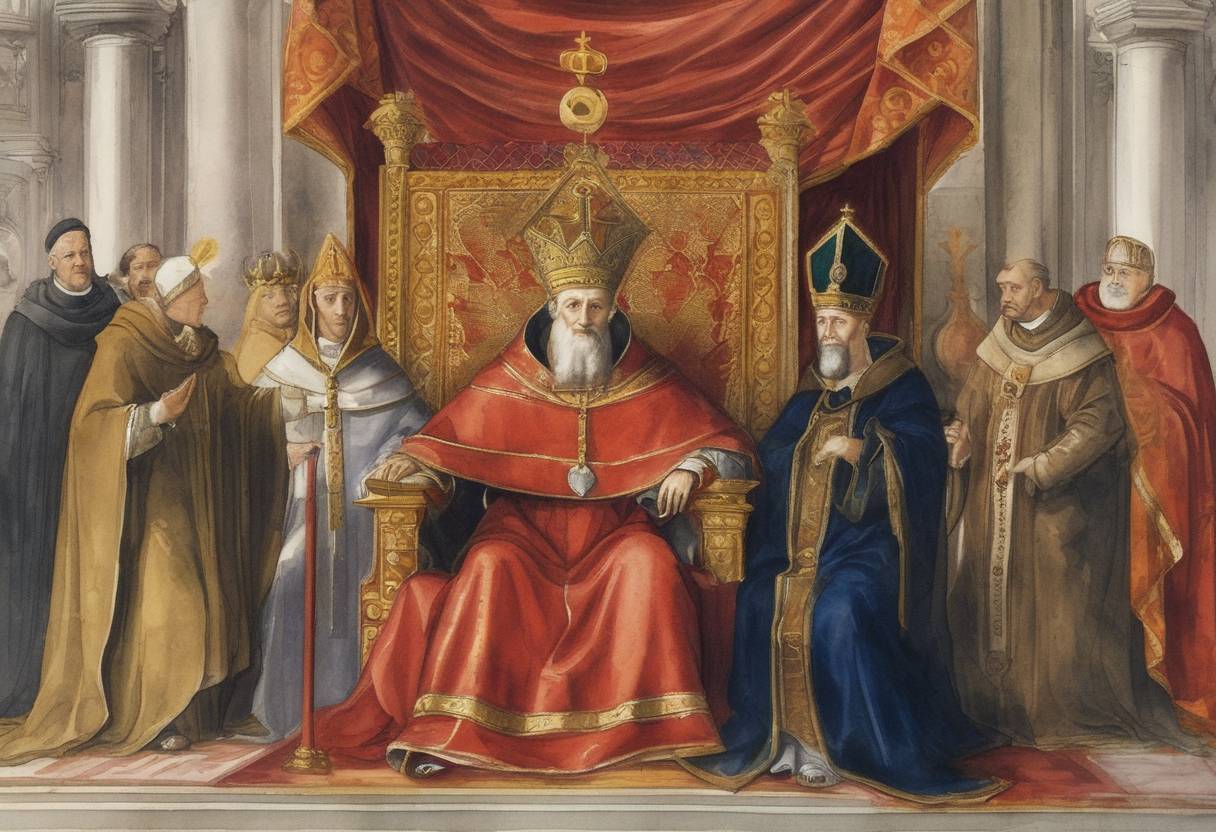
Antipope Nicholas V Enthroned on July 26, 1328
On July 26, 1328, Nicholas V was enthroned as an antipope under the influence of the Holy Roman Emperor, Louis IV. Nicholas V, born Pietro Rainalducci, was a Franciscan friar before he became a rival claimant to the papacy. This event occurred amidst the greater conflict of the Avignon Papacy period, a time when the papacy had moved from Rome to Avignon, leading to significant political and ecclesiastical turmoil.
Context and Leading Events
Avignon Papacy: The papacy’s relocation to Avignon in 1309 created tensions between the papal leadership and various European monarchs, particularly the Holy Roman Empire, who viewed the papal residency in France as subservience to French interests.
Louis IV vs. Pope John XXII: The conflict arose when Emperor Louis IV (not Henry VII, as initially stated) opposed Pope John XXII, who had excommunicated Louis over a dispute concerning imperial authority and lack of papal approval for Louis’s election.
Key Events on July 26, 1328
Enthronement: Nicholas V was installed in Rome by Louis IV, marking a significant defiance against Pope John XXII and the Avignon Papacy. Emperor Louis IV sought to establish a pro-imperial papacy that aligned with his political goals.
Coronation at St. Peter’s Basilica: The enthronement ceremony took place in the symbolic and politically charged setting of St. Peter’s Basilica in Rome.
Aftermath and Consequences
Short-lived Papacy: Nicholas V’s papacy was not widely recognized, lacking the broader support of most European powers. His pontificate was overshadowed by John XXII’s remaining influence over Christendom from Avignon.
Downfall and Submission: Eventually, faced with dwindling support and pressure, Nicholas V renounced his claim and submitted to Pope John XXII in 1330, leading a life of penance thereafter.
Impact on Church Politics: The rise of an antipope highlighted the fractious nature of Church politics during the 14th century, exacerbating existing divisions and setting precedent for future antipapal claims and schisms, notably foreshadowing the Western Schism later in the century.
Nicholas V’s tenure as antipope accentuates the complex interplay between papal and imperial power during the Avignon Papacy, an era characterized by significant challenges to papal authority and territorial disputes within the Christian world.