Deportation from the Łódź Ghetto to Auschwitz: August 12, 1944
1944 · Lodz, Poland
Nazi Germany began the systematic deportation of 70,000 people from the Lodz Ghetto to the Auschwitz concentration camp, part of the Holocaust's Final Solution.
March 14, 1943
The Kraków Ghetto in Nazi-occupied Poland was 'liquidated,' with thousands of Jews rounded up and deported to the Płaszów concentration camp or killed.
Kraków, Poland | Nazi Germany
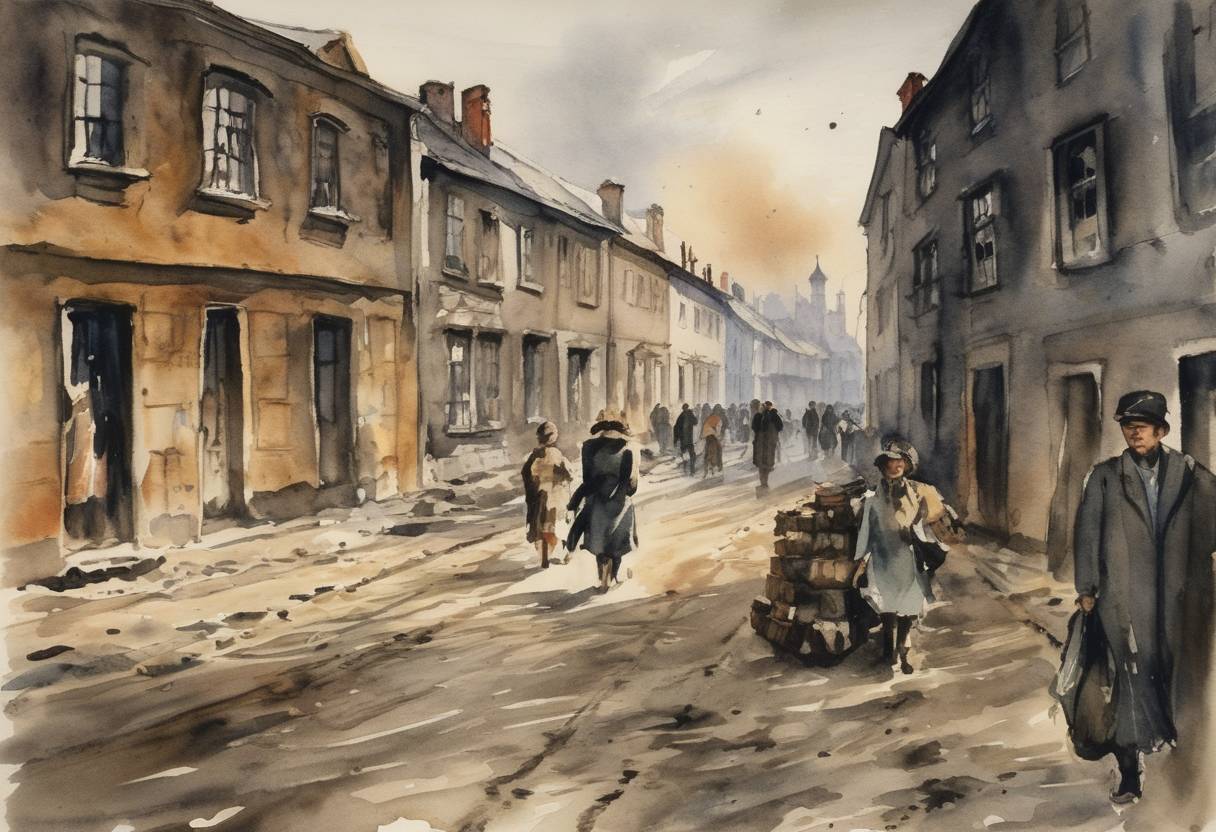
The liquidation of the Kraków Ghetto in Nazi-occupied Poland occurred on March 14, 1943, marking a horrific chapter in the Holocaust. Established in March 1941, the Kraków Ghetto was one of many such Jewish enclosures implemented by Nazi Germany across occupied Europe. By early 1943, approximately 15,000 Jews remained confined within its walls, living under deplorable conditions.
Kraków, as the capital of the German-occupied General Government, held a strategic and administrative significance for the Nazis. Initially, it was home to a vibrant Jewish community, but the anti-Semitic policies of the Nazis targeted several Polish cities for “cleansing” as part of the broader genocidal efforts against the Jewish population.
The decision to liquidate the Kraków Ghetto was part of the larger Nazi plan known as “Operation Reinhard,” aimed at the extermination of Polish Jewry. This entailed systematic deportations to extermination camps and mass killings, following the infamous Wannsee Conference of January 1942, which formalized the “Final Solution.”
On March 13-14, 1943, under the orders of SS-Hauptsturmführer Amon Goeth, the Nazis carried out the liquidation of the Kraków Ghetto. The ghetto’s population was divided:
Deportations: Many Jews were forcibly deported to the nearby Płaszów concentration camp. Płaszów, initially established as a forced labor camp, soon evolved into a brutal concentration camp infamous for its appalling conditions and high mortality rate.
Killings: Numerous individuals, including the elderly, sick, and children, were shot on site. The violence and chaos of the liquidation were characterized by arbitrary and brutal executions.
The liquidation of the Kraków Ghetto was a grim component of the broader process of Jewish extermination in Eastern Europe. It represented the systematic removal of Jewish communities, erasing a cultural heritage that had flourished for centuries.
The events in Kraków have been memorialized in various cultural and historical narratives, perhaps most famously depicted in the film “Schindler’s List.” This depiction highlighted the efforts of individuals like Oskar Schindler, who risked their lives to save Jews from certain death amidst such atrocities.
The liquidation serves as a somber reminder of the Holocaust’s devastating impact and the extreme measures employed by the Nazi regime in its genocidal campaign, underscoring the importance of remembrance and education to prevent future atrocities.
Source: en.wikipedia.org