Opening of the Royal Albert Hall on March 29, 1871
1871 · London, United Kingdom
The Royal Albert Hall is officially opened by Queen Victoria and Prince Albert’s eldest son, the future King Edward VII.
May 6, 1851
The Great Exhibition of the Works of Industry of All Nations, also known as The Great Exhibition or the Crystal Palace Exhibition, opens in London. It was the first international exhibition of manufactured products.
London, United Kingdom | Royal Commission for the Exhibition of 1851
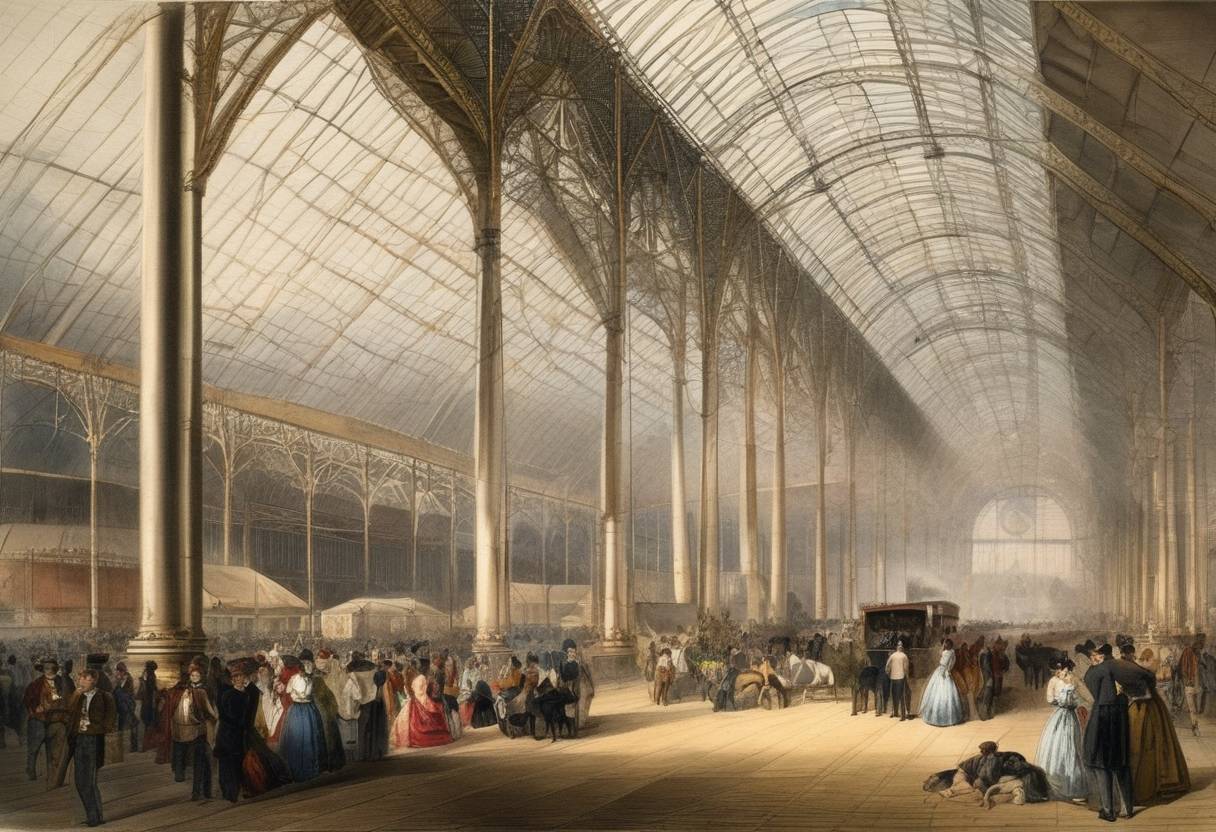
The Great Exhibition of the Works of Industry of All Nations, commonly referred to as The Great Exhibition or the Crystal Palace Exhibition, officially opened on May 1, 1851, in Hyde Park, London. It was the first international exhibition dedicated to showcasing the achievements of the industrial revolution, featuring products from various nations.
The exhibition was organized by Prince Albert, the husband of Queen Victoria, and was largely driven by his vision to promote international trade and foster innovation. The idea was to create a platform where countries could display their technological advancements and artistic achievements. Prince Albert’s dedication to the project and the support of the Royal Commission were pivotal in its realization.
The exhibition was housed in an iconic structure known as the Crystal Palace, designed by architect Joseph Paxton. This innovative structure earned its name due to its extensive use of glass and cast iron, a marvel of engineering at the time. The palace covered over 990,000 square feet and incorporated prefabricated parts, which allowed it to be erected quickly and efficiently, symbolizing the very industrial advances it was meant to celebrate.
The event featured over 100,000 objects displayed by more than 15,000 contributors from around the world. Countries such as the United Kingdom, France, the United States, and India, among others, participated. Exhibits ranged from machinery, textiles, and tools, to fine arts and raw materials, highlighting the diverse spectrum of global industrial progress.
The Great Exhibition attracted over six million visitors during its run, from May 1 to October 15, 1851. This unprecedented gathering underscored the potential of international exchange and cooperation. Financially, it was a success, and the proceeds were used to establish educational and cultural institutions, such as the Victoria and Albert Museum and the Natural History Museum in London.
The exhibition set a precedent for future world fairs, influencing the format and ambition of subsequent exhibitions. The Crystal Palace itself was later relocated to Sydenham Hill, although it was ultimately destroyed by fire in 1936. The Great Exhibition remains a seminal event in the history of industrialization, elevating the importance of international collaboration in the advancement of technology and culture.
Source: en.wikipedia.org