Lac-Mégantic Rail Disaster - July 7, 2013
2013 · Lac-Mégantic, Canada
A train carrying crude oil derailed in Lac-Mégantic, Quebec, Canada, causing a massive explosion and fire that killed 47 people and destroyed much of the town's center.
February 6, 1996
A tanker-truck and train collision occurs in Secaucus, New Jersey, resulting in a massive blaze.
Secaucus, United States | local emergency services
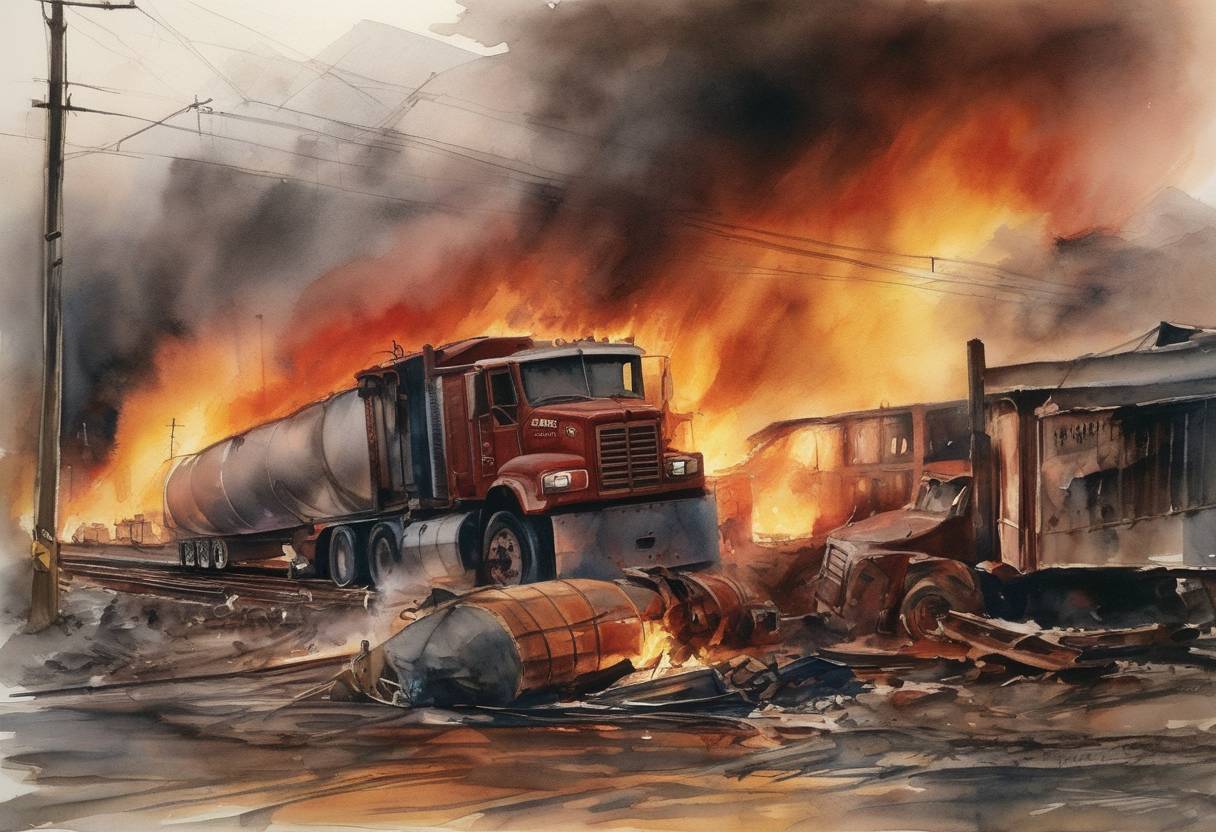
On February 6, 1996, a catastrophic collision occurred in Secaucus, New Jersey, involving a tanker truck and a commuter train. The incident resulted in a significant fire, drawing attention to safety measures concerning transportation and infrastructure in the area.
The collision happened at a railway crossing when a Conrail freight train carrying various goods collided with a tanker truck transporting propane. The force of the impact caused the tanker to rupture, igniting a massive blaze that created a hazardous situation for nearby residents and commuters.
Fire and Explosion: The primary concern was the large fire fueled by the propane from the ruptured tanker. The initial explosion and subsequent fire required immediate response from emergency services, focusing on containment and ensuring public safety.
Train and Road Traffic Disruption: The collision led to significant delays in train services and road closures due to the need for emergency response vehicles and the risk presented by the fire.
Local fire departments, hazardous materials units, and other emergency services responded rapidly to tackle the blaze and assess the situation. Evacuations were carried out in the immediate vicinity to protect residents from potential hazards such as toxic fumes and further explosions.
The incident highlighted several key areas for review concerning transportation safety, particularly at railway crossings. Discussions were initiated regarding the improvement of safety measures to prevent such accidents in the future, focusing on better signaling, the scheduling of transport services, and the handling of hazardous materials.
This event underscored the necessity for stringent safety standards and crisis response strategies, echoing across the state and influencing policy discussions at both local and broader governmental levels related to infrastructure safety and emergency preparedness.
The tanker-truck and train collision in Secaucus was a significant incident that brought to light critical issues surrounding transportation safety. The event not only mobilized an immediate response but also served as a catalyst for continued improvements in public safety and transportation regulations.
Source: www.nytimes.com