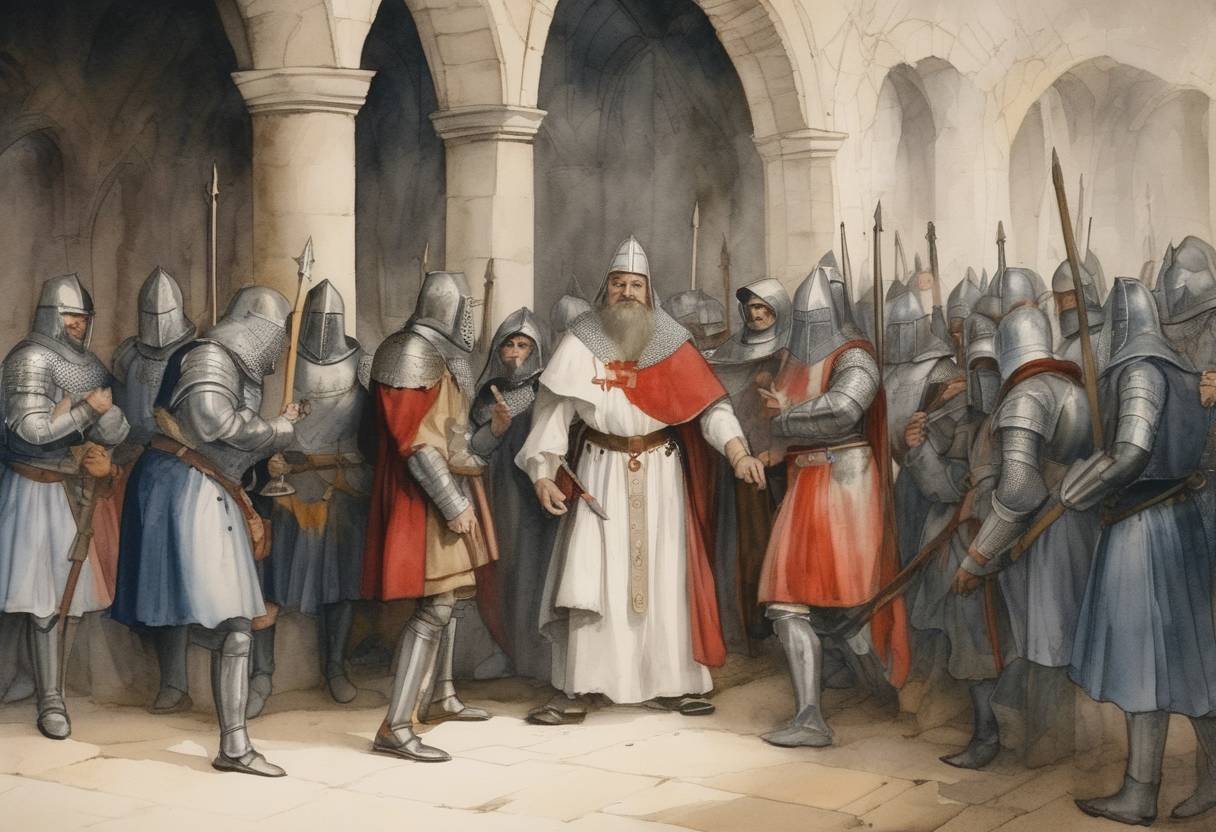
Trial of Knights Templar Leaders on June 9, 1310
On June 9, 1310, pivotal events in the history of the Knights Templar reached a critical juncture when several leaders were tried for heresy in France. This event was part of a concerted effort led by King Philip IV of France to dissolve the Templar order.
Background
The Knights Templar was a medieval Christian military order founded in 1119, originally established to protect pilgrims on their way to the Holy Land. Over the centuries, the Templars amassed significant wealth and influence, drawing suspicion and enmity from various European powers.
In 1307, King Philip IV, facing financial difficulties and owing substantial debts to the Templars, initiated a campaign against the order. On October 13, 1307, he ordered the arrest of many Templar leaders in France, accusing them of a variety of crimes, including heresy, blasphemy, and sodomy. Pope Clement V, under pressure from Philip, ordered Papal commissions in different countries to investigate the charges.
Events Leading to the Trial
By 1310, the fate of the Templars was uncertain. The trials to determine the legality of the order began, focusing on accusations against its leaders. The trials were a combination of ecclesiastical and royal inquiries, inextricably linking religious legitimacy and secular punishment.
The Trial on June 9, 1310
On June 9, 1310, several Templar leaders, including Grand Master Jacques de Molay, faced charges before a church council in Paris. De Molay and other prominent figures were accused of heresy and defying the faith. The trial was characterized by the absence of substantive evidence, reliance on confessions obtained under duress, and political maneuvering by King Philip.
The ecclesiastical council, influenced by Philip’s will, found the leaders guilty. Although originally sentenced to life imprisonment, the trials foreshadowed further actions. In 1314, Jacques de Molay and Geoffrey de Charney were ultimately executed, burned at the stake after they recanted earlier confessions.
Aftermath and Historical Impact
The dissolution of the Knights Templar in 1312, following a decree by Pope Clement V, dispersed the order’s assets to other Christian military orders and royal treasuries. The fall of the Templars marked a significant episode in medieval history, highlighting the tensions between secular and religious powers and demonstrating how political motivations could manipulate church authorities.
The events surrounding the trial and dissolution of the Knights Templar have fueled countless legends and continued fascination with their legacy in popular culture.