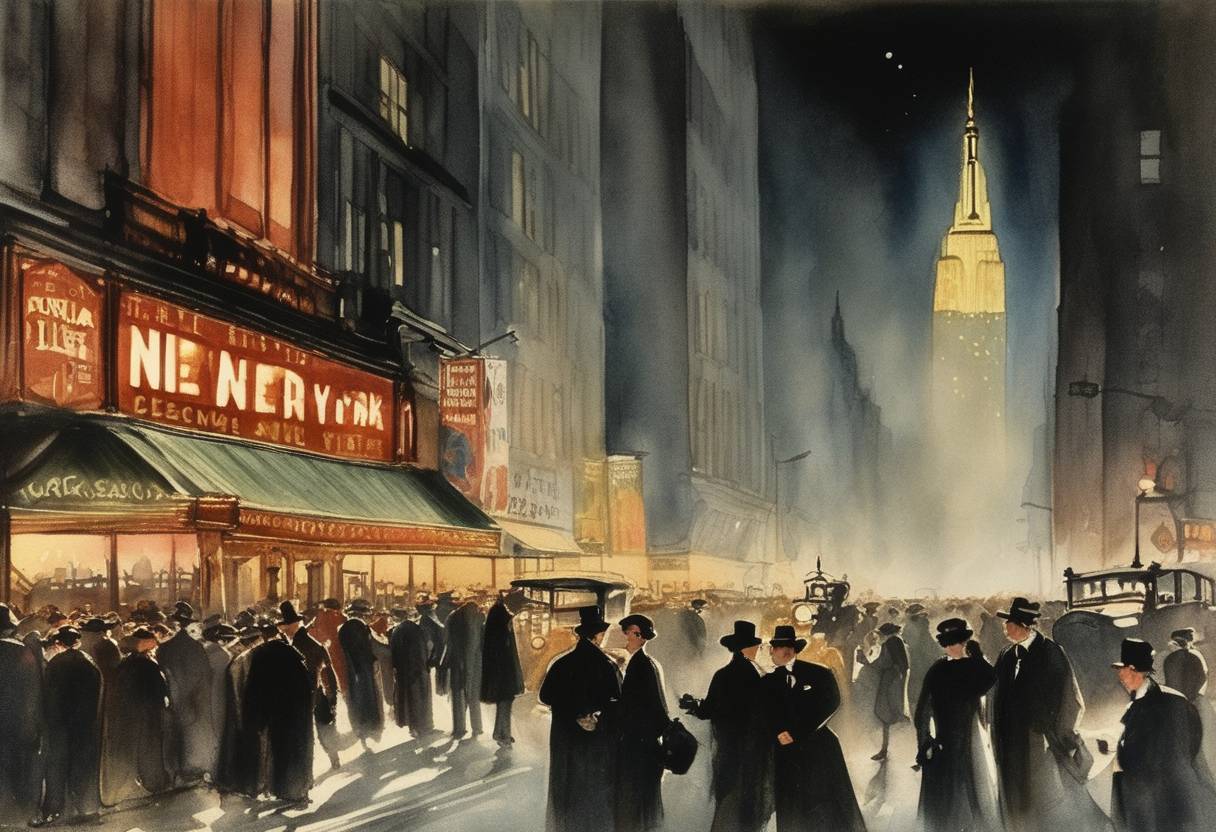
The First All-Talking Motion Picture: “Lights of New York”
On July 6, 1928, “Lights of New York,” the first all-talking motion picture, premiered in New York City. This landmark event marked a monumental shift in the film industry, ushering in the era of “talkies” and transforming cinematic experiences worldwide.
Background
The success of “The Jazz Singer” in 1927, which featured synchronized sound and dialogue sequences, paved the way for more advancements in sound technology for films. Warner Bros., the studio responsible for this innovation, continued to experiment with the Vitaphone sound system, leading them to produce “Lights of New York.”
Plot and Production
Directed by Bryan Foy and produced by Warner Bros., “Lights of New York” was a crime drama that quickly became notable not for its plot but for its technological achievement. The film ran for 57 minutes and was produced on a modest budget. It managed to capture audiences with its spoken dialogue throughout the entire movie, a groundbreaking feat at the time.
Significance
The release of “Lights of New York” signified a significant turning point for the film industry. While silent films had been the norm, the arrival of an all-talking picture demonstrated the potential for audiences to experience stories with more realism and engagement. This transition compelled theaters to upgrade their equipment to accommodate sound films, and it led studios to invest heavily in new sound technologies.
Impact
“Lights of New York” proved to be commercially successful, grossing over $1 million against its low production costs. Its success accelerated the shift from silent films to sound films, contributing to the decline of the silent film era. The demand for talkies surged, transforming production methodologies and leading to rapid innovations in filmmaking techniques.
Conclusion
The debut of “Lights of New York” on July 6, 1928, is a pivotal moment in film history. It not only improved audience engagement but also revolutionized the industry, setting a new standard for motion pictures and influencing the future of cinematic storytelling.
As the first all-talking motion picture, “Lights of New York” demonstrated the potential for sound in film and paved the way for countless classics that followed, forever changing the landscape of the entertainment industry.