Mary, Queen of Scots Recognizes Philip II of Spain as Her Heir - June 16, 1586
1586 · Chartley, England
Mary, Queen of Scots, recognized Philip II of Spain as her heir, a significant political move during her imprisonment in England.
November 24, 1554
Mary I of England and Philip II of Spain were granted a papal dispensation by Pope Julius III to preserve Philip's claims to the English throne as consort. This political union was a strategic alliance aimed at strengthening Catholic influence in England.
, England | Catholic Church
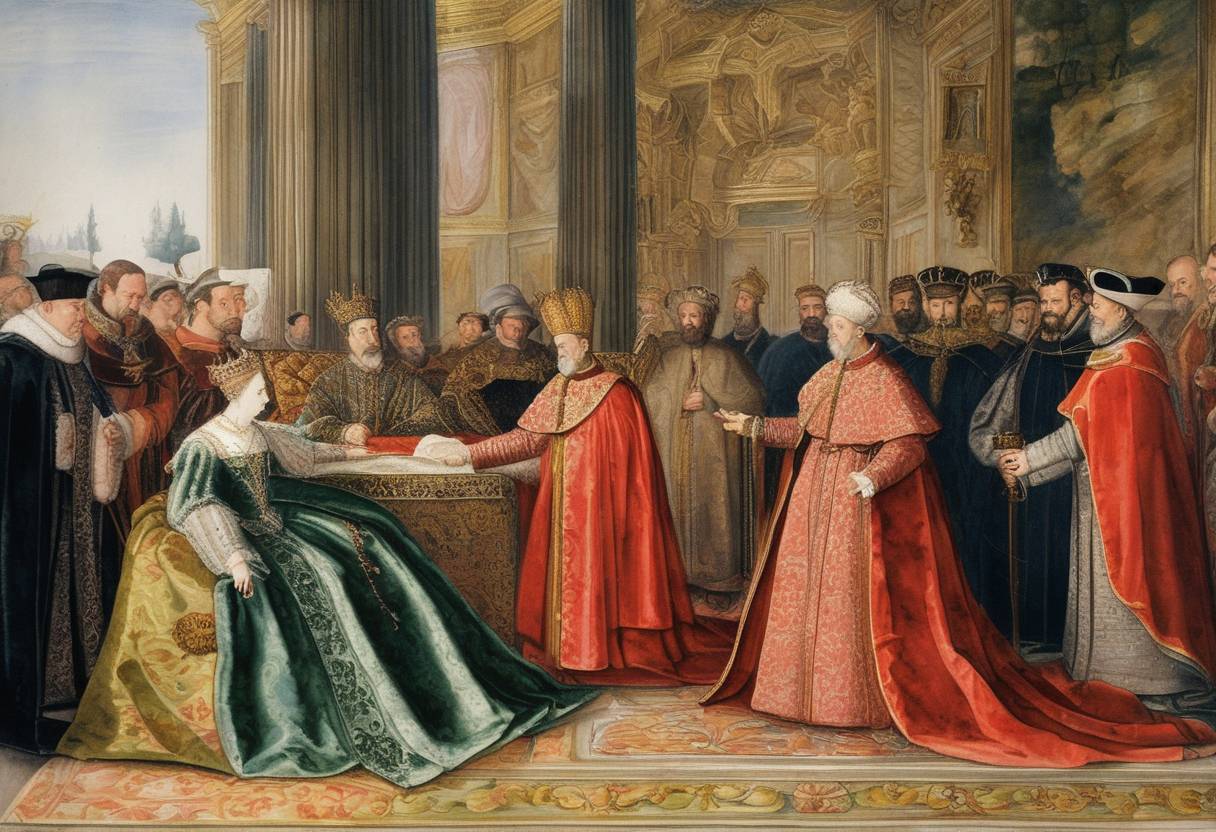
On November 24, 1554, Pope Julius III granted a papal dispensation to Mary I of England and Philip II of Spain, a significant event in the political and religious landscape of 16th-century Europe. This dispensation was crucial for preserving Philip’s potential claims to the English throne as Mary’s consort. The marriage, formalized earlier in 1554, was part of a broader strategy to assert Catholic influence in England and strengthen ties between England and Spain.
Mary I, also known as “Mary Tudor” or “Bloody Mary,” was determined to restore Roman Catholicism in England after her father, Henry VIII, had severed ties with the Papacy. Her marriage to Philip II, the son of the Holy Roman Emperor Charles V, was designed to establish an alliance with Spain, the leading Catholic power in Europe. This union aimed to counteract the Protestant Reformation and reinforce Catholic hegemony through political means.
The papal dispensation granted by Pope Julius III was vital for the legitimacy of the marriage. It sought to resolve any ecclesiastical and legal uncertainties surrounding Philip’s role in England. The dispensation assured that despite English trepidations, the union had the Catholic Church’s approval, which was hoped to bolster Mary’s authority and the position of Catholicism in England.
The marital alliance between Mary I and Philip II did not achieve all its intended goals:
The marriage and papal dispensation have since been viewed as pivotal in the complex religious and political history of Tudor England and reflect broader European dynamics as states engaged in alliances to further religious and territorial ambitions.