1415 · Constance, Holy Roman Empire
Jan Hus, a Czech theologian and reformer, was burned at the stake for heresy against the doctrines of the Catholic Church at the Council of Constance.
May 4, 1415
Religious reformer and pre-Lutheran dissenter John Wycliffe was posthumously condemned at the Council of Constance.
Constance, Holy Roman Empire | Council of Constance
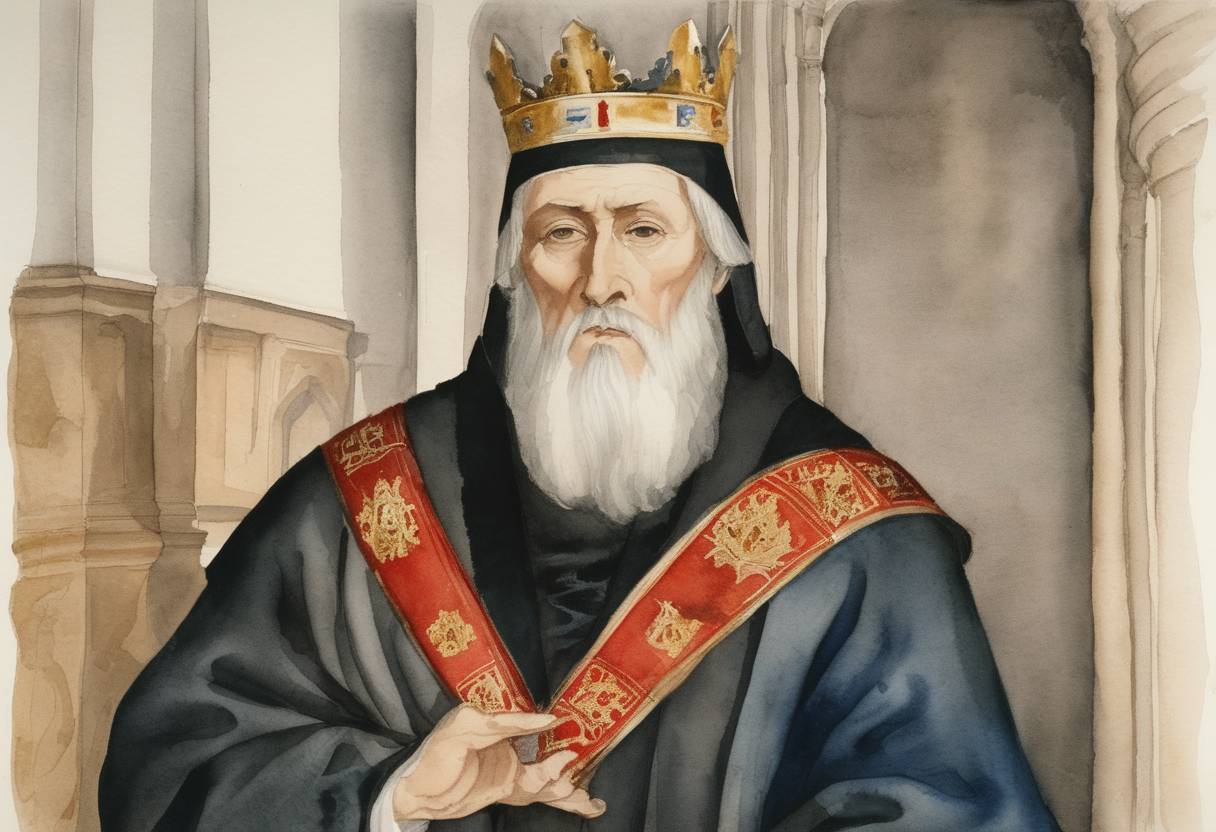
On May 4, 1415, the Council of Constance, a crucial ecclesiastical assembly of the Roman Catholic Church, officially condemned the works of John Wycliffe, a significant pre-Lutheran religious reformer. This condemnation marked a pivotal moment in the history of ecclesiastical reform movements preceding the Protestant Reformation.
John Wycliffe (c. 1330–1384) was an English theologian and scholar known for his critical views of the Church’s practices and his advocacy for reform. A prominent figure at the University of Oxford, Wycliffe’s teachings emphasized the authority of Scripture over the Church and criticized the wealth and power held by the clergy. His support for translating the Bible into the vernacular made sacred texts more accessible to the general populace, challenging the Church’s control over religious knowledge.
Convened from 1414 to 1418, the Council of Constance aimed to address various issues within the Church, most notably the Papal Schism, which had resulted in multiple claimants to the papacy. Additionally, the Council sought to address heretical teachings. Wycliffe, despite having died three decades earlier, was scrutinized at the council because his ideas were perceived as a significant threat to Church authority.
The council condemned Wycliffe’s writings, labeling them heretical. In total, 45 propositions attributed to Wycliffe were denounced. His revolutionary ideas on the nature of the Church, the Eucharist, and ecclesiastical abuses were all considered antithetical to the established doctrine.
As a result of the condemnation, Wycliffe’s works were ordered to be burned, and his remains exhumed and posthumously desecrated in 1428—a symbolic act aimed at erasing his influence. Despite these efforts, Wycliffe’s teachings endured and later inspired reformers like Jan Hus, who was himself condemned at the Council. Wycliffe’s advocacy for scriptural primacy and church reform predates and lays groundwork for the Protestant Reformation sparked by Martin Luther in the 16th century.
The Council of Constance’s condemnation of Wycliffe illustrates the tensions and conflicts between emerging reformist ideas and the traditional ecclesiastical structure, marking an essential juncture in the movement toward broader reform within Christianity.
Source: en.wikipedia.org