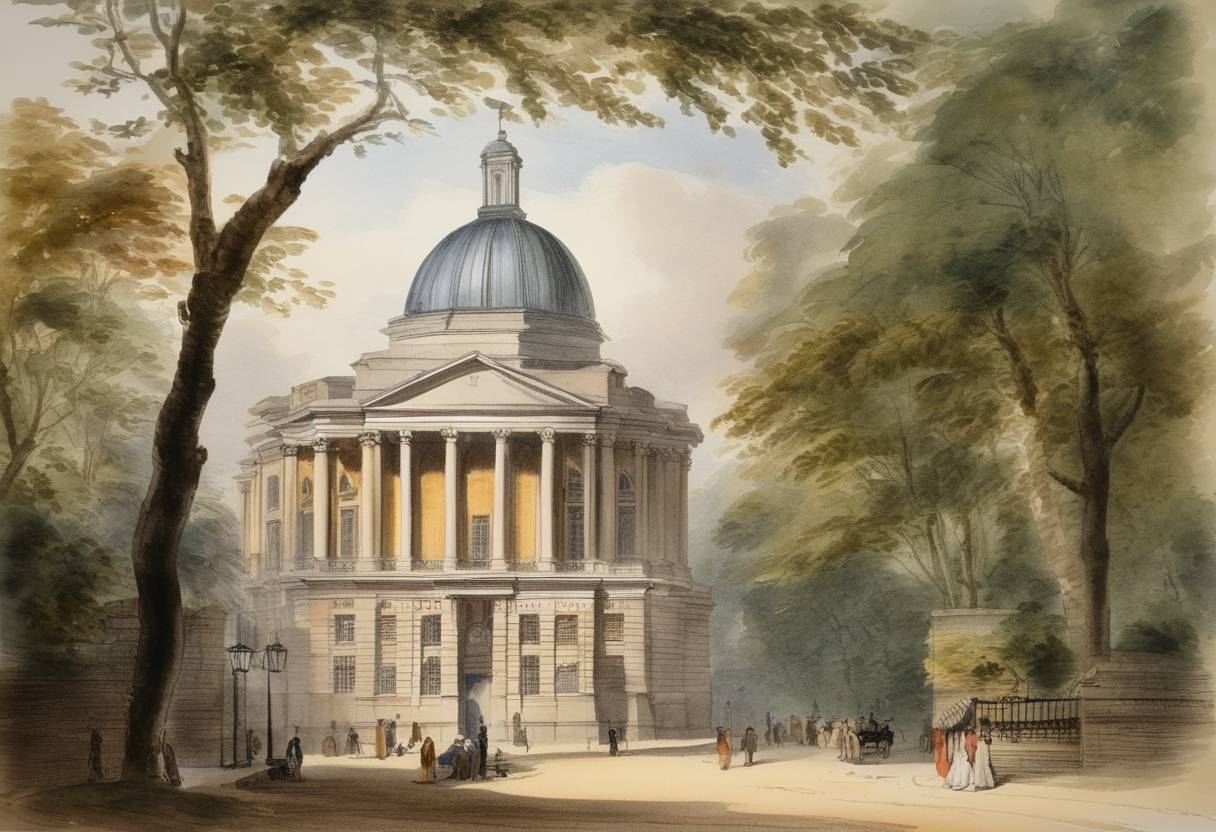
Founding of University College London (UCL)
On February 11, 1826, University College London (UCL) was established under the original name “University of London.” It was founded as a revolutionary educational institution designed to provide an inclusive environment that contrasted significantly with the religiously affiliated universities of Oxford and Cambridge. UCL’s founding aimed to offer access to higher education independent of religious restrictions, thus embodying the principles of secularism, intellectual freedom, and academic excellence.
Historical Context and Motivation
During the early 19th century, the existing university system in England was heavily influenced by religious doctrines, with both Oxford and Cambridge requiring adherence to the Church of England for admission. This religious monopoly excluded many, including those from dissenting religious backgrounds, Jews, Catholics, and non-believers, from pursuing higher education. There was growing demand for a modern educational system reflective of the burgeoning ideals of the Enlightenment, which emphasized reason, science, and individual rights.
The establishment of UCL was spearheaded by visionaries such as the poet and philosopher Jeremy Bentham, although he was not directly involved in its management. His utilitarian ideas inspired many who sought a new paradigm for education. Other key figures included Henry Brougham, a prominent lawyer and social reformer, and Thomas Campbell, a poet who publicly advocated for the founding of the college. Their collective effort was instrumental in designing a curriculum and governance structure that promoted inclusive and progressive education.
Impact and Legacy
UCL’s founding marked a significant milestone in expanding access to higher education in England, effectively pioneering the concept of the modern university. It opened its doors in 1828, offering programs in arts, law, and the sciences, and was the first university in England to admit students regardless of their religious background. Furthermore, UCL championed advancements such as admitting women students on equal terms with men by the late 19th century.
Its establishment laid the groundwork for later educational reforms and inspired similar initiatives across Europe and beyond. Today, UCL is recognized as one of the world’s leading multidisciplinary universities, renowned for its commitment to research and teaching excellence.
The founding of UCL in 1826 not only challenged the status quo but also set the foundation for a more inclusive and secular higher education system, reflecting broader social transformations in British and global society.