Ferdinand Magellan and the Pacific Ocean: December 7, 1520
1520 · ,
After spending several months exploring the coast of South America, Portuguese navigator Ferdinand Magellan reached the Pacific Ocean.
September 29, 1513
Vasco Núñez de Balboa reaches and discovers the eastern shore of the Pacific Ocean, becoming the first European to see the Pacific from its eastern side after crossing the Isthmus of Panama.
Darien, Panama
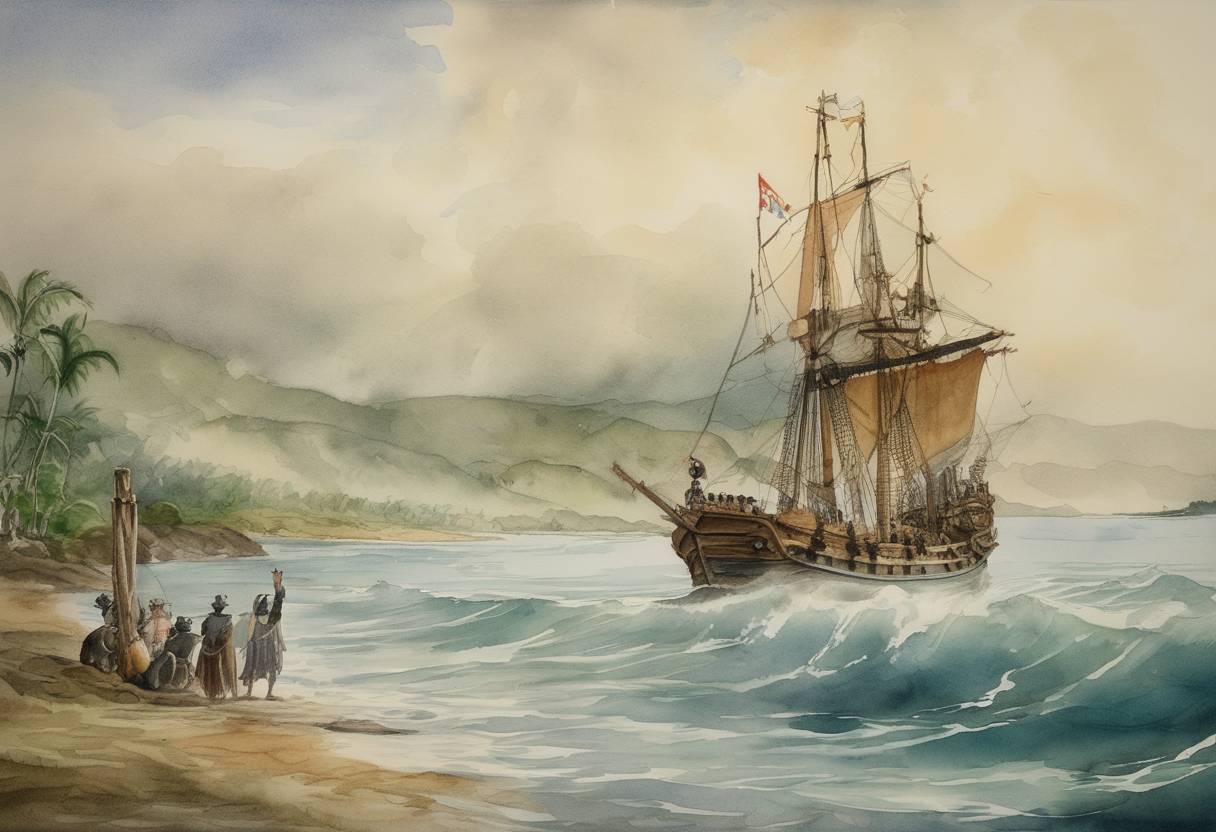
On September 29, 1513, the Spanish explorer Vasco Núñez de Balboa became the first European to sight the Pacific Ocean from its eastern shore. This significant milestone occurred after an arduous expedition across the Isthmus of Panama.
Vasco Núñez de Balboa was originally part of an expedition that was intended to explore the coast of as-yet-unexplored territories in the New World. Balboa, eager to repair his financial and social standing, joined the exploration efforts from Santo Domingo to the coast of present-day Colombia.
In early 1513, reports from indigenous peoples of a vast ocean and tales of great gold reserves reached Balboa, prompting him to organize an expedition to verify these claims. Setting out with a crew of approximately 190 Spaniards and augmented by indigenous guides, Balboa navigated uncharted jungles and treacherous mountainous terrain.
After weeks of traversing the rugged landscape, Balboa and his party reached a peak from which they could see the expanse of the Pacific Ocean. On September 29, 1513, standing on the shore, Balboa claimed the ocean and all its shores for the Spanish Crown in a formal ceremony, dramatically expanding European knowledge and ambition in the Americas.
This discovery was pivotal in the Age of Exploration. It demonstrated the existence of another ocean beyond the Americas, which spurred further exploration and colonization. The sighting of the Pacific Ocean opened new trade routes and was a critical step in establishing European dominance in the region.
Balboa’s achievement brought him widespread recognition. However, despite this triumph, he fell victim to political intrigue and was unjustly accused of treason by his rival, the new governor Pedrarias Dávila. He was executed in 1519. Nonetheless, Balboa’s historic sighting of the Pacific continued to inspire exploration, significantly impacting global trade and geopolitics in the centuries to follow.
Source: www.britannica.com