The 228 Incident: February 28, 1947
1947 · Taipei, Taiwan
The 228 Incident occurs in Taiwan when an anti-government uprising begins, resulting in a violent crackdown by the Kuomintang-led Republic of China government.
October 10, 1928
Chiang Kai-shek became Chairman of the National Government of the Republic of China.
Nanjing, China | Kuomintang
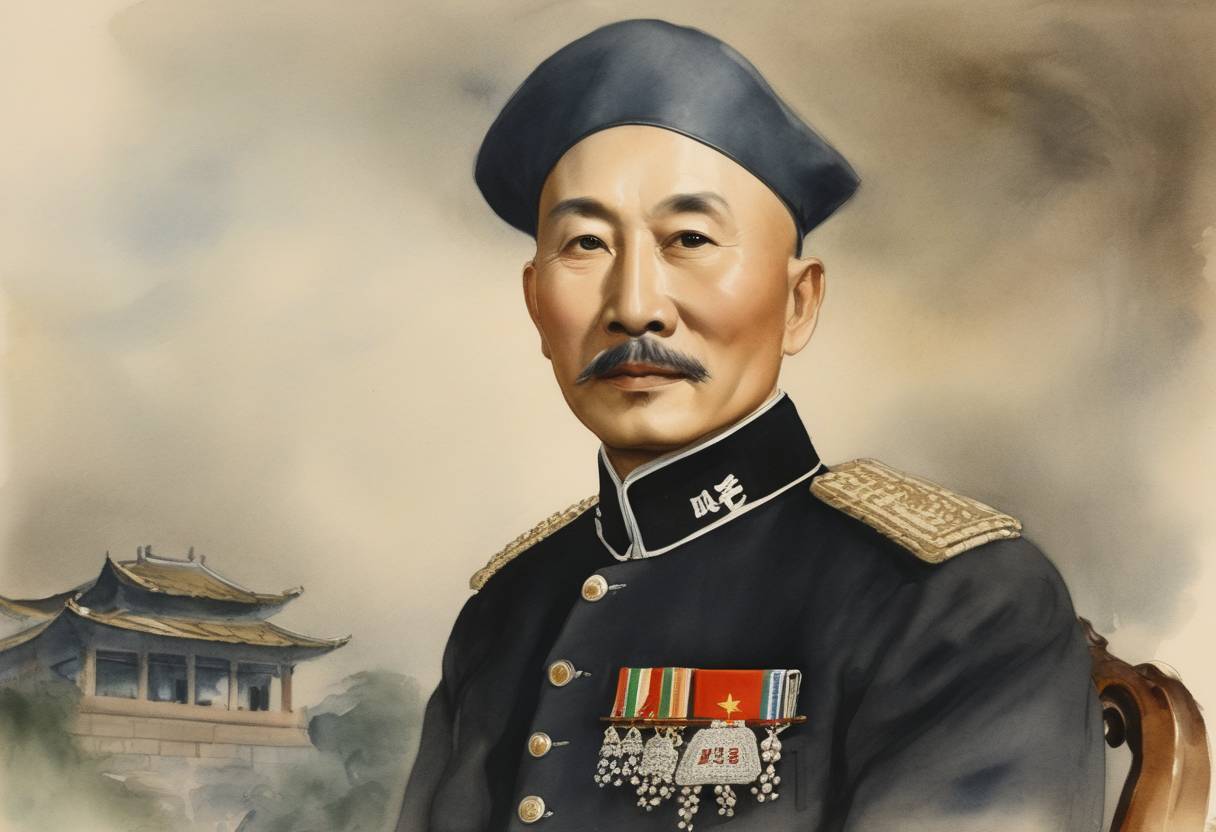
On October 10, 1928, Chiang Kai-shek officially assumed the role of Chairman of the National Government of the Republic of China, marking a pivotal moment in Chinese history. This event was a significant milestone in the consolidation of power by the Kuomintang (KMT), or the Nationalist Party, following years of fragmentation and regional warlordism in post-imperial China.
Following the fall of the Qing Dynasty in 1912, China experienced a period of instability characterized by regional divisions and the emergence of warlordism. The Republic of China was proclaimed, but central authority was weak. Sun Yat-sen, the founding figure of the KMT, sought to unify the country under a republican system. However, it wasn’t until after his death in 1925 that his successor, Chiang Kai-shek, managed to take decisive steps toward national unification.
Chiang emerged as a key military leader during the Northern Expedition (1926–1928), a military campaign launched by the KMT to unify China by defeating the warlords. By mid-1928, the success of the Northern Expedition had allowed Chiang and the Nationalists to control large parts of China, including key cities like Shanghai and Beijing (then known as Peking).
The date October 10 is significant, also known as the “Double Tenth” day, marking the anniversary of the 1911 Wuchang Uprising, which began the Xinhai Revolution that led to the end of Imperial rule in China. On this symbolic date in 1928, Chiang Kai-shek was appointed as the Chairman of the National Government of the Republic of China. This position effectively made him the leader of the country’s central government, a crucial step as the government aimed to establish a unified, stable, and modernized China under KMT dominance.
Chiang’s rise to the office of Chairman solidified his leadership and marked the beginning of what is now referred to as the “Nanjing Decade” (1928-1937), a period during which the KMT government, headquartered in Nanjing, sought to implement nationalist policies and modern reforms across China. The government focused on modernization efforts, educational reforms, and infrastructure development, though it faced significant challenges from both internal communist movements led by the Chinese Communist Party (CCP) and external pressures from Japanese expansionism.
While Chiang’s leadership bolstered the initial unification endeavors, it failed to fully stabilize the nation, as continuous internal strife and external aggression led to further conflict, ultimately culminating in the outbreak of the Second Sino-Japanese War in 1937.
Chiang Kai-shek’s appointment as Chairman remains a crucial episode in the complex history of modern China, symbolizing a formative, albeit turbulent, period in the nation’s attempt to forge a unified national identity and governance system.
Source: en.wikipedia.org