Nelson Mandela's Inauguration as South Africa's First Black President
1994 · Pretoria, South Africa
Nelson Mandela is inaugurated as South Africa's first black president.
September 17, 1993
The first meeting of the South African parliament following its country's first non-racially framed election convenes.
Cape Town, South Africa | South African Government
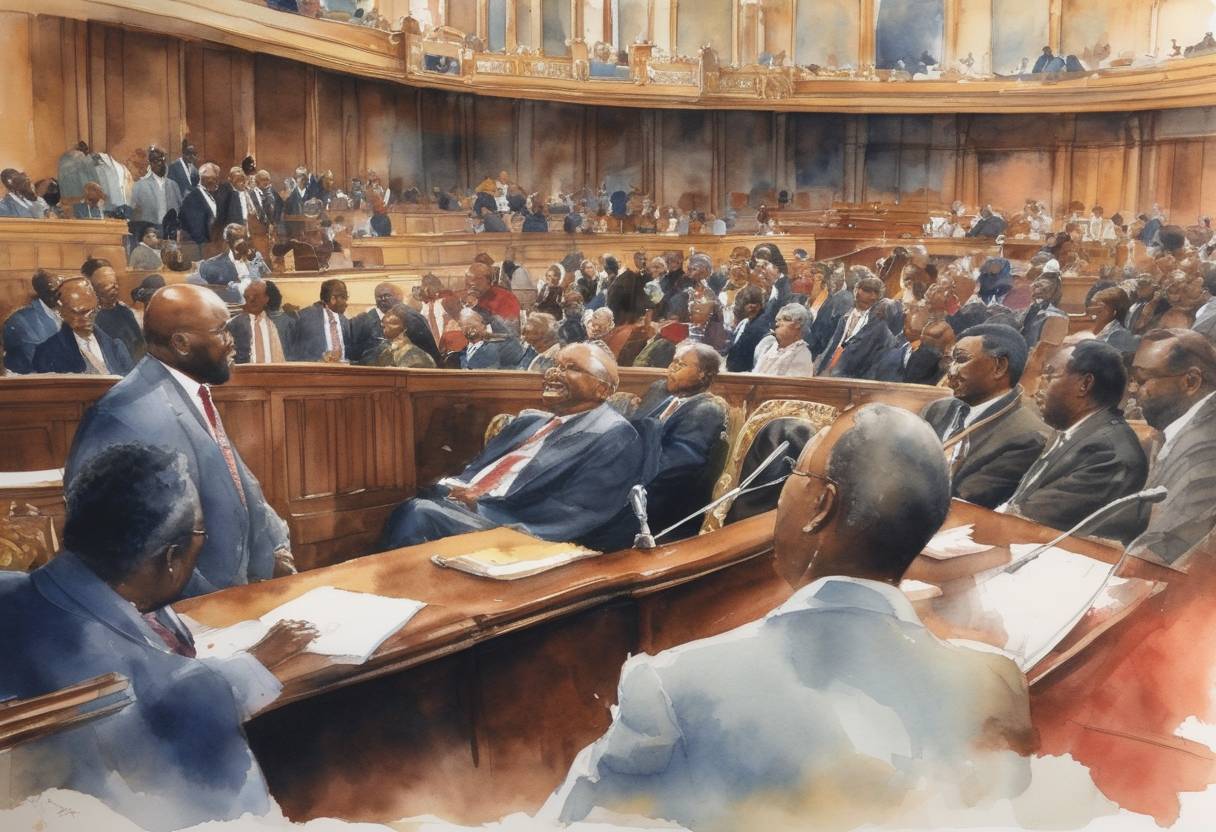
The event described, the first meeting of the South African parliament following the country’s first non-racially framed election, did not occur on September 17, 1993. The first democratic, non-racial election in South Africa took place from April 26 to April 29, 1994. Following this historic election, the new parliament convened for the first time on May 9, 1994.
South Africa’s first non-racial elections in April 1994 were a pivotal moment in the country’s history, marking the end of an era of apartheid—a system of institutionalized racial segregation and discrimination. The elections saw the African National Congress (ANC), led by Nelson Mandela, winning a majority of the votes.
Leading up to these elections, South Africa experienced decades of apartheid, which began in 1948 under the National Party. Throughout the latter half of the 20th century, international and domestic pressure mounted against this oppressive regime. Key moments in the dismantling of apartheid included the release of Nelson Mandela from prison in 1990 and the subsequent negotiations to transition to a more inclusive and democratic political landscape.
On May 9, 1994, the first multi-racial parliament was convened in Cape Town, with Nelson Mandela being elected as the first black president of South Africa on May 10. This watershed event symbolized the formal end of apartheid and the beginning of a new chapter of governance aimed at fostering equality and reconciliation in South Africa. The peaceful transition of power was hailed worldwide as a significant triumph for human rights and democratic governance.
Source: www.parliament.gov.za