The Siege of Vienna Begins - September 1, 1529
1529 · Vienna, Austria
The Siege of Vienna begins as the Ottoman Empire, led by Suleiman the Magnificent, attempts to capture Vienna, Austria.
October 1, 1529
The Ottoman Empire, led by Suleiman the Magnificent, begins the Siege of Vienna as part of its campaign to expand into Central Europe.
Vienna, Austria | Ottoman Empire
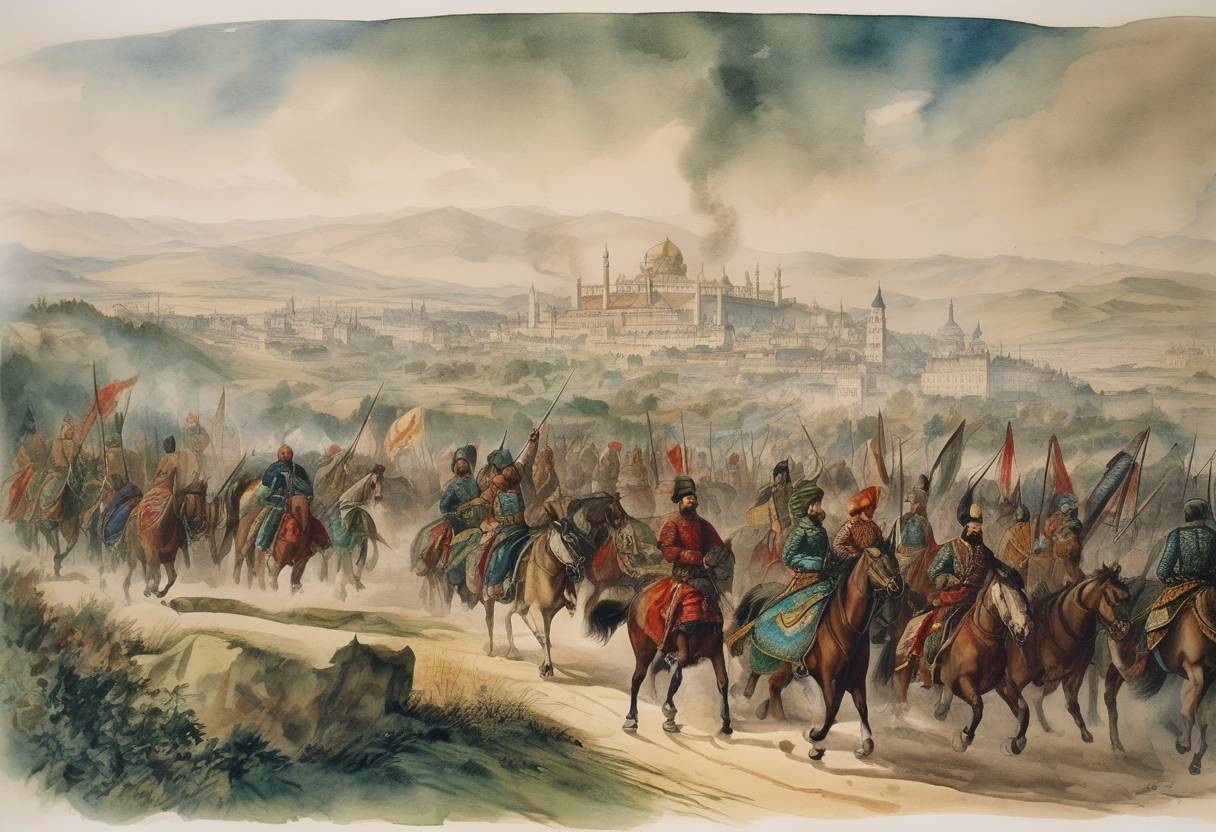
On October 1, 1529, the Ottoman Empire, under the command of Sultan Suleiman the Magnificent, commenced the Siege of Vienna. This marked a pivotal moment in the Ottoman-Habsburg wars and represented Suleiman’s ambitious attempt to expand Ottoman influence into Central Europe. The siege was part of the protracted struggle between the Ottoman Empire and the Habsburg-led forces of Charles V, Holy Roman Emperor.
Suleiman the Magnificent, who reigned from 1520 to 1566, sought to extend his territory farther west and thereby consolidate control over Central Europe. The Ottoman Empire had already experienced unprecedented growth, making strides in Eastern Europe, North Africa, and the Middle East. The expansion into Europe was strategically aimed at weakening the Habsburg Empire, Suleiman’s primary European rival.
Prior to the siege, the Ottoman forces had gained momentum by seizing Belgrade in 1521 and decisively defeating the Kingdom of Hungary at the Battle of Mohács in 1526. These victories paved the way for Suleiman’s campaign against Vienna. However, logistical challenges, primarily due to the great distances and the onset of autumn, posed significant obstacles.
The Ottoman army, boasting impressive manpower with more than 100,000 troops, faced the fortified city of Vienna, which was crucial for the control of Central Europe. The city’s defense was commanded by Count Nicholas von Salm and commanded a garrison of approximately 20,000 defenders, comprised of Austrian soldiers and local militia.
The siege began with the Ottomans attempting to undermine the city’s walls and sizeably outnumbering the defenders. Despite Suleiman’s vast forces and their sophisticated artillery, the city fortifications held strong against repeated assaults. One significant factor was the inclement weather, which turned rainy and cold, complicating the Ottoman attack lines and supply routes.
After nearly three weeks of persistent siege, Suleiman and his army failed to breach Vienna’s defenses. The Ottoman forces were compelled to withdraw by mid-October, primarily due to the onset of poor weather and dwindling supplies. The withdrawal marked one of the first significant setbacks of Suleiman’s reign, maintaining Habsburg control over Central Europe.
The failure of the siege had profound implications. It weakened the perception of Ottoman invincibility and provided a morale boost to European powers who sought to counter Ottoman expansion. The 1529 siege of Vienna is often cited as a key turning point that halted Ottoman expansion into Europe, setting the stage for future conflicts, most notably the more famous 1683 Siege of Vienna.
Although the Ottomans did not succeed in capturing Vienna, the event underscored the ongoing power struggle between the Ottomans and the Habsburgs. It reinforced Vienna’s strategic significance and eventually led to further fortification and military innovation in response to potential future threats.
Source: en.wikipedia.org