Dedication of the Washington Monument
1885 · Washington, D.C., United States
The newly completed Washington Monument was dedicated in Washington, D.C., honoring George Washington, the first President of the United States.
December 13, 1884
The Washington Monument was completed in Washington D.C., becoming the tallest structure in the world at the time. The monument, an iconic obelisk, honors George Washington, the first President of the United States.
Washington, United States | U.S. Army Corps of Engineers
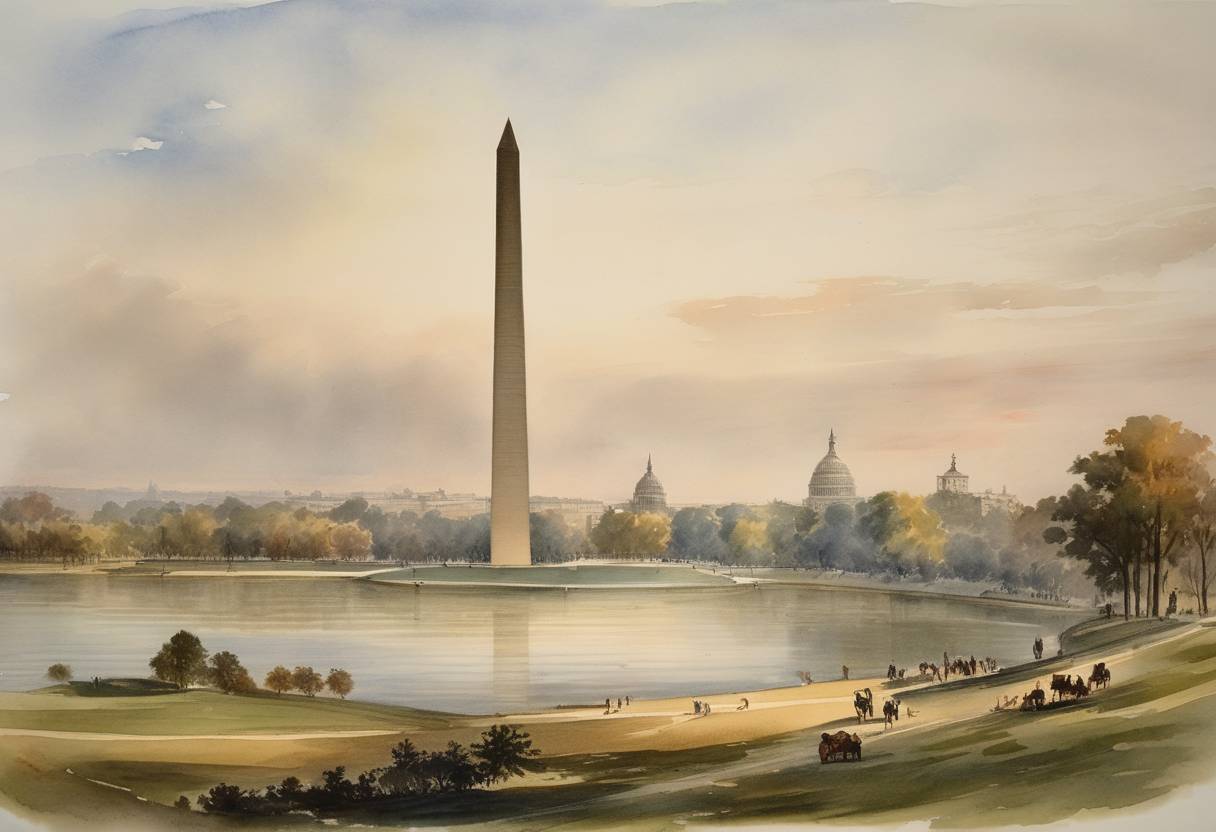
The Washington Monument was completed on December 6, 1884, becoming the world’s tallest structure at the time. Standing as an iconic obelisk in Washington, D.C., it honors George Washington, the first President of the United States. The monument measures approximately 555 feet and 5 1⁄8 inches (169 meters) and remained the tallest structure in the world until the completion of the Eiffel Tower in 1889.
Inception and Delays: The idea for a monument to George Washington was proposed shortly after his death in 1799. However, it wasn’t until 1832, marking the centennial of Washington’s birth, that the Washington National Monument Society was formed to fund and promote its construction. The cornerstone was laid on July 4, 1848.
Design and Construction: Designed by architect Robert Mills, the original design included a pantheon at the base that was never completed due to financial difficulties and political wrangling. Construction initially halted in 1854 when funds ran out, and the project languished, further delayed by the American Civil War.
Resumption and Completion: Work resumed in 1876 after Congress appropriated funds and authorized the U.S. Army Corps of Engineers to oversee the completion. Notably, Lieutenant Colonel Thomas Lincoln Casey supervised this final phase, which included changes to stabilize and finish the monument. The capstone was set in place on December 6, 1884, marking its completion.
Symbolic Role: The monument serves as a symbol of the nation’s respect and admiration for George Washington, embodying the values of leadership and unity he represented.
Cultural Impact: As an architectural feat of its time, it demonstrated advancements in engineering and construction, particularly through its pioneering use of masonry techniques.
Legacy: Today, the Washington Monument remains a central feature of the National Mall, attracting millions of visitors annually and serving as a symbol of the U.S. capital. It reflects both the historical significance of Washington’s leadership and the perseverance of a nation to honor its forebearers.
The monument was officially dedicated on February 21, 1885, and opened to the public on October 9, 1888. While it no longer holds the title of the tallest structure, its historical importance and architectural grandeur continue to make it a pivotal landmark in both the American and global context.
Source: www.nps.gov