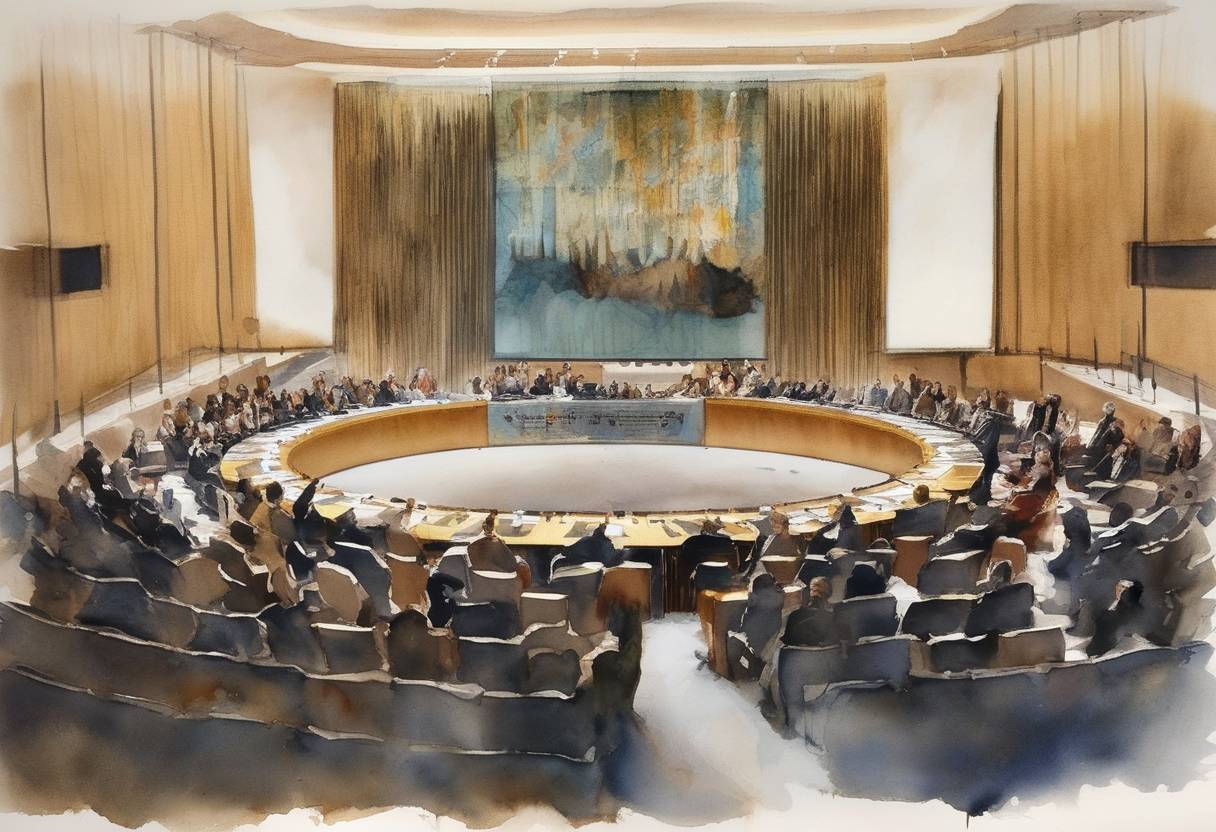
United Nations Security Council Resolution 678
On November 29, 1990, the United Nations Security Council (UNSC) passed Resolution 678, a critical decision in the build-up to the Gulf War. Passed with a majority vote, this resolution authorized the use of military force against Iraq unless it withdrew its troops from Kuwait by January 15, 1991.
Context
In the early hours of August 2, 1990, Iraq, led by President Saddam Hussein, launched an invasion of its neighbor Kuwait. This aggressive act was met with international condemnation, sparking a major crisis in the Persian Gulf region. The international community, led by the United States and supported by a broad coalition of countries, sought to reverse Iraq’s annexation of Kuwait.
In response to the invasion, the United Nations had already passed multiple resolutions aimed at pressuring Iraq to withdraw. Economic sanctions were imposed, and diplomatic efforts were made, but they failed to yield a retreat by Iraqi forces.
Key Provisions of Resolution 678
Use of Force Authorization: The resolution explicitly authorized UN member states to use “all necessary means” to ensure compliance with previous UN resolutions if Iraq did not withdraw from Kuwait by the January 15 deadline.
Compliance Deadline: The resolution set a clear deadline of January 15, 1991, for Iraq to comply with the demands for withdrawal.
International Coalition: Resolution 678 called upon member states to provide support to the coalition forces, establishing a broad international mandate for military intervention.
Voting Outcome
Resolution 678 was adopted by a vote of 12 in favor, 2 against (Cuba and Yemen), and 1 abstention (China). The support reflected a strong international consensus against Iraq’s actions, with only limited opposition.
Aftermath
The resolution effectively set the stage for Operation Desert Storm, the combat phase of the Gulf War, which commenced on January 17, 1991, just two days after the deadline passed without an Iraqi withdrawal.
The coalition, composed largely of U.S.-led forces, deployed military capabilities to the Gulf region, signaling their readiness to act under the authority granted by the UNSC.
The Gulf War resulted in the liberation of Kuwait following a massive air and ground campaign against Iraqi forces.
Resolution 678 remains a significant example of UN-sanctioned military intervention, emphasizing the role of the Security Council in maintaining international peace and security. The resolution’s passage underscored the willingness of the international community to use force, if necessary, to respond to breaches of sovereignty and aggression.