Incorporation of the American Fur Company
1808 · New York City, United States
John Jacob Astor incorporated the American Fur Company, which would become one of the largest businesses in the United States at the time.
September 8, 1810
The Tonquin, an American merchant ship, leaves New York City to set up a fur trading post for the Pacific Fur Company at the mouth of the Columbia River in present-day Oregon, USA.
New York City, United States | Pacific Fur Company
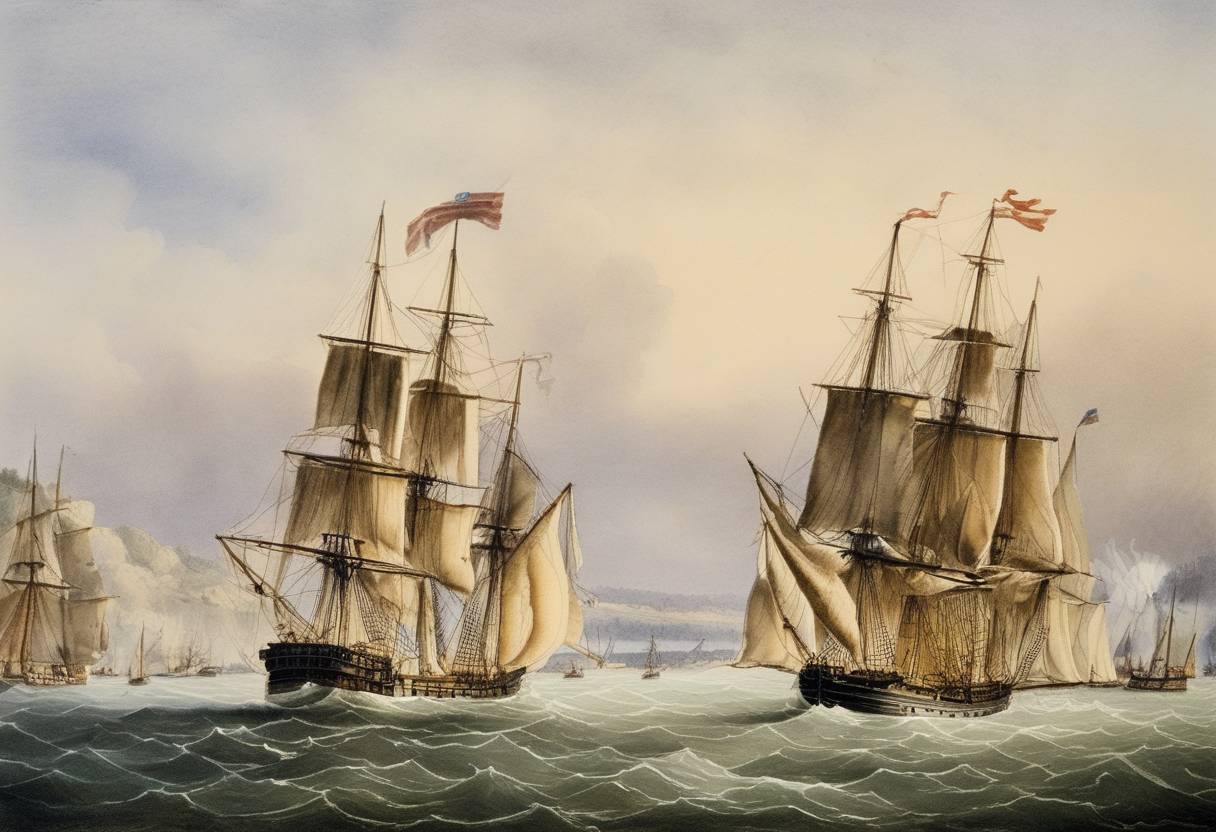
On September 8, 1810, the American merchant ship The Tonquin set sail from New York City, marking a pivotal moment in the history of the American fur trade and expansion into the Pacific Northwest. Commissioned by the Pacific Fur Company, a consortium established by the prominent businessman John Jacob Astor, the voyage aimed to establish a fur trading post at the mouth of the Columbia River, in what is today Oregon, USA.
The early 19th century was a period of extensive exploration and economic ambition in North America, particularly in the fur trade, which served as a significant economic driver. John Jacob Astor, an influential figure in the fur industry, sought to capitalize on the lucrative fur resources of the Pacific Northwest. The Pacific Fur Company was created as part of his vision to expand American presence and enhance trade routes across the continent.
The Tonquin was tasked with transporting a group of employees, supplies, and trading goods necessary to establish a permanent settlement and trading post at the Columbia River’s mouth. This site was strategically chosen to access rich fur resources and establish trade with the indigenous populations and other European powers, notably the British, who also had interests in the region.
Captain Jonathan Thorn commanded the Tonquin, overseeing a crew and a mix of traders, craftsmen, and adventurers, collectively referred to as “Astorians.”
The departure of the Tonquin was significant for several reasons:
After successfully establishing the trading post known as Astoria in March 1811, the Tonquin tragically met its demise later that year near Vancouver Island. The ship was reportedly attacked by indigenous Nuu-chah-nulth people during a trading mission, resulting in its destruction and the loss of the crew. Despite this, the establishment of Astoria laid the groundwork for further American exploration and influence in the Pacific Northwest.
The Tonquin’s journey from New York on September 8, 1810, marked an important episode in American history, representing not only the ambitions of early 19th-century entrepreneurs but also the broader themes of exploration, trade, and territorial expansion that defined the era. The venture contributed to the intricate tapestry of cultural exchanges and conflicts that characterized North America’s Pacific Coast during this period.
Source: www.history.com