Establishment of Santiago by Pedro de Valdivia
1541 · Santiago, Chile
Pedro de Valdivia, a Spanish conquistador, establishes the city of Santiago, which becomes the capital of Chile.
September 13, 1541
Santiago, Chile, was officially founded by Spanish conquistador Pedro de Valdivia's expedition.
Santiago, Chile | Spanish Empire
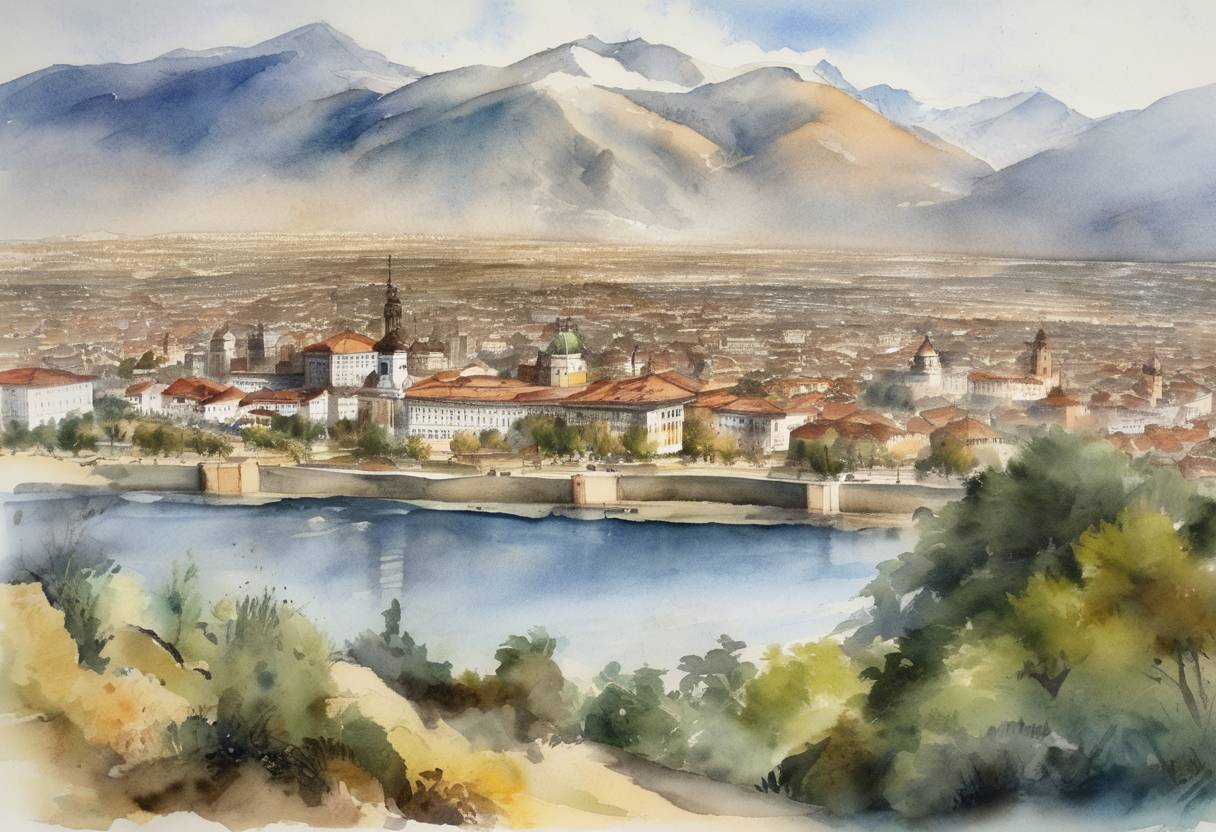
On September 13, 1541, the city of Santiago, Chile, was officially founded by Spanish conquistador Pedro de Valdivia. The founding came after Valdivia’s expedition ventured southward from Peru, seeking to expand Spanish influence into the territory that would become present-day Chile.
Pedro de Valdivia, born around 1497 in Spain, was a seasoned military officer by the time he arrived in the Americas. Before his expedition to Chile, Valdivia had participated in Francisco Pizarro’s conquest of the Inca Empire in Peru. His ambitions led him to request permission to explore and annex territories further south for the Spanish Crown.
February 12, 1541: Valdivia originally founded the city of Santiago del Nuevo Extremo at a site called Mapocho, on the northern bank of the Mapocho River. The site’s strategic location was chosen because of its fertile lands and its proximity to the indigenous Mapuche people, whom the Spaniards sought to convert, control, and integrate into their economic enterprises.
The choice of this date to commemorate the founding recognizes the importance of Valdivia’s official ceremonies that were carried out as a statement of Spanish claim over the land, as well as to formally establish governance structures.
Valdivia named the city Santiago del Nuevo Extremo in honor of St. James, the patron saint of Spain, and as a reflection of his aspirations for the city to serve as the gateway to further Spanish conquests into the southern parts of the continent.
The city’s layout was planned in a typical Spanish colonial grid pattern, centering around a central plaza (now known as Plaza de Armas). This centralized planning reflected the Spanish colonial authorities’ intent to facilitate administrative control, religious propagation through Catholicism, and self-defense.
Shortly after the city’s founding, Valdivia and his settlers faced numerous challenges, primarily due to resistance from the local Mapuche population. This resistance culminated in the destruction of the city by Mapuche warriors in 1541, a testament to their fierce opposition and the harsh realities Valdivia’s settlers confronted.
Despite its destruction, Santiago was rebuilt and eventually developed into the capital city of Chile. Its establishment played a crucial role in the spread of Spanish culture and influence in the region, significantly impacting Chile’s demographic and cultural landscape over the subsequent centuries.
The founding of Santiago marked a pivotal point in Chilean history. It served as a cornerstone for subsequent colonial endeavors in the region, symbolizing the early European colonial ambitions in South America. Moreover, it set the stage for the complex interactions between European settlers and the indigenous populations, which profoundly shaped Chile’s historical trajectory.
By establishing Santiago, Valdivia laid the groundwork for the economic and political structures that would govern Chile throughout the colonial period and into its eventual path to independence.
Source: en.wikipedia.org