1770 · , Moldova
The Russo-Turkish War (1768–1774) saw the Battle of Larga, where Russian forces led by Field Marshal Peter Rumyantsev decisively defeated Ottoman troops.
October 3, 1739
The Treaty of Nissa was signed between the Ottoman Empire and the Russian Empire, ending the Russo-Turkish War of 1735–1739. The treaty resulted in territorial adjustments and confirmed Russian control over Azov.
Nissa, Serbia | Ottoman Empire, Russian Empire
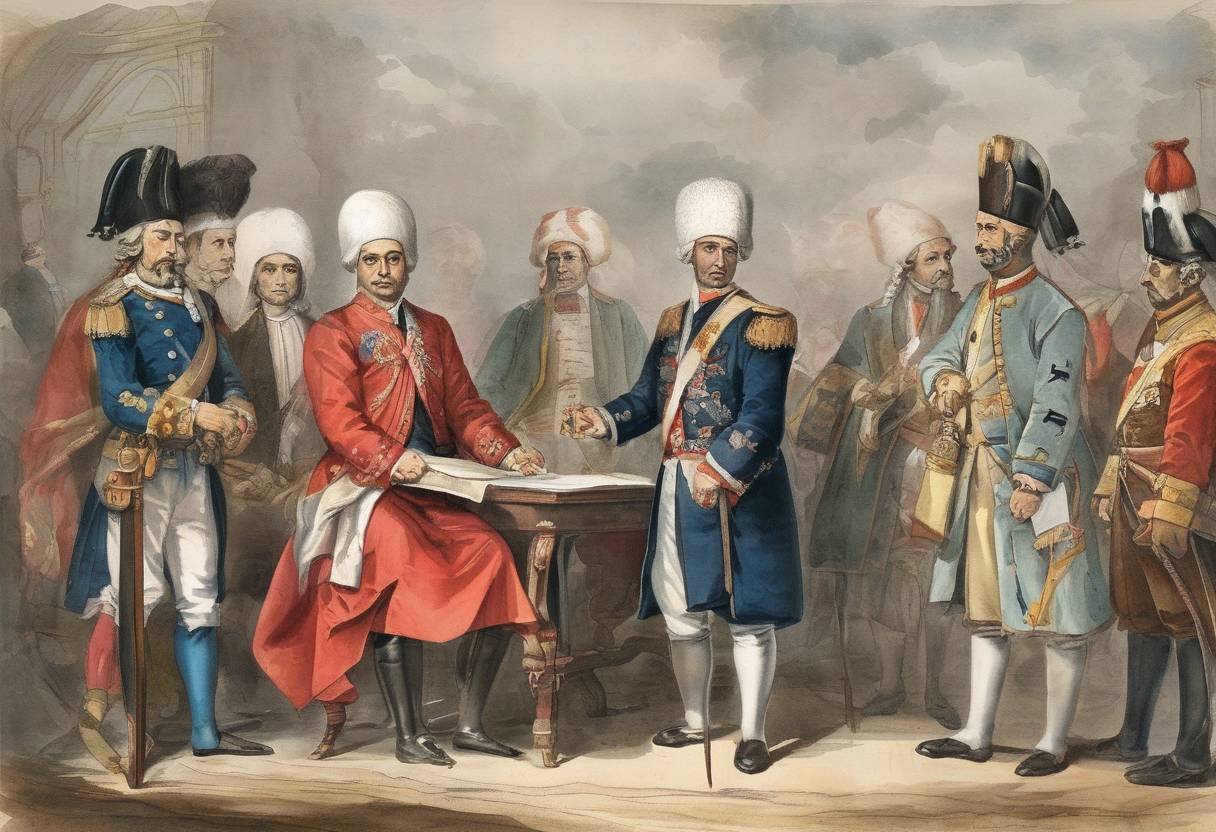
The Treaty of Nissa, signed on October 3, 1739, marked the conclusion of the Russo-Turkish War of 1735–1739. This treaty was a significant diplomatic agreement between the Ottoman Empire and the Russian Empire, resulting in notable territorial adjustments and confirming Russian control over key regions.
The Russo-Turkish War of 1735–1739 was part of a series of conflicts between the Russian and Ottoman Empires, driven by Russia’s ambitions to expand southward and secure access to the Black Sea. The war was also influenced by the broader geopolitical dynamics of the time, including the shifting alliances and power struggles in Eastern Europe.
The Treaty of Nissa resulted in several important outcomes:
Territorial Adjustments: The treaty confirmed Russian control over the fortress of Azov, a strategic location on the Sea of Azov. However, Russia agreed not to fortify the city, reflecting a compromise between the two empires.
Status Quo Ante Bellum: The treaty largely restored the pre-war territorial status quo, with both empires returning to their respective borders prior to the conflict, except for the Russian acquisition of Azov.
Trade and Navigation: The treaty included provisions for trade and navigation, allowing Russian ships to navigate freely in the Black Sea, albeit under certain restrictions imposed by the Ottomans.
The Treaty of Nissa had several long-term implications:
Russian Expansion: The acquisition of Azov marked a significant step in Russia’s southward expansion and its quest for access to warm-water ports, a recurring theme in Russian foreign policy.
Ottoman Decline: The treaty highlighted the gradual decline of Ottoman power in Eastern Europe, as it struggled to contain the growing influence of neighboring empires.
Future Conflicts: Although the treaty temporarily resolved hostilities, it set the stage for future Russo-Turkish conflicts, as both empires continued to vie for dominance in the region.
In summary, the Treaty of Nissa was a pivotal moment in 18th-century European diplomacy, reflecting the complex interplay of territorial ambitions and strategic interests between two major empires. It underscored the shifting balance of power in Eastern Europe and foreshadowed further conflicts in the centuries to come.
Source: en.wikipedia.org