Creation of Martin Luther King Jr. Day
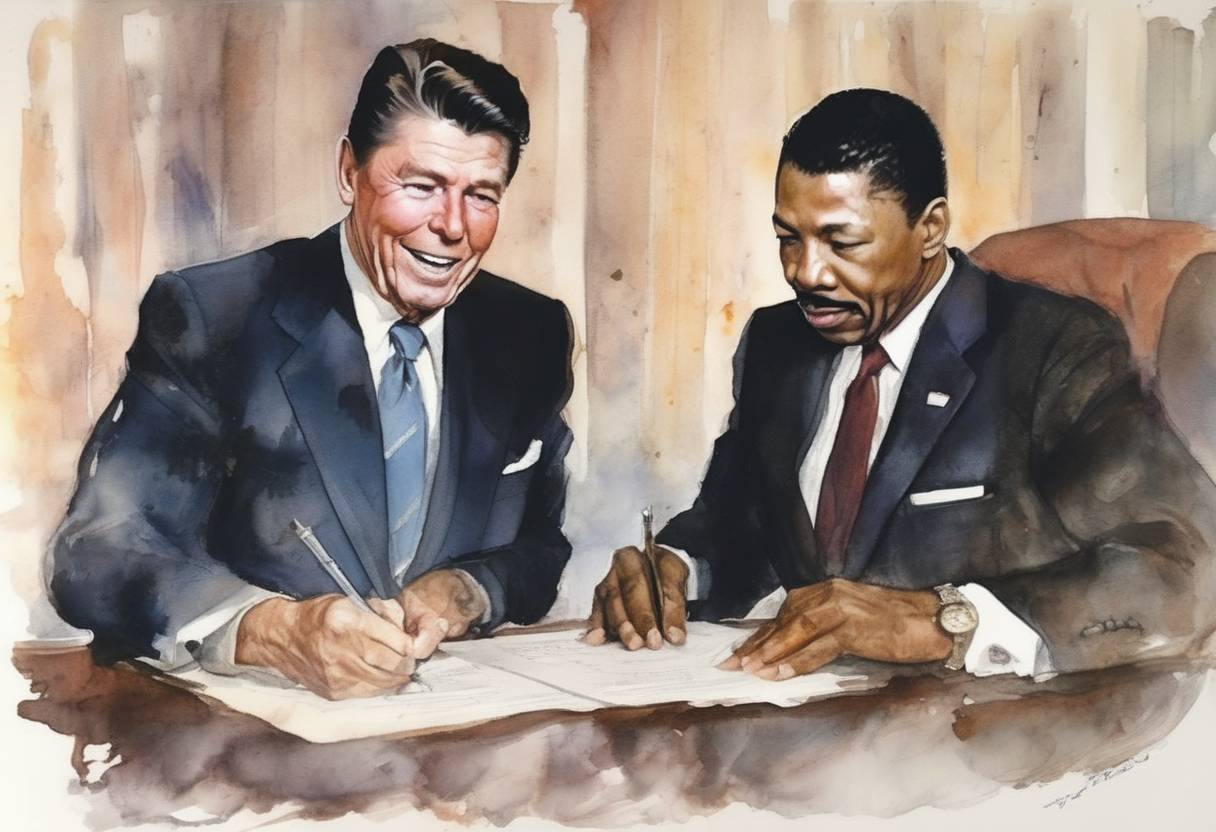
On November 2, 1983, U.S. President Ronald Reagan signed a landmark bill into law, establishing Martin Luther King Jr. Day as a federal holiday. This significant event marked a pivotal moment in American history, honoring the legacy of Dr. Martin Luther King Jr., a prominent leader in the Civil Rights Movement.
Background
Dr. Martin Luther King Jr. was a central figure in the struggle for civil rights in the United States during the 1950s and 1960s. Known for his advocacy of nonviolent protest, King played a crucial role in ending legal segregation and advancing civil rights for African Americans. His leadership in events such as the Montgomery Bus Boycott and the March on Washington, where he delivered his iconic “I Have a Dream” speech, cemented his legacy as a champion of equality and justice.
Following King’s assassination on April 4, 1968, there was a strong push to honor his contributions with a national holiday. However, the journey to establish Martin Luther King Jr. Day was fraught with challenges and took over a decade of advocacy and legislative efforts.
Legislative Journey
The campaign for a holiday in King’s honor gained momentum in the late 1970s, spearheaded by figures such as Congressman John Conyers and Senator Edward Brooke. Public support was bolstered by petitions and the efforts of civil rights organizations, labor unions, and celebrities.
Despite initial resistance from some lawmakers who cited concerns over the cost and the precedent of creating a holiday for an individual, the bill eventually garnered enough support. A turning point came when musician Stevie Wonder released the song “Happy Birthday” in 1980, which became an anthem for the movement.
Signing of the Bill
The bill to establish Martin Luther King Jr. Day passed both the House of Representatives and the Senate in 1983. On November 2, 1983, President Reagan signed the bill into law during a ceremony in the White House Rose Garden. The law designated the third Monday in January as Martin Luther King Jr. Day, beginning in 1986.
Significance and Aftermath
The creation of Martin Luther King Jr. Day was a significant acknowledgment of King’s impact on American society and the ongoing struggle for civil rights. It serves as a day of reflection, education, and service, encouraging Americans to honor King’s legacy by promoting equality and justice.
The holiday faced some initial resistance at the state level, with some states choosing not to observe it or combining it with other holidays. However, by the year 2000, all 50 states officially recognized Martin Luther King Jr. Day.
The establishment of this holiday underscores the importance of King’s contributions to American history and the enduring relevance of his message of nonviolence and equality. It remains a day dedicated to remembering the past and inspiring future generations to continue the fight for civil rights.