Abdication of Byzantine Emperor Justin II
574 · Constantinople, Byzantine Empire
The Byzantine Emperor Justin II, suffering from mental illness, abdicates the throne in favor of his general, Tiberius II Constantine, who is crowned as co-emperor.
December 7, 0574
Emperor Justin II of the Byzantine Empire, suffering from mental illness, abdicates the throne in favor of his general Tiberius, who becomes Tiberius II Constantine.
Constantinople, Byzantine Empire | Byzantine Empire
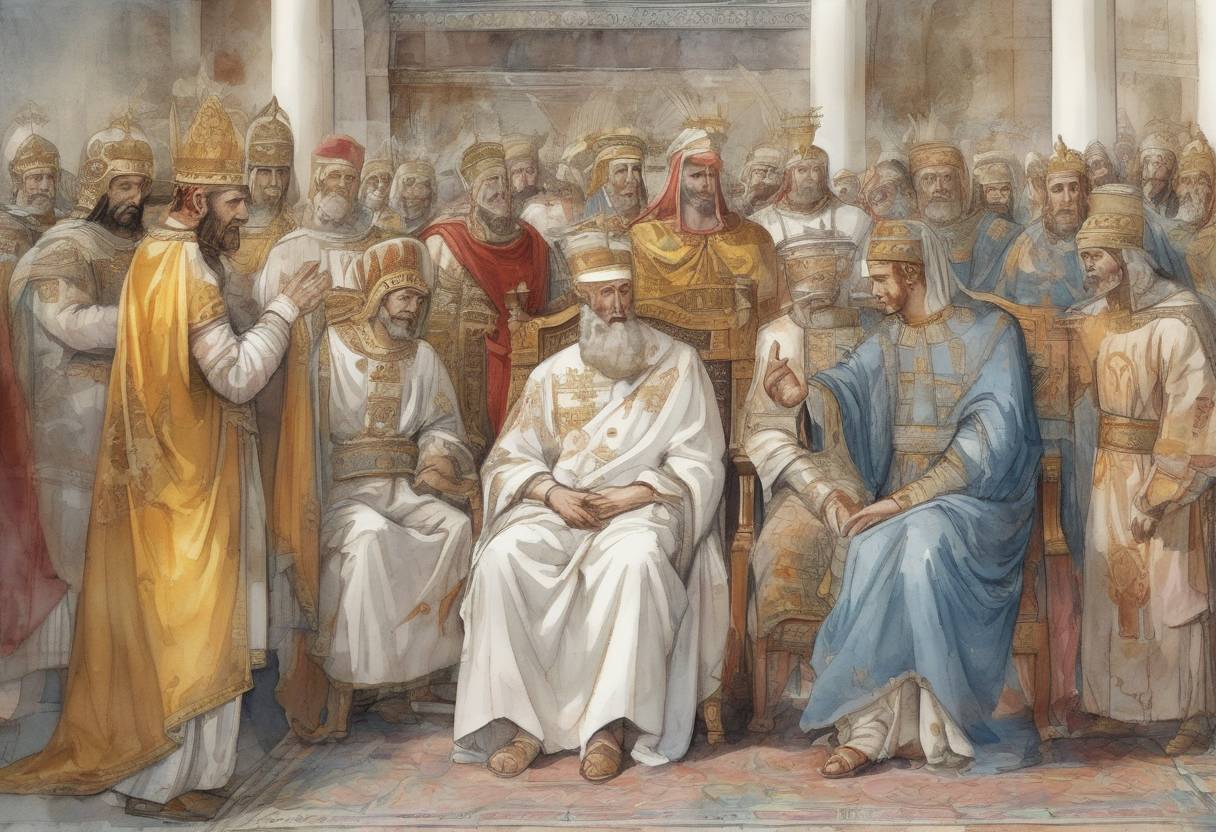
On December 7, 574, a significant transition of power occurred in the Byzantine Empire when Emperor Justin II, plagued by mental illness, abdicated the throne in favor of his general, Tiberius, who would become known as Tiberius II Constantine. This event marked a pivotal moment in the Byzantine Empire’s history, reflecting both the personal struggles of an emperor and the political dynamics of the time.
Emperor Justin II: Ascending to the throne in 565, Justin II was the nephew and successor of the renowned Emperor Justinian I. His reign was marked by initial attempts to continue Justinian’s policies, including efforts to consolidate the empire’s territories and maintain its Christian orthodoxy.
Challenges: Justin II faced significant challenges during his reign, including military pressures from the Lombards in Italy and the Persians in the East. These external threats, combined with internal strife and economic difficulties, placed immense pressure on his leadership.
Mental Health Decline: Over time, Justin II’s mental health began to deteriorate. Historical accounts suggest that he suffered from severe bouts of mental instability, which increasingly impaired his ability to govern effectively.
Regency and Abdication: Recognizing his incapacity, Justin II appointed his trusted general, Tiberius, as Caesar in 574, effectively making him the regent. On December 7 of the same year, Justin formally abdicated the throne, allowing Tiberius to assume full control as Emperor Tiberius II Constantine.
Rise to Power: Tiberius was a capable and popular military leader, known for his administrative skills and efforts to stabilize the empire. His ascension was generally well-received, as he was seen as a stabilizing force during a tumultuous period.
Reign: As emperor, Tiberius II Constantine focused on restoring the empire’s financial stability and strengthening its military defenses. He pursued diplomatic efforts to manage relations with the empire’s neighbors and sought to alleviate the burdens on the populace through tax reforms.
Transition of Power: The abdication of Justin II and the rise of Tiberius II Constantine highlight the challenges of leadership during the Byzantine Empire’s complex history. It underscores the impact of personal health on governance and the importance of competent leadership during times of crisis.
Legacy: Tiberius II Constantine’s reign, though relatively short (574-582), set the stage for future emperors and contributed to the empire’s resilience in the face of external threats. His leadership helped to stabilize the Byzantine state during a period of significant transition.
This event is a testament to the intricate interplay of personal, political, and military factors that shaped the Byzantine Empire’s history, illustrating the enduring challenges of maintaining power and stability in one of history’s most enduring empires.
Source: en.wikipedia.org