The Women's March on January 21, 2017
2017 · Washington, D.C., United States
The Women's March took place in Washington, D.C., and around the world, with millions of people protesting for women's rights and other civil rights issues.
March 3, 1913
Thousands of women marched in Washington, D.C., for women's suffrage, the day before President Woodrow Wilson's inauguration.
Washington, D.C., United States | National American Woman Suffrage Association
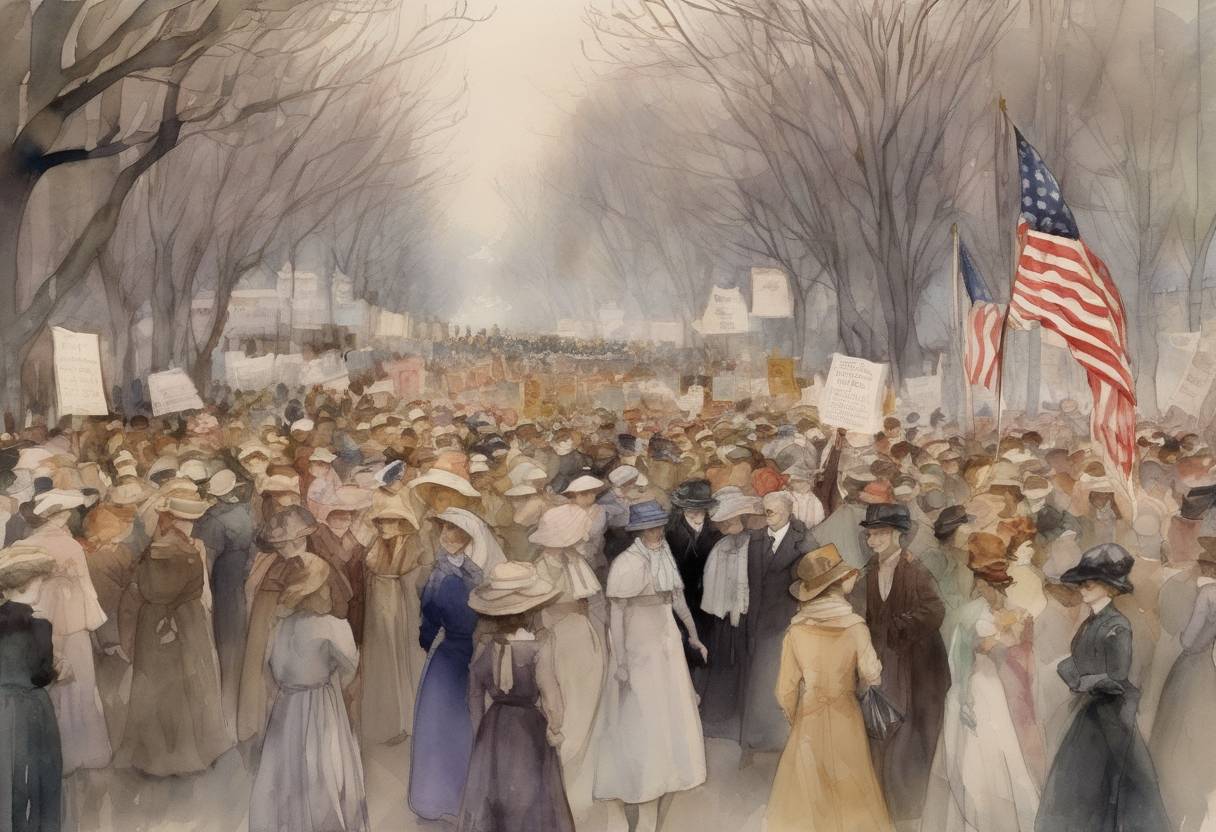
On March 3, 1913, a pivotal event in the history of the women’s suffrage movement took place in Washington, D.C. Thousands of women marched down Pennsylvania Avenue, advocating for their right to vote. This significant demonstration was strategically organized to occur the day before President Woodrow Wilson’s inauguration, ensuring maximum visibility and impact.
The early 20th century was a period of intense activism for women’s suffrage in the United States. The movement had been gaining momentum since the mid-19th century, with organizations like the National American Woman Suffrage Association (NAWSA) leading the charge. By 1913, suffragists were increasingly adopting more public and confrontational tactics to draw attention to their cause.
The 1913 Women’s Suffrage Parade was organized by Alice Paul and Lucy Burns, prominent leaders in the suffrage movement. They were inspired by the militant suffrage tactics they had observed in the United Kingdom. The parade featured over 5,000 participants, including women from various states, and was designed to showcase the diversity and determination of the suffrage movement.
The parade faced significant opposition and hostility. Spectators, many of whom were in town for Wilson’s inauguration, heckled and harassed the marchers. The police failed to provide adequate protection, leading to injuries and chaos. Despite these challenges, the parade succeeded in drawing national attention to the suffrage cause.
The Women’s Suffrage Parade of 1913 remains a powerful symbol of the fight for gender equality and the enduring impact of peaceful protest in effecting social change.
Source: en.wikipedia.org