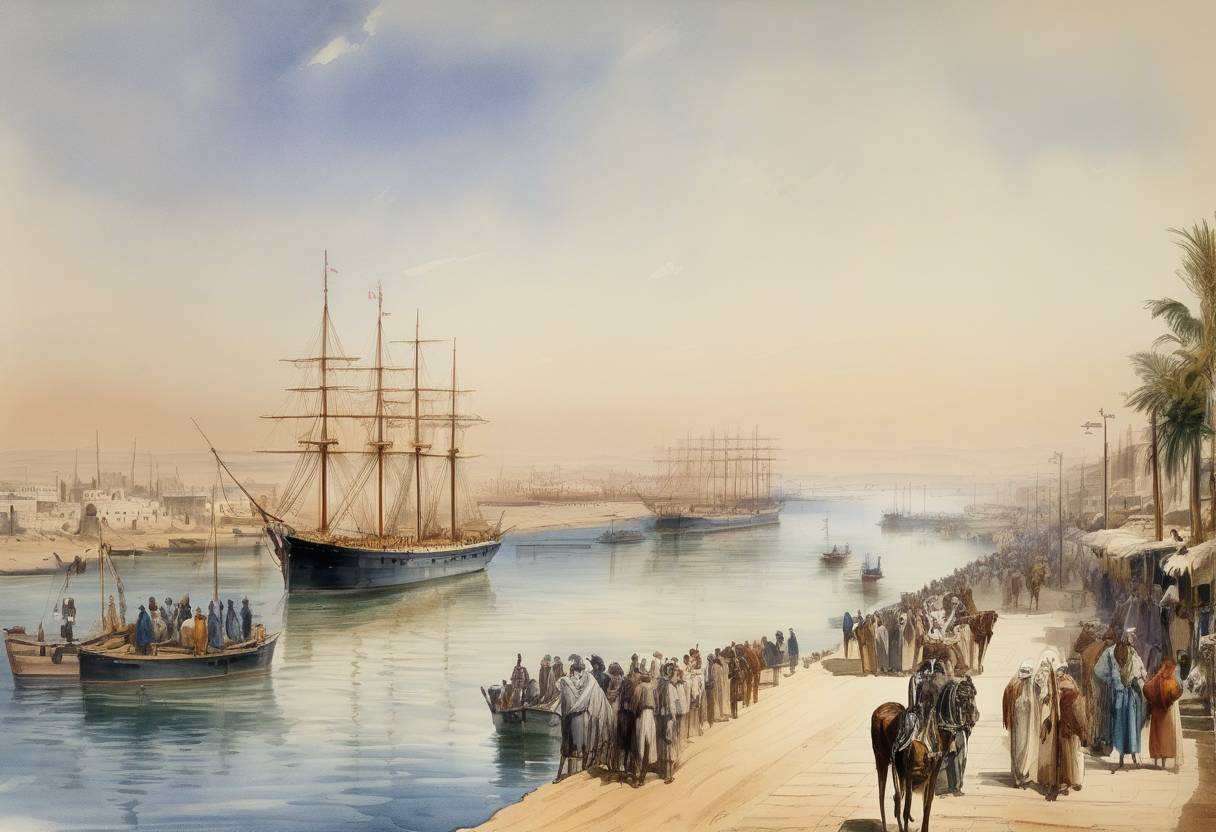
The Opening of the Suez Canal: November 17, 1869
The Suez Canal, a monumental engineering feat, officially opened on November 17, 1869. This event marked a significant milestone in global maritime trade by providing a direct sea route between Europe and Asia, connecting the Mediterranean Sea to the Red Sea.
Historical Context
- Early Conceptions: The idea of connecting the Mediterranean and Red Seas dates back to ancient times, with various attempts made by the Egyptians and later by Napoleon Bonaparte during his campaign in Egypt.
- Modern Initiative: The modern initiative to construct the canal was spearheaded by Ferdinand de Lesseps, a French diplomat and engineer, who secured a concession from the Ottoman viceroy of Egypt, Said Pasha, in 1854.
Construction
- Commencement: Construction began in 1859 and took ten years to complete, involving a workforce of over 1.5 million people, including many Egyptian laborers.
- Challenges: The project faced numerous challenges, including technical difficulties, financial constraints, and political opposition, particularly from the British, who were concerned about French influence in the region.
The Opening Ceremony
- Grand Celebration: The opening ceremony was a grand affair attended by numerous dignitaries, including Empress Eugénie of France, the wife of Napoleon III, and other European royalty and leaders.
- Significance: The canal’s opening was celebrated as a triumph of engineering and international cooperation, symbolizing a new era of global connectivity.
Impact and Aftermath
- Economic Impact: The Suez Canal drastically reduced the sea voyage distance between Europe and Asia, facilitating faster and more economical trade routes.
- Strategic Importance: It became a critical strategic asset, influencing colonial and global power dynamics, particularly for the British Empire, which later took control of the canal in 1882.
- Modern Relevance: Today, the Suez Canal remains one of the world’s most heavily used shipping lanes, playing a vital role in international trade.
Broader Historical Significance
The opening of the Suez Canal was a pivotal moment in the 19th century, reflecting the era’s technological advancements and the increasing interconnectedness of the world. It underscored the geopolitical importance of controlling key maritime routes and set the stage for future developments in global trade and international relations.