New Jersey Ratifies the United States Constitution
1787 · Trenton, United States
New Jersey becomes the third state to ratify the United States Constitution.
December 12, 1787
Pennsylvania becomes the second state to ratify the United States Constitution.
Philadelphia, United States | United States
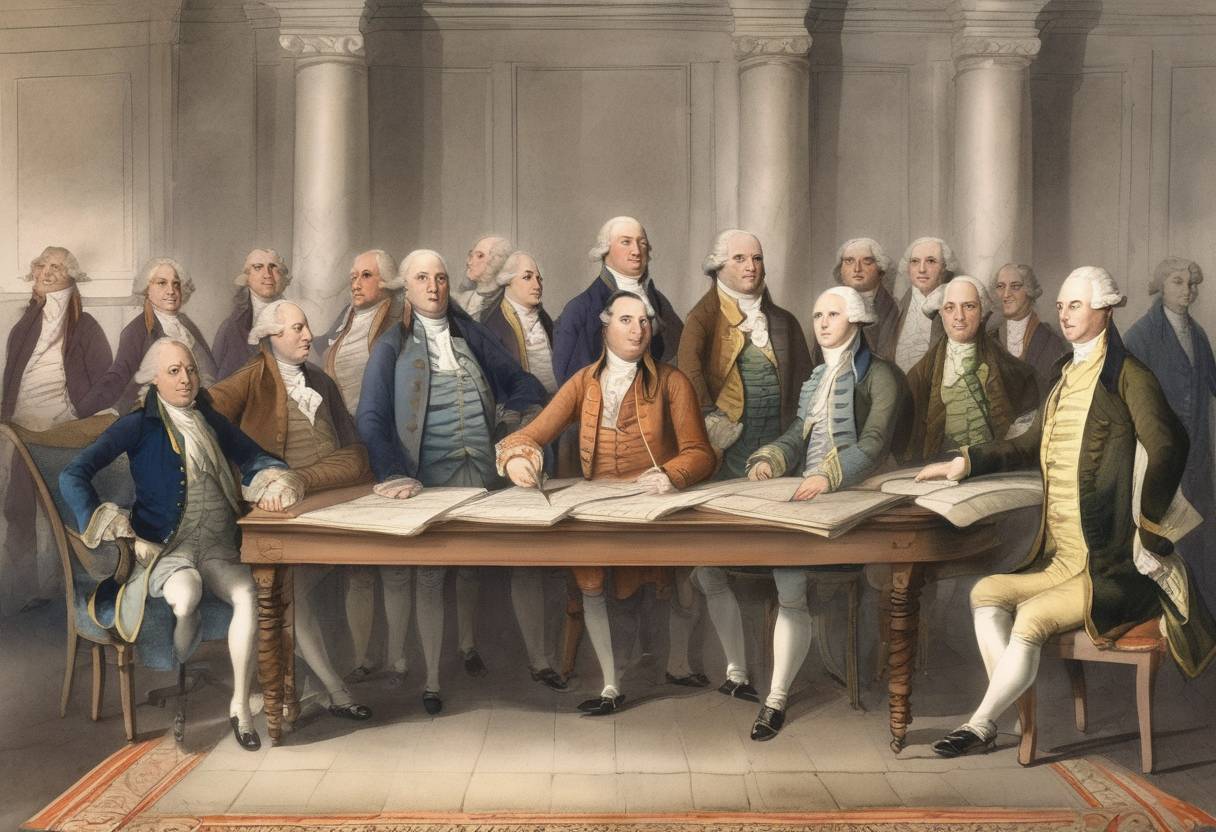
On December 12, 1787, Pennsylvania became the second state to ratify the United States Constitution. This event marked a significant step in the process of forming a more unified and effective national government in the wake of the Articles of Confederation.
The Articles of Confederation: The original governing document of the United States, the Articles of Confederation, proved to be inadequate due to its lack of central authority, inability to levy taxes, and challenges in regulating interstate commerce.
The Constitutional Convention: In response to these issues, the Constitutional Convention was held in Philadelphia from May to September 1787. Delegates from various states debated and drafted a new Constitution designed to create a stronger federal government.
Ratification Process: The new Constitution required ratification by at least nine of the thirteen states to become effective. The process involved each state holding a convention to debate and vote on the document.
Pennsylvania’s Convention: Pennsylvania was one of the first states to hold a convention to consider the new Constitution. The state was a key player due to its size, economic power, and central location.
Debate and Decision: The Pennsylvania convention was marked by intense debate. Federalists, who supported the new Constitution, argued that it would provide stability and unity. Anti-Federalists, however, were concerned about the potential for centralized power to infringe on individual liberties.
Outcome: Despite the opposition, the Federalists succeeded in securing a majority. On December 12, 1787, Pennsylvania ratified the Constitution by a vote of 46 to 23.
Influence on Other States: Pennsylvania’s ratification was crucial in building momentum for the Constitution. As a populous and influential state, its approval helped sway other states to follow suit.
The Federalist Papers: The debates in Pennsylvania and other states prompted the publication of “The Federalist Papers,” a series of essays by Alexander Hamilton, James Madison, and John Jay, advocating for the Constitution’s ratification.
Bill of Rights: Concerns raised by Anti-Federalists, including those in Pennsylvania, eventually led to the adoption of the Bill of Rights in 1791, addressing fears about individual liberties and limiting government power.
Pennsylvania’s ratification of the Constitution was a pivotal moment in American history, contributing to the establishment of the United States’ foundational legal framework and setting the stage for the country’s future growth and governance.
Source: en.wikipedia.org