The First Unsolicited Bulk Commercial Email: A Historical Overview
1978 · Los Angeles, United States
The first unsolicited bulk commercial email (later known as spam) was sent by Gary Thuerk to 393 recipients on ARPANET.
July 5, 1937
Spam, the canned meat product, was introduced by Hormel Foods Corporation.
Austin, United States | Hormel Foods Corporation
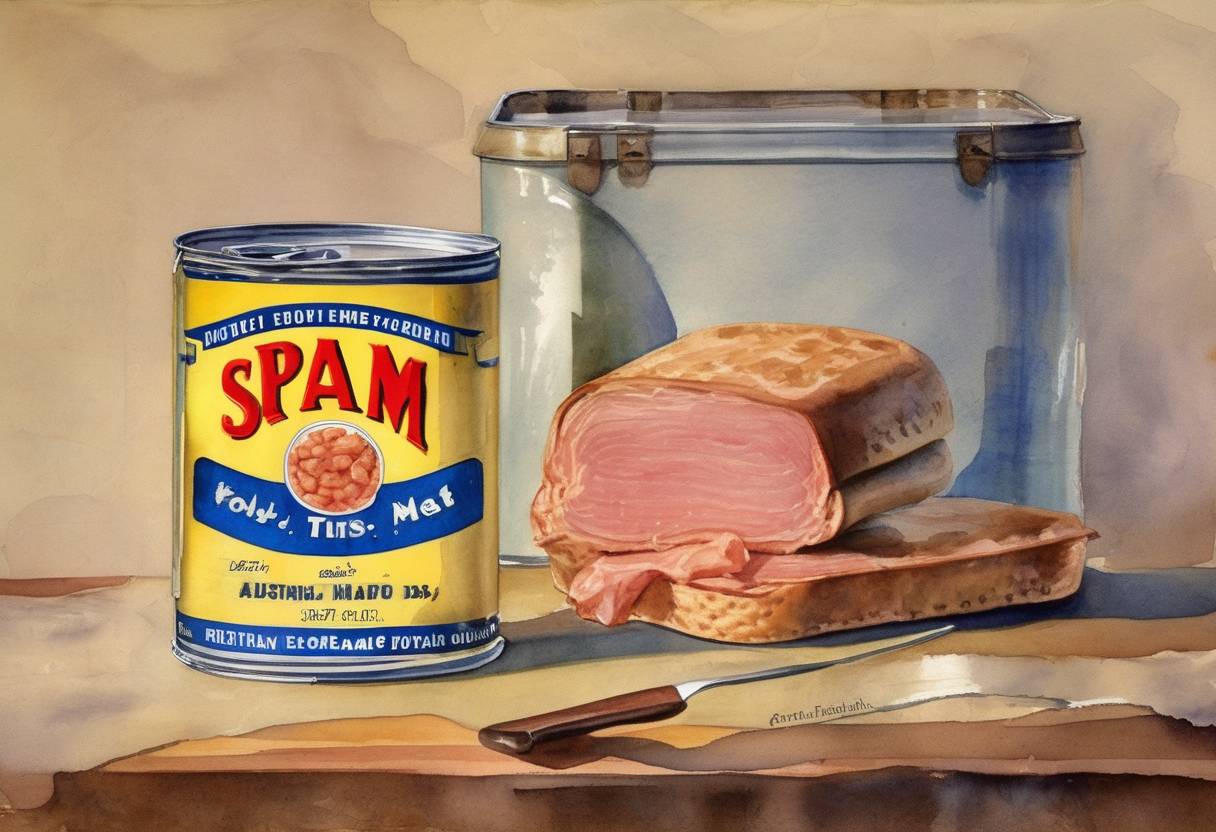
On July 5, 1937, Hormel Foods Corporation introduced Spam, a canned meat product that would become a staple in households across the United States and eventually around the world. This product was developed during a time when convenience foods were gaining popularity, and it quickly became known for its versatility and long shelf life.
Hormel Foods Corporation, founded in 1891 by George A. Hormel in Austin, Minnesota, had been a significant player in the meatpacking industry. By the 1930s, the company was looking to innovate and expand its product line. The idea for Spam emerged as a solution to utilize surplus pork shoulder, a cut of meat that was not as popular as others.
Spam was created by Jay C. Hormel, the son of the company’s founder. The product was designed to be affordable, easy to prepare, and long-lasting, making it an ideal choice for families during the Great Depression. The name “Spam” is believed to be a portmanteau of “spiced ham,” although the exact origin of the name has been the subject of various interpretations and myths.
Spam is made from a mixture of pork shoulder, ham, salt, water, sugar, and sodium nitrite, which acts as a preservative. The product is cooked and canned, allowing it to be stored for extended periods without refrigeration. This feature made it particularly appealing during times of economic hardship and later during wartime.
Spam’s introduction was well-timed, as it coincided with the increasing demand for convenient and non-perishable food items. Its popularity soared during World War II when it was included in military rations due to its durability and ease of transport. Soldiers often referred to it as “the meat that won the war,” and it became a familiar taste for many servicemen.
After the war, Spam’s popularity continued to grow, and it became a cultural icon in various regions, particularly in the Pacific Islands, where it remains a beloved ingredient in local cuisines.
Over the decades, Spam has become more than just a food product; it has entered the cultural lexicon, inspiring everything from Monty Python’s famous “Spam” sketch to annual Spam festivals. Its adaptability in recipes and its role in global cuisines underscore its lasting impact.
The introduction of Spam by Hormel Foods Corporation on July 5, 1937, marked the beginning of a unique chapter in food history. Its enduring presence on grocery shelves and in popular culture is a testament to its significance as a culinary innovation and a symbol of resilience and adaptability.
Source: en.wikipedia.org