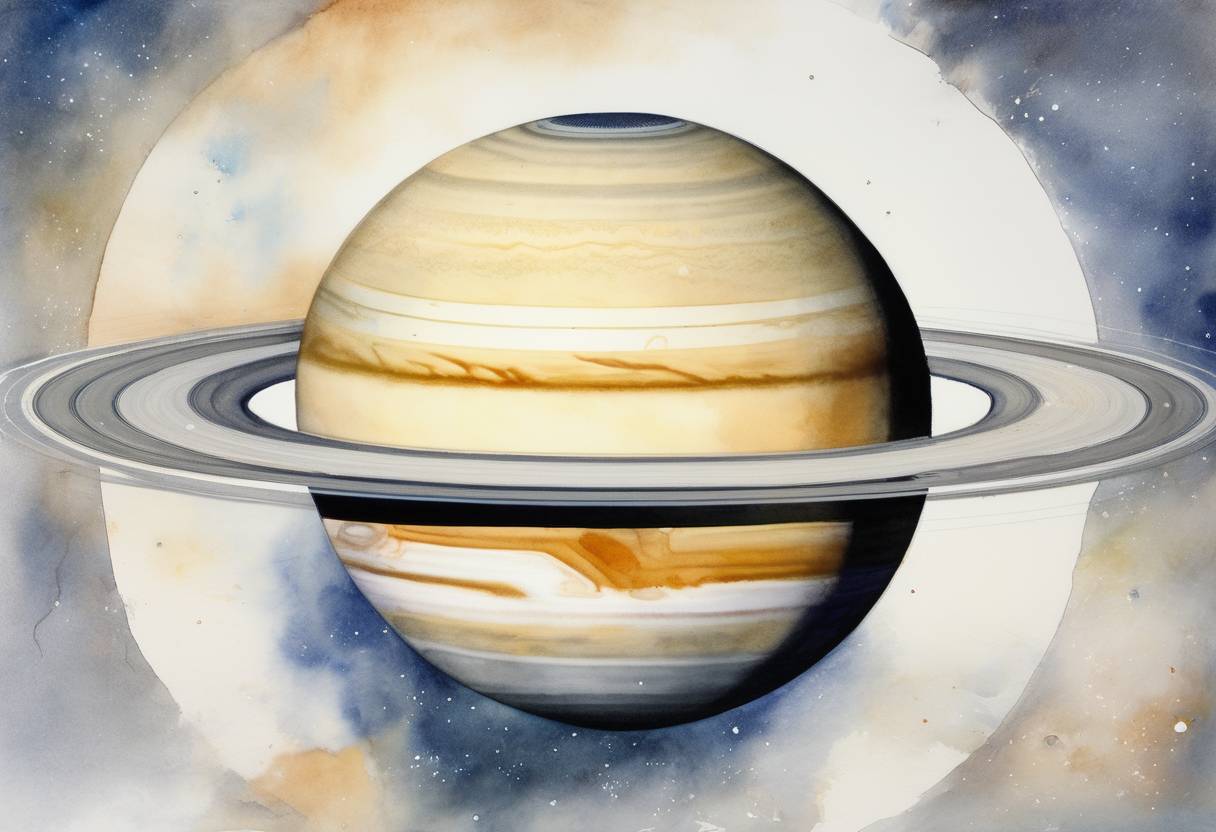
Voyager I’s Closest Approach to Saturn - November 12, 1980
On November 12, 1980, NASA’s Voyager I space probe made its closest approach to Saturn, marking a significant milestone in space exploration. This event provided unprecedented data and images of the planet and its rings, greatly enhancing our understanding of the Saturnian system.
Background
Voyager I was launched on September 5, 1977, as part of NASA’s Voyager program, which aimed to explore the outer planets of the solar system. The mission was designed to take advantage of a rare planetary alignment that occurs once every 176 years, allowing the spacecraft to use gravitational assists to visit multiple planets.
Key Events Leading Up to the Encounter
- Launch and Journey: After its launch, Voyager I first conducted a flyby of Jupiter in March 1979, where it gathered valuable data and images of the planet and its moons. This encounter set the stage for its subsequent journey to Saturn.
- Approach to Saturn: As Voyager I approached Saturn, it began transmitting data back to Earth, providing scientists with their first detailed look at the planet’s atmosphere, rings, and moons.
The Closest Approach
- Date: November 12, 1980
- Distance: Voyager I passed within approximately 124,000 kilometers (77,000 miles) of Saturn’s cloud tops.
- Discoveries: The spacecraft’s instruments captured high-resolution images and data, revealing intricate details of Saturn’s rings, including the discovery of new ringlets and the “braided” F-ring. It also provided insights into the planet’s atmosphere and magnetic field.
Notable Discoveries
- Saturn’s Rings: Voyager I’s observations revealed the complex structure of Saturn’s rings, including the discovery of “spokes” and the confirmation of the existence of the thin, outer F-ring.
- Moons: The probe provided detailed images of several of Saturn’s moons, including Titan, Mimas, Enceladus, Tethys, Dione, and Rhea. Notably, it confirmed the thick, hazy atmosphere of Titan, Saturn’s largest moon.
- Magnetic Field: Voyager I measured Saturn’s magnetic field, providing data that helped scientists understand its composition and dynamics.
Aftermath and Significance
- Continued Exploration: Following its successful encounter with Saturn, Voyager I continued its journey toward the outer reaches of the solar system. It eventually became the first human-made object to enter interstellar space in August 2012.
- Scientific Impact: The data collected by Voyager I during its flyby of Saturn significantly advanced our knowledge of the planet and its moons, influencing subsequent missions and studies.
- Legacy: Voyager I’s mission remains one of the most successful and enduring in the history of space exploration, demonstrating the potential of robotic spacecraft to explore distant worlds.
Voyager I’s encounter with Saturn on November 12, 1980, stands as a landmark achievement in space exploration, providing a wealth of information that continues to inform and inspire scientists and enthusiasts alike.