The Election of Salvador Allende: October 24, 1970
1970 · Santiago, Chile
Salvador Allende of the Popular Unity party is elected the first Marxist President of Chile, marking a shift in Chilean politics.
September 18, 1810
Chile declares its independence from Spain, marking the beginning of the Chilean War of Independence.
Santiago, Chile | Chilean Junta
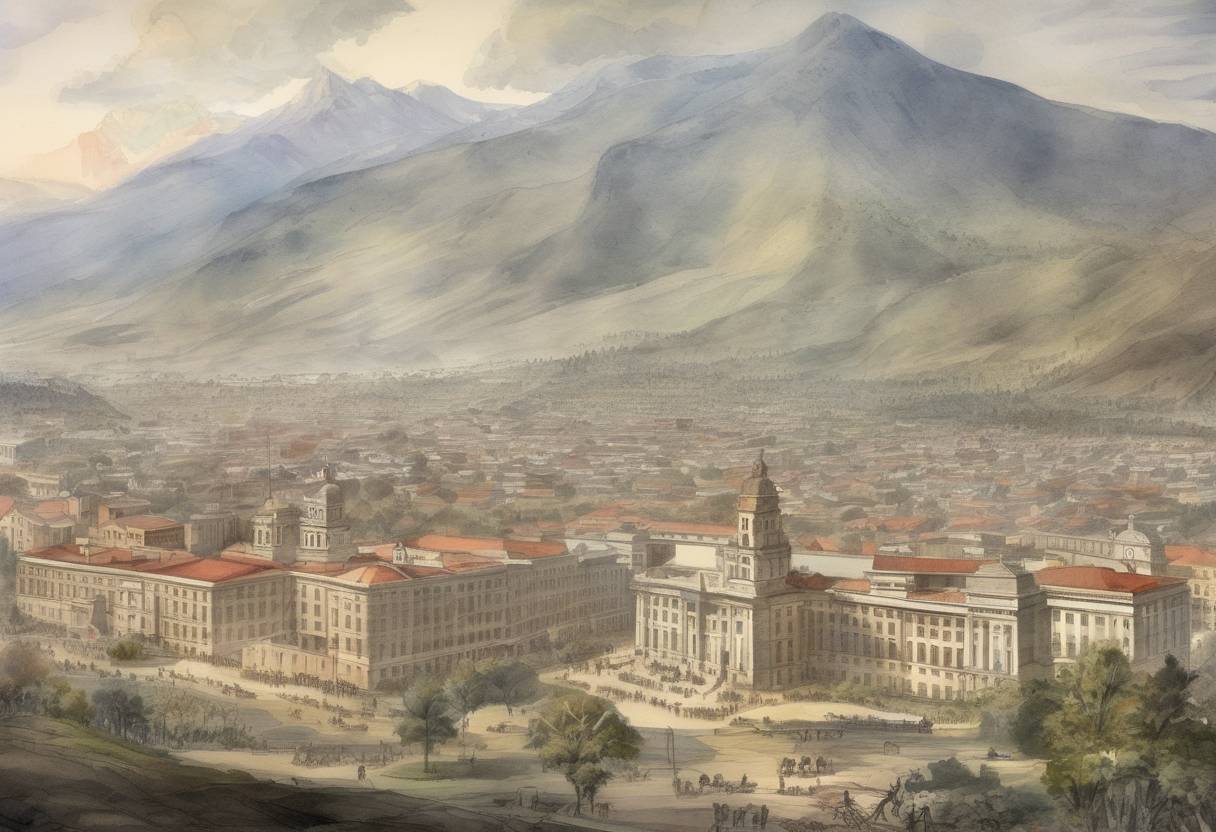
On September 18, 1810, a significant event unfolded in Santiago, Chile, marking the beginning of the Chilean War of Independence. This day is celebrated as the commencement of Chile’s journey toward independence from Spanish colonial rule.
The early 19th century was a period of upheaval in Latin America, influenced by the Napoleonic Wars in Europe and the subsequent weakening of Spanish authority. In 1808, Napoleon Bonaparte invaded Spain, leading to the abdication of King Ferdinand VII and the installation of Joseph Bonaparte as the Spanish monarch. This political instability in Spain provided an impetus for independence movements across Spanish America.
In Chile, the local elite, inspired by Enlightenment ideas and the success of other independence movements, began to question Spanish authority. The power vacuum created by Spain’s internal struggles offered an opportunity for Chileans to assert greater autonomy.
On September 18, 1810, a cabildo abierto (open town meeting) was convened in Santiago. This assembly was attended by prominent citizens, including landowners, clergy, and military officers. The meeting resulted in the establishment of the First National Government Junta of Chile. This junta was intended to govern in the name of the deposed King Ferdinand VII, but it effectively marked the beginning of Chile’s path to independence.
The junta was led by Mateo de Toro y Zambrano, a respected local leader, who became its president. The formation of the junta was a cautious step, as it did not immediately declare full independence but rather sought to establish a provisional government that could manage local affairs amidst the chaos in Spain.
The establishment of the junta set off a series of events that would eventually lead to full independence:
Political Reforms and Tensions: The junta initiated various reforms, including the establishment of a national congress. However, tensions soon arose between royalists, who remained loyal to Spain, and patriots, who sought complete independence.
Military Conflicts: The initial years saw sporadic conflicts between royalist forces and patriot militias. These skirmishes laid the groundwork for a more organized military struggle.
Declaration of Independence: It wasn’t until February 12, 1818, that Chile formally declared its independence, following a series of military victories led by figures such as Bernardo O’Higgins and José de San Martín.
The declaration of independence on September 18, 1810, was a pivotal moment in Chilean history. It marked the beginning of a protracted struggle that would last until 1826, when the last Spanish forces were expelled from Chilean territory.
The Chilean War of Independence was part of a broader wave of independence movements across Latin America, which reshaped the political landscape of the continent. Chile’s eventual success in achieving independence contributed to the decline of Spanish colonial power and the rise of new, sovereign nations in the Americas.
Today, September 18 is celebrated as Chile’s National Day, known as “Fiestas Patrias,” commemorating the country’s rich history and its journey toward becoming an independent republic.
Source: en.wikipedia.org