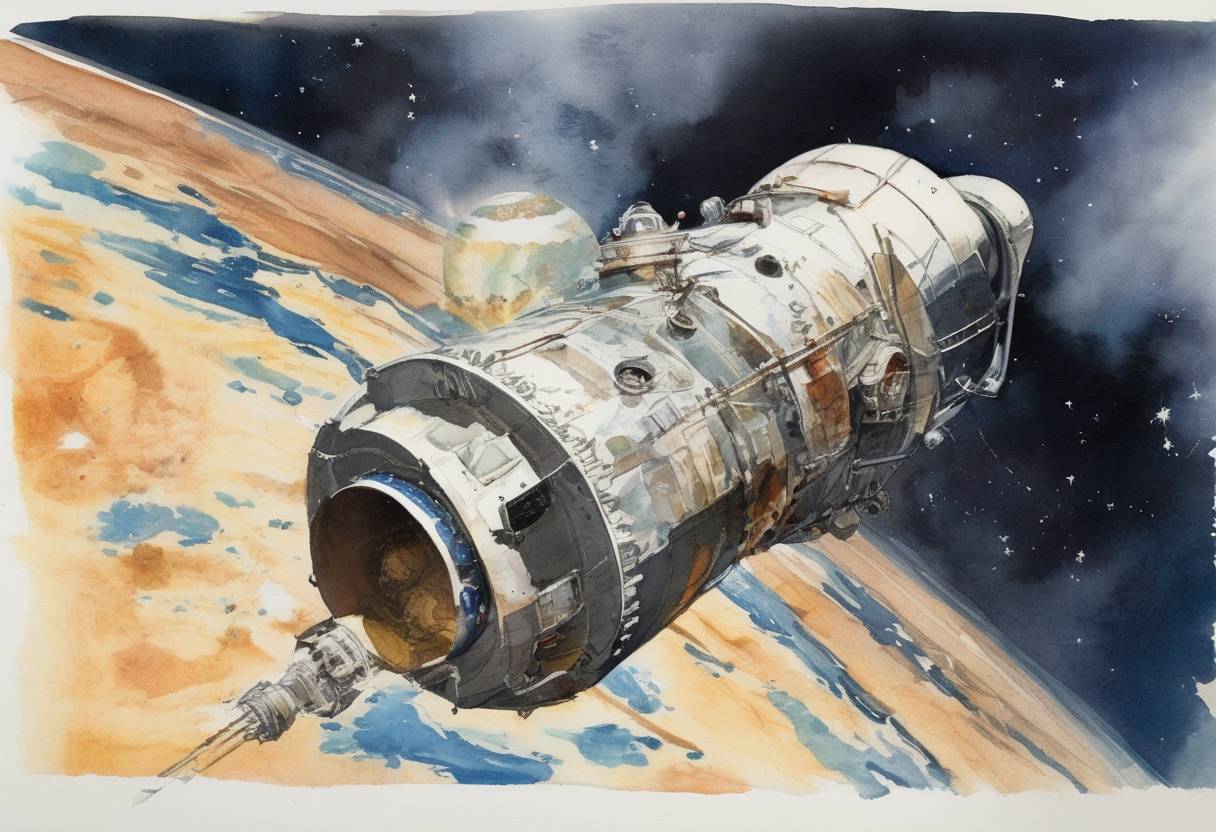
Apollo 7: The First Live Telecast from a Manned U.S. Spacecraft
On October 14, 1968, the Apollo 7 mission achieved a significant milestone in space exploration and broadcasting history by conducting the first live television transmission from a manned U.S. spacecraft. This event marked a pivotal moment in the Apollo program and showcased the potential for space missions to engage the public and share real-time experiences from space.
Background
Apollo 7 was the first manned mission in NASA’s Apollo program to be launched after the tragic Apollo 1 accident, which resulted in the deaths of three astronauts during a pre-flight test. The mission was crucial for testing the redesigned Command/Service Module (CSM) and ensuring the safety and reliability of the spacecraft for future lunar missions.
- Launch Date: October 11, 1968
- Crew: Commander Walter M. Schirra, Command Module Pilot Donn F. Eisele, and Lunar Module Pilot R. Walter Cunningham
- Mission Duration: 11 days
The Live Telecast
The live telecast on October 14 was part of a series of broadcasts made by the Apollo 7 crew during their mission. The broadcasts were designed to demonstrate the capabilities of the spacecraft’s communication systems and to engage the public with the mission’s progress.
Key Features of the Telecast:
- Content: The crew provided a tour of the spacecraft, demonstrated daily activities, and shared their experiences in zero gravity. They also showcased the Earth from orbit, offering viewers a unique perspective of the planet.
- Technology: The transmission utilized a small black-and-white television camera, which was a significant technological achievement at the time, given the constraints of space travel.
- Public Engagement: The broadcasts were well-received by the public and media, helping to generate excitement and support for the Apollo program.
Significance and Aftermath
The successful live telecast from Apollo 7 set a precedent for future missions, including the iconic broadcasts from the Moon during the Apollo 11 mission. It demonstrated the feasibility of live space communication and played a role in enhancing public interest and support for NASA’s endeavors.
- Impact on Future Missions: The success of Apollo 7 paved the way for subsequent missions, including the historic Apollo 11 lunar landing in 1969.
- Cultural Influence: The broadcasts helped to humanize the astronauts and bring the space experience closer to people on Earth, fostering a sense of global connection and curiosity about space exploration.
Apollo 7’s live telecast remains a landmark achievement in both space exploration and broadcasting history, illustrating the power of technology to bridge the gap between space and Earth.