Feodor III Becomes Tsar of Russia
1676 · Moscow, Russia
Feodor III became Tsar of Russia after the death of his father, Tsar Alexis.
February 21, 1613
Mikhail Romanov was elected Tsar of Russia, marking the beginning of the Romanov dynasty.
Moscow, Russia | Zemsky Sobor
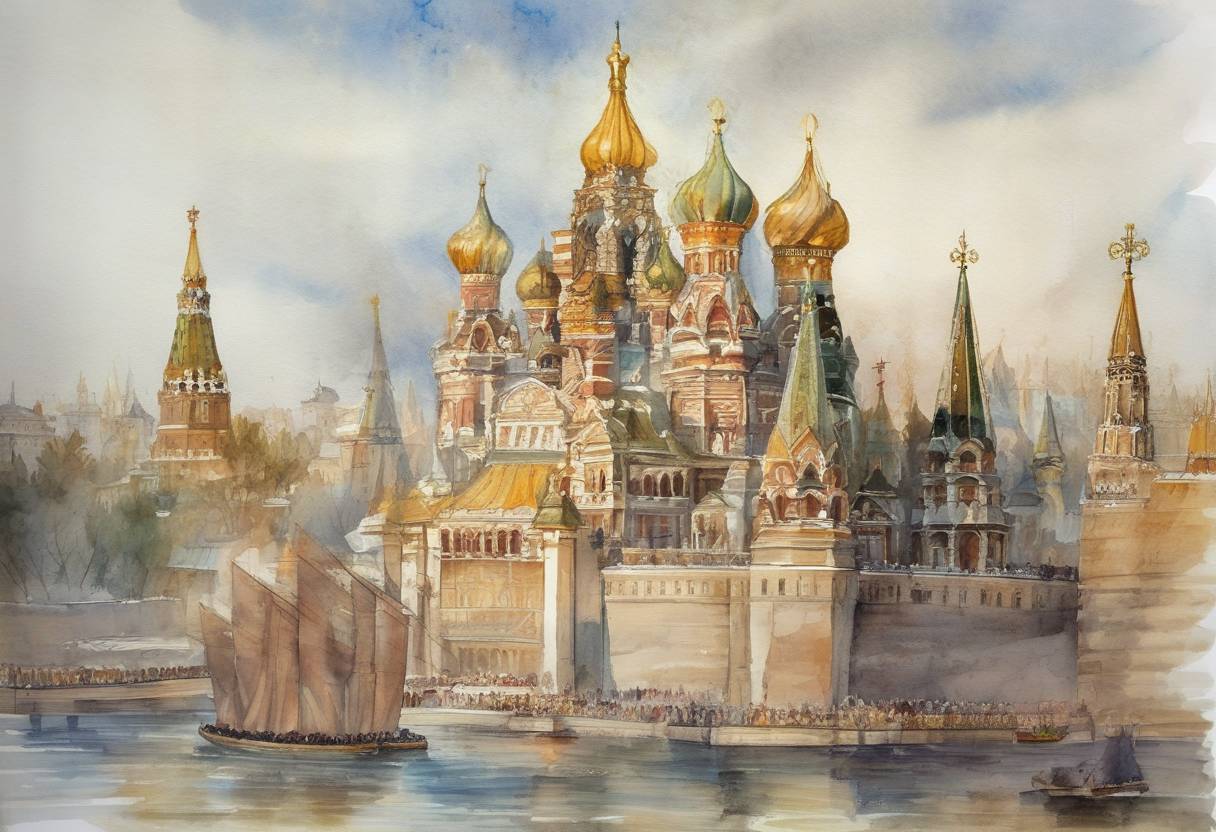
On February 21, 1613, Mikhail Romanov was elected Tsar of Russia, marking the beginning of the Romanov dynasty, which would rule Russia for over 300 years until the abdication of Tsar Nicholas II in 1917. This event was a pivotal moment in Russian history, bringing an end to the Time of Troubles, a period of political instability, famine, and foreign intervention.
Time of Troubles (1598-1613): The period preceding Mikhail’s election was marked by chaos following the death of Tsar Ivan IV (Ivan the Terrible) and the subsequent demise of his son, Tsar Feodor I, in 1598. The lack of a clear heir led to a power vacuum and a series of weak rulers, impostors, and foreign invasions, notably by Polish and Swedish forces.
False Dmitris: During this time, several impostors, known as the False Dmitris, claimed to be the legitimate heirs to the Russian throne, further destabilizing the country.
Zemsky Sobor: In response to the ongoing crisis, a national assembly known as the Zemsky Sobor was convened. This assembly included representatives from various Russian social classes, including the nobility, clergy, and commoners, tasked with selecting a new tsar to restore order.
Mikhail Romanov: Mikhail was a young boy of 16 at the time of his election. He was the son of Feodor Romanov, who had been forced into a monastery and took the name Filaret. The Romanovs were a noble family with connections to the former ruling dynasty through Mikhail’s maternal grandfather, Ivan IV.
Selection: Mikhail was chosen largely because of his family’s noble lineage and the hope that his youth and inexperience would make him a pliable ruler, allowing the powerful boyars (nobles) to maintain influence.
Coronation: Mikhail was crowned Tsar of Russia on July 22, 1613, in the Dormition Cathedral in the Moscow Kremlin.
Stabilization: Mikhail’s election and subsequent rule helped stabilize Russia after years of turmoil. His reign marked the beginning of the Romanov dynasty, which would oversee significant territorial expansion and the centralization of power in Russia.
Romanov Dynasty: The Romanovs would go on to rule Russia for over three centuries, overseeing periods of reform, expansion, and modernization, as well as enduring challenges such as the Napoleonic Wars and internal revolutions.
Legacy: The Romanov dynasty’s influence on Russian history is profound, with its legacy still evident in Russia’s cultural and political landscape.
Mikhail Romanov’s election as tsar was a turning point that helped restore order to a fractured nation and laid the foundation for the future development of the Russian state.
Source: en.wikipedia.org